



Vintage Reclining Chair
A vintage reclining chair offers mechanical ingenuity and deep comfort, spanning camp furniture to colonial planters' seats.
Vintage Reclining Chair
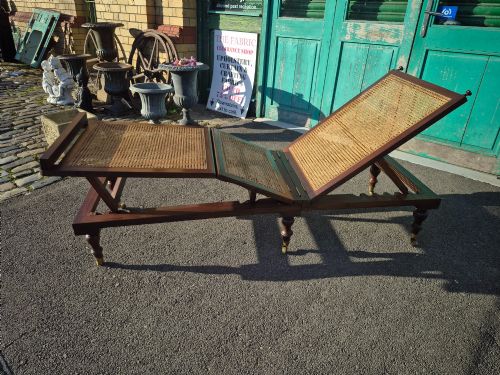
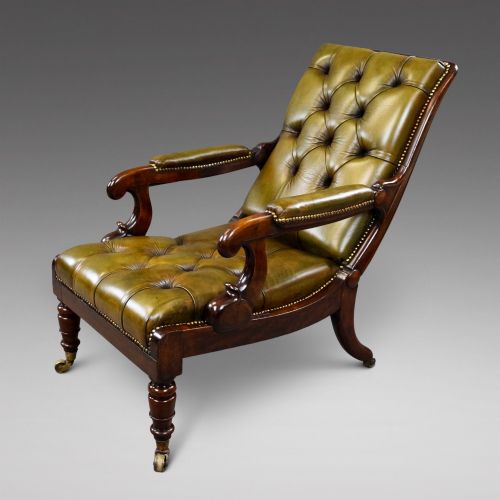
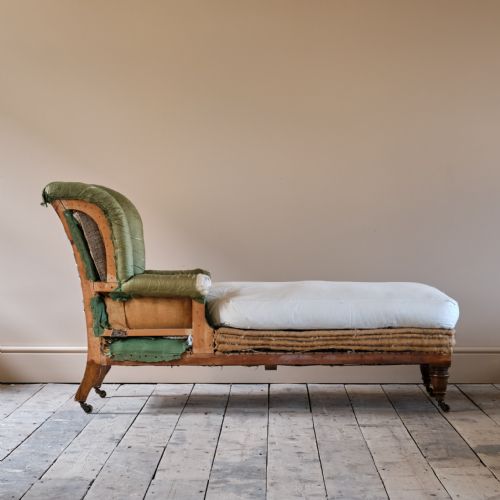
A vintage reclining chair brings together nineteenth-century ingenuity and early twentieth-century domestic comfort, appearing across styles from Regency library models to Arts and Crafts armchairs. Buyers searching this phrase encounter heavy mahogany library chairs, folding campaign seats, and colonial plantation loungers with extending arms.
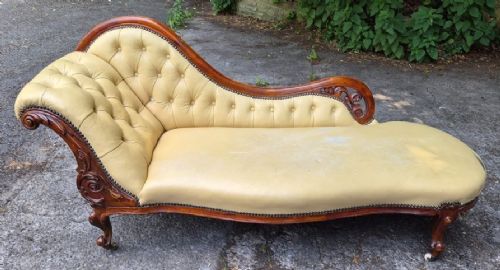
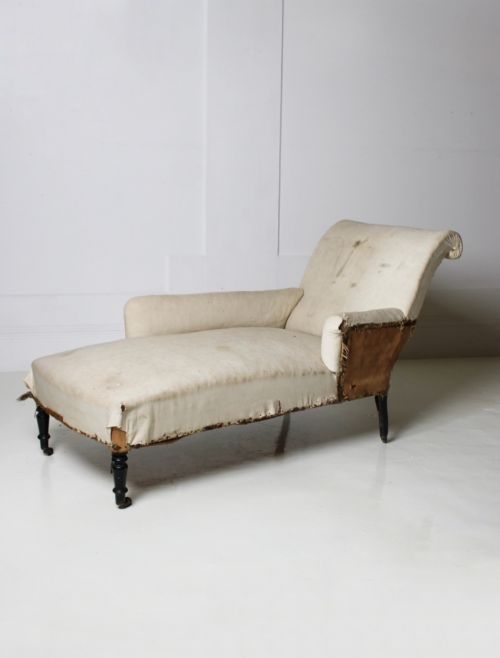
The selections span daybeds, chaises longues, and adjustable armchairs originating from Victorian workshops, Edwardian makers, and French ateliers. Oak, teak, and rosewood frame constructions dominate the offerings, often fitted with mechanical ratchets or adjustable backrests for altered seating angles.
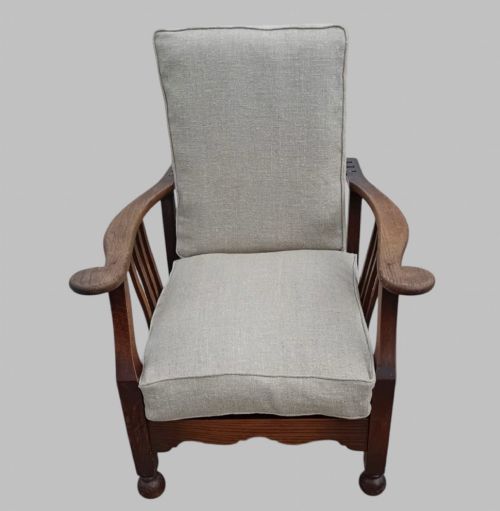
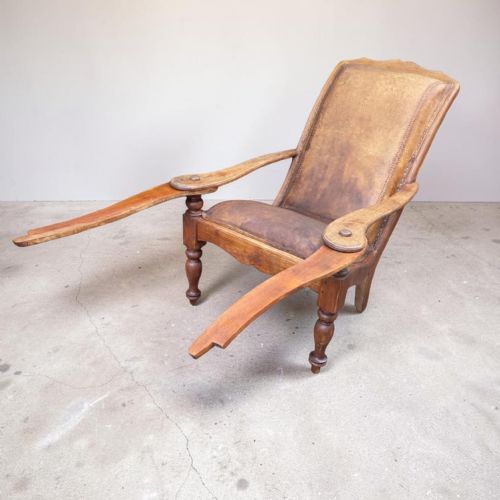
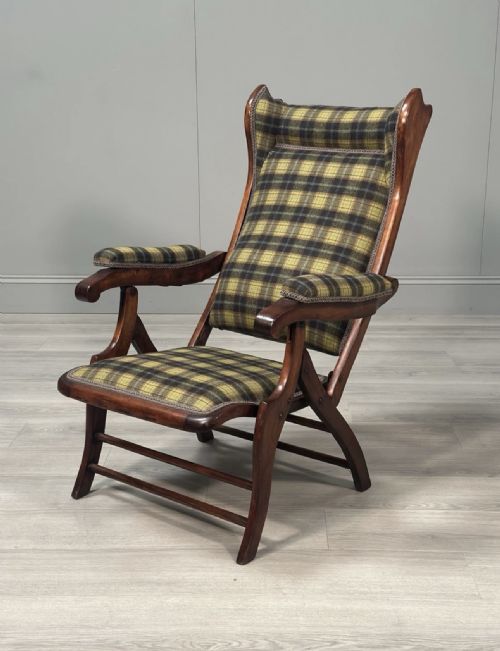
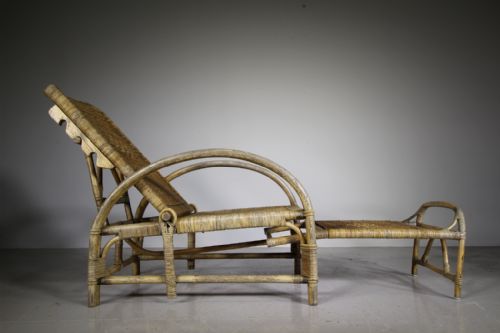
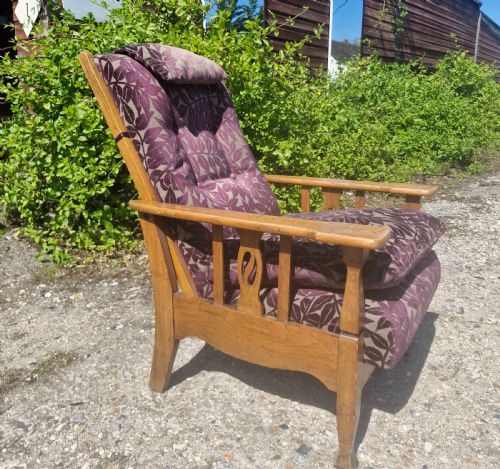
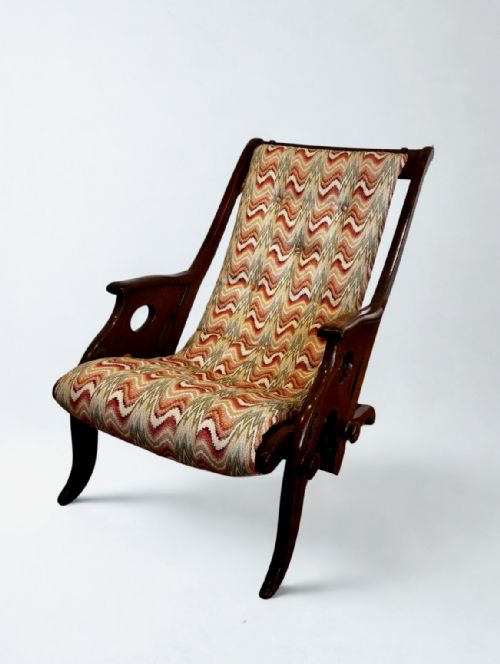
The most frequent versions on this page are sturdy oak armchairs from the early twentieth century and nineteenth-century colonial teak or rosewood planters' chairs. These pieces combine utilitarian folding mechanisms with upholstered leather, cane, or wicker surfaces designed for extended repose.
Materials and construction
Frames rely on dense hardwoods such as mahogany, oak, teak, and solid rosewood, shaped through traditional turning, carving, and joinery methods. Brass fittings, hinges, and cast-iron mechanisms enable the folding and adjustable actions found on campaign and library models.
Support surfaces utilise supple leather upholstery, woven cane, wicker, or stretched fabric webbing fixed to wooden frameworks. Extending armrests, foot mechanisms, and ratcheted backrests require precise carpentry to function smoothly within the timber frames.
Listings feature woods spanning mahogany, teak, oak, rosewood, and walnut, paired with leather, cane, brass, and cast-iron.
Craftsmanship and mechanisms
Quality reveals itself in the smoothness of the adjustment mechanism and the integrity of the hardwood framing, whether brass ratchets on a library chair or folding joints on a campaign piece. Superior examples exhibit precise joinery and original metalwork that operate without sticking or structural looseness.
The grade of materials distinguishes finer versions, such as heavy solid rosewood or finely grained mahogany matched with high-grade bridle leather and intact hand-woven cane. Original makers' stamps, patent brasses, and untouched patination elevate the standing of an individual piece.
Angraves of Leicester·Howard and Sons·Foot and Son·Robert Daws·J Herbert McNair
The Vintage Reclining Chair Glossary
- Campaign chair
- Portable folding furniture designed for military officers during nineteenth-century campaigns. These pieces dismantle or fold flat for transport.
- Planter's chair
- A colonial lounger featuring extended arms designed for resting legs. They originate from British-era tropical postings.
- Bergère
- An enclosed upholstered armchair with wooden framing exposed. The sides often feature woven cane panels.
- Metamorphic chair
- Furniture engineered to transform into alternative forms, such as a chair converting into a step ladder or reclining daybed.
- Ratchet back
- A mechanical adjustment system using notched metal arms to secure a chair back at various angles.
Vintage Reclining Chair: Frequently Asked Questions
Where were plantation chairs used?
Planters' chairs were designed for British colonists living in tropical regions like India and Burma during the nineteenth century. The long extending arms served as footrests for resting during the hottest hours of the day.
The cane or slatted teak construction allowed maximum airflow around the sitter, making them practical for humid climates before mechanical air conditioning existed.
How do I care for leather upholstery?
Period leather requires careful cleaning with a damp cloth followed by a neutral, microcrystalline-based wax or leather dressing. Avoid modern chemical detergents that strip natural oils from nineteenth-century hide.
Keep these chairs away from direct sunlight and strong heat sources to prevent the leather from drying out and cracking across the buttoned surface.
Are campaign chairs comfortable?
Campaign chairs were built for portability but often incorporated supportive leather slings or canvas panels that mould to the body. Many feature adjustable backrests to shift between sitting and lounging positions.
Adding a matching footstool or a loose squab cushion enhances the seating experience while maintaining the historic aesthetic of the piece.