



Traditional Oak Lounge Chairs
Traditional oak lounge chairs bring warmth and sturdy comfort to a room, spanning styles from Carolean revivals to early twentieth century reclining designs.
Traditional Oak Lounge Chairs
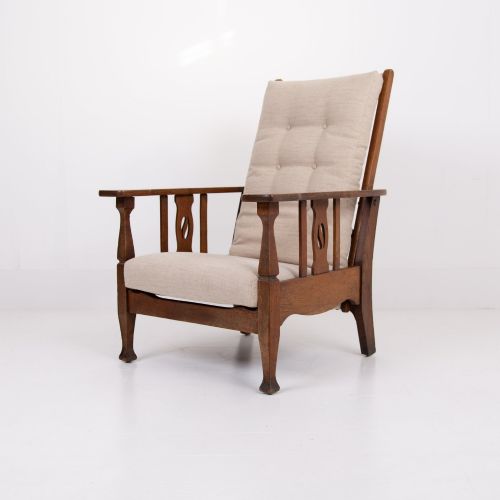
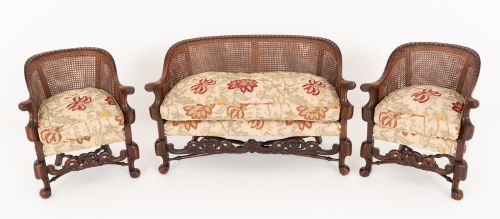
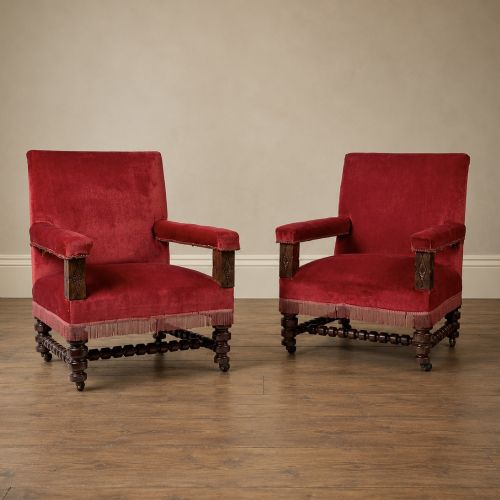
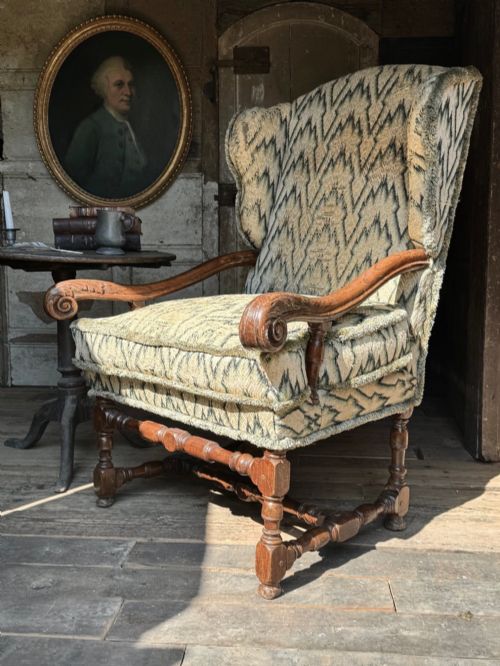
Traditional oak lounge chairs encompass substantial seating forms built for comfort in sitting rooms, libraries and garden spaces. The selection ranges from high backed wingback armchair models and bergere suites to reclining chairs and pairs of carved open armchairs.
The periods represented stretch from the eighteenth century through the Victorian era up to nineteen thirties British pieces. Buyers frequently encounter nineteenth century examples alongside pieces dating from nineteen ten to nineteen thirty.
Makers and design influences vary from Heals of London types to French provincial models and Arts and Crafts pieces. Buyers find both single statement chairs and matched pairs suitable for formal or relaxed interiors.
How they were made
The primary structural material across these pieces is solid oak, often deeply carved or shaped into sturdy frames. Artisans combined this timber with supporting elements such as cane panels, brass fittings and woven Lloyd Loom material.
Upholstered versions rely on traditional textiles including red velvet, supple leather, and various fabrics and cushions. Frames utilise traditional joinery methods to support the weight of reclining mechanisms and sprung or padded seats.
Traditional Oak Lounge Chairs Retail Price Guide 2026
Typical asking prices for traditional oak lounge chairs among the pieces listed under this phrase on Sellingantiques today, from the lower quarter to the upper quarter. They describe what is for sale here now, not the wider market.
A solitary garden room armchair from nineteen thirty proves that even sturdy oak likes to occasionally sit by the begonias.
What varies in quality
Quality in traditional oak lounge chairs rests upon the crispness of the timber carving and the architectural proportion of the frame. Superior examples demonstrate thoughtful joinery and harmonious integration of cane or upholstery.
The depth and integrity of the original materials, from thick leather hides to woven cane and period textiles, distinguish finer pieces. Chairs retaining their original reclining mechanisms or matching suite configurations hold particular distinction.
The Traditional Oak Lounge Chairs Glossary
- Bergere
- An upholstered armchair with an enclosed cane or wicker back and sides. This French style gained popularity in various English revival forms during the nineteenth and early twentieth centuries.
- Wingback
- An armchair with high sides attached to the back, designed to shield the sitter from draughts. Early examples often feature exposed oak framing and deep upholstery.
- Lloyd Loom
- A furniture material invented in the nineteen twenties using twisted cellulose wire pressed over metal reinforcement. It provides a durable, lightweight alternative to traditional wicker.
- Bobbin
- A style of turned furniture leg or arm formed of repeated rounded spheres resembling wooden thread bobbins. This decorative turning technique appears frequently on nineteenth century seating.
Traditional Oak Lounge Chairs: Frequently Asked Questions
What periods do these chairs cover?
The inventory spans several centuries, including eighteenth century French pieces, Victorian designs, and early twentieth century examples up to nineteen thirty.
Buyers will find specific decades represented such as eighteen eighty, eighteen ninety, nineteen ten, nineteen twenty, and nineteen thirty alongside broader period categorisations.
Are pairs commonly available?
Yes, several listings feature matched pairs of armchairs, including oversized Victorian red velvet models and reclining chairs from nineteen ten.
These paired sets offer a balanced look for larger living spaces or seating suites.
What upholstery materials are used?
The chairs utilise a range of traditional coverings including red velvet, leather, standard upholstery fabrics, and woven cane panels.
Some specialist pieces incorporate Lloyd Loom material or come accompanied by loose cushions.
What distinct styles appear in the collection?
The selection includes Jacobean Revival, Carolean style, French provincial, Arts and Crafts, and English country aesthetics.
Reclining mechanisms and Heals of London type designs also feature among the twentieth century seating options.