
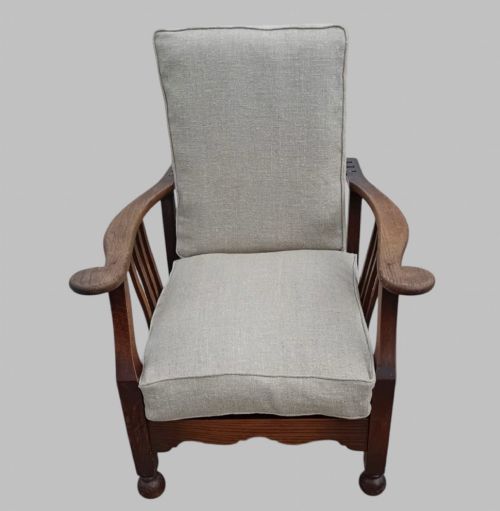
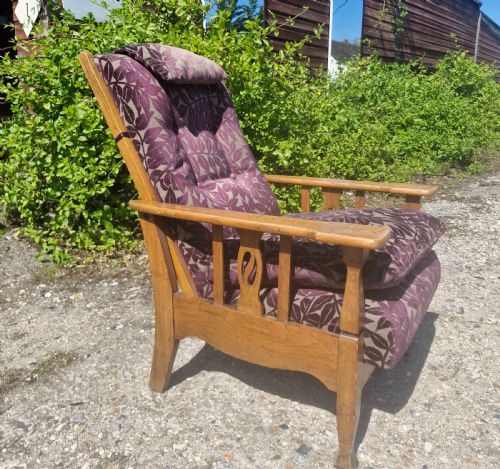


Edwardian Reclining Armchair
An Edwardian reclining armchair offers adjustable comfort and solid timber construction, making it a functional centrepiece for any traditional library or study.
Edwardian Reclining Armchair
The edwardian reclining armchair encompasses adjustable seating from the early twentieth century alongside related examples from the nineteenth century. Buyers encounter sturdy oak and mahogany frames designed for domestic leisure, reading or convalescence.
Many examples reflect the influence of Arts and Crafts design or specific makers, utilising mechanisms that allow the sitter to alter the back angle. Forms range from folding steamer chairs to substantial library and office armchairs.
While true Edwardian pieces date around nineteen ten, the selection includes Victorian mechanical chairs and later variations. Oak remains the predominant timber, often paired with upholstered cushions, leather or cane.
Materials and construction
Makers utilised solid timbers such as oak, mahogany, walnut and teak to build durable frames capable of supporting mechanical reclining actions. Brass fittings, castors and hinges facilitated the adjustable functions found in library and steamer chairs.
Upholstery materials included leather, fabric and cane panels inserted into wooden frames. Frames frequently incorporated ladderback designs, folding mechanisms or swivel actions operated by levers and ratchets.
Listings feature oak, mahogany, walnut, and teak frames equipped with brass castors and adjustable mechanical actions.
Judging quality in adjustable seating
Quality rests in the complexity and durability of the adjusting mechanism, from simple folding struts to sophisticated mechanical gears by known makers. Smooth operation of the reclining action distinguishes superior library and lounge chairs from basic models.
The choice of timber and the execution of carved or turned details affect the overall standard of the piece. Well-preserved leather upholstery, original brass castors and intact cane work add significantly to the integrity of the chair.
J Foot & Son·John Ward·Minter
The Edwardian Reclining Armchair Glossary
- Metamorphic armchair
- A chair with mechanical parts that transform its shape for different uses, such as reclining or reading. These pieces often feature complex wooden or brass adjustments.
- Steamer chair
- A folding wooden lounge seat originally designed for ocean travel or garden use. They typically employ slatted timber frames in teak, oak or walnut.
- Bergère
- A type of chair featuring woven cane panels on the back and sides. This technique lightens the visual weight of heavy timber frames.
- Library chair
- A substantial seating form intended for study environments, sometimes equipped with writing slopes or reading attachments. They are frequently constructed from mahogany or oak.
- Arts and Crafts
- A design movement prioritising simple forms, visible construction and quality craftsmanship. Furniture from this style often displays plain oak surfaces and honest joinery.
Edwardian Reclining Armchair: Frequently Asked Questions
How do these reclining mechanisms work?
These chairs use various mechanical systems, including ratchets, brass struts, and folding hinges to adjust the angle of the backrest. Sitters manipulate levers or shift the back manually into designated notches.
More advanced library and metamorphic examples employ specialised metal underframes to support the weight during adjustment. These devices require gentle handling to preserve their original function.
Are these chairs comfortable for daily use?
Many examples provide deep seating and adjustable angles designed for relaxation, reading, or convalescence. The addition of upholstered cushions or leather pads enhances daily comfort.
Original padding may vary in firmness depending on restoration work. Buyers often assess the seat height and depth to suit their personal stature.
What is the difference between steamer and library chairs?
Steamer chairs are generally lighter, folding wooden seats constructed for portability in gardens or on ship decks. They frequently utilise teak, walnut, or oak slats.
Library chairs are heavier, stationary pieces built from solid mahogany or oak for indoor study. They often incorporate leather upholstery, castors, and mechanical reclining functions.
How do I identify an Edwardian piece?
Edwardian chairs typically date from around nineteen hundred to nineteen ten, displaying simpler lines than ornate Victorian predecessors. They frequently show the influence of the Arts and Crafts movement through plain oak frames.
Construction details, such as metal castor types and timber patination, help differentiate these early twentieth-century pieces from nineteenth-century prototypes.