


Vintage Adjustable Armchair
These vintage adjustable armchairs span the nineteenth and twentieth centuries, offering mechanical comfort and sturdy timber frames for daily seating.
Vintage Adjustable Armchair
A vintage adjustable armchair combines mechanical movement with traditional seating forms across several design periods. Buyers seeking a vintage adjustable armchair encounter styles ranging from Victorian industrial pieces to Arts and Crafts and Art Deco models.
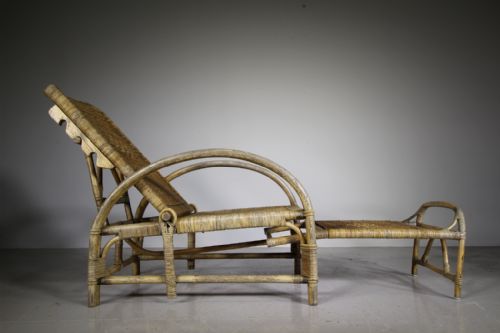
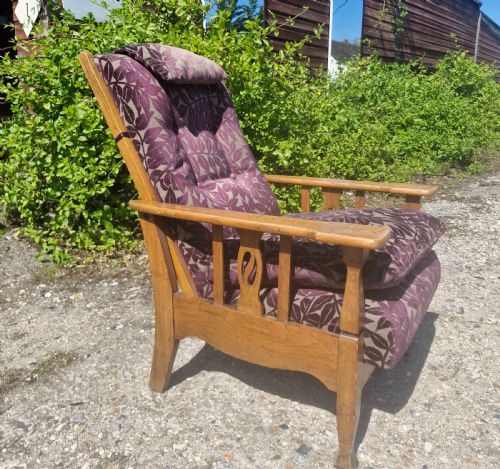
The selection on this page centres on sturdy timber frames paired with reclining mechanisms or height-adjustable bases. Common forms include oak reclining armchairs, campaign chairs, swivel desk chairs, and wicker garden armchairs.
How they were made
Construction relies heavily on solid hardwoods like oak, mahogany, and teak, often joined with brass fittings and cast iron mechanical components. Upholstered versions feature leather or fabric coverings supported by cane or rattan inserts.
Makers utilised pivoting hinges, ratchet backs, and swivel screws to allow the sitter to alter the angle or height. Castors frequently appear on the base of heavier designs to aid movement across the floor.
The styles represented include Victorian, Arts and Crafts, Art Deco, and Jacobean Revival.
What varies in quality
Quality in these chairs rests upon the robustness of the adjustable mechanism and the integrity of the timber frame. Superior examples combine smooth mechanical operation with dense, well-figured oak or mahogany.
Finishing details such as turned wooden components, original brass hardware, and careful joinery separate standard production pieces from finer workshop creations.
Angraves of Leicester·Foot and Sons
The Vintage Adjustable Armchair Glossary
- Campaign chair
- Portable seating designed for military officers, often featuring folding or dismantling frames with metal hinges.
- Reclining armchair
- A seat with an adjustable back mechanism that tilts to various angles for resting.
- Swivel desk chair
- A revolving seat mounted on a central adjustable spindle, frequently fitted with castors.
- Ratchet back
- A mechanical adjustment system using a notched bar to hold the chair back at chosen angles.
Vintage Adjustable Armchair: Frequently Asked Questions
How do I adjust the backrest?
Many of these chairs use a mechanical ratchet system hidden behind the armrests or a sliding bar beneath the seat. Lifting or tilting the back allows it to settle into the designated slots.
Care should be taken to support the weight of the backrest while changing positions to avoid straining the original metal components.
Are these chairs suitable for daily use?
The sturdy timber frames and solid construction make them well-suited for regular seating in a study or living room. Oak and mahogany models offer robust support for everyday sitting.
Upholstered sections and leather cushions may require occasional conditioning or careful maintenance to preserve their condition over time.
What periods do these chairs come from?
The pieces span the nineteenth century through to the Art Deco and modernist periods of the twentieth century. Styles range from heavy Victorian industrial designs to lighter Edwardian Arts and Crafts forms.
Construction details and timber choices typically help identify the specific era of manufacture.
Do they require special care?
Maintaining the wood with appropriate wax and keeping metal mechanisms lightly oiled ensures smooth operation. Leather and fabric parts benefit from gentle cleaning suited to antique textiles.
Avoiding excessive moisture protects both the wooden frames and the internal metal parts from corrosion.