

Oak Fireside Armchair
An oak fireside armchair brings sturdy warmth and vernacular character to a room, offering a deep, solid seat built for long winter evenings.
Oak Fireside Armchair
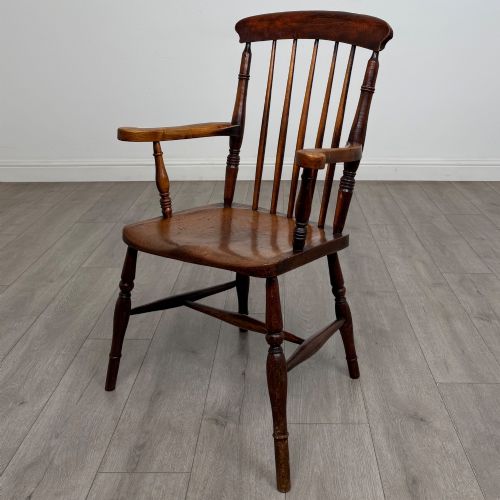
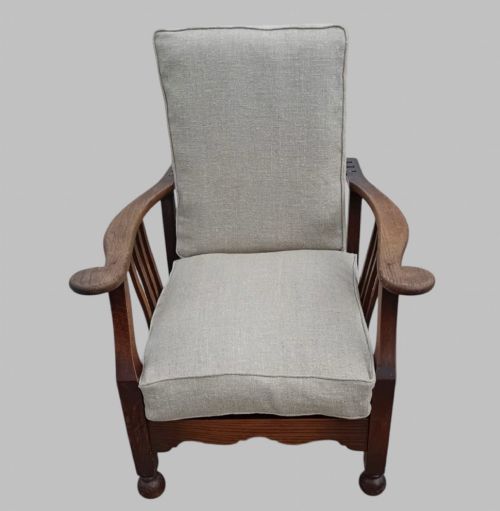
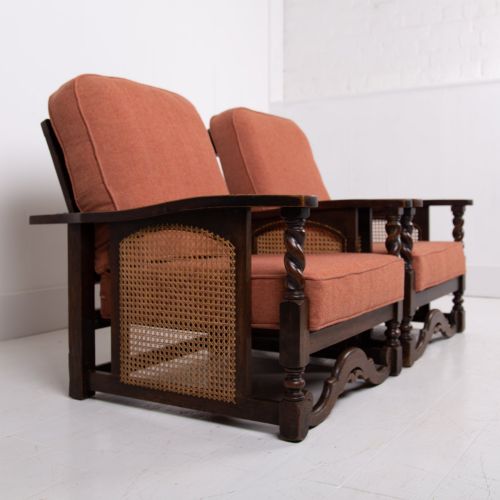
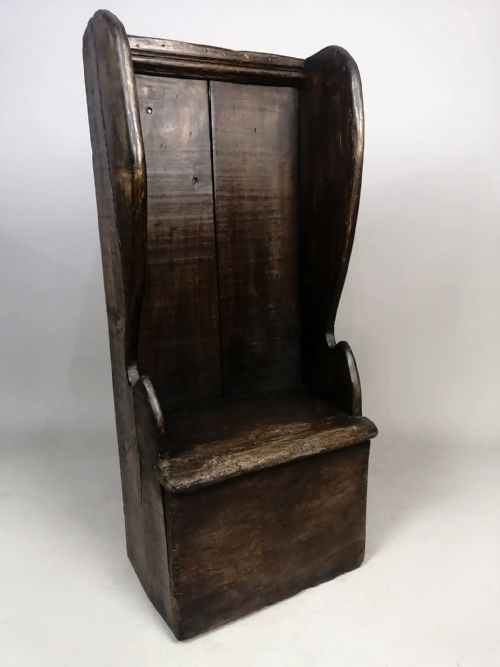
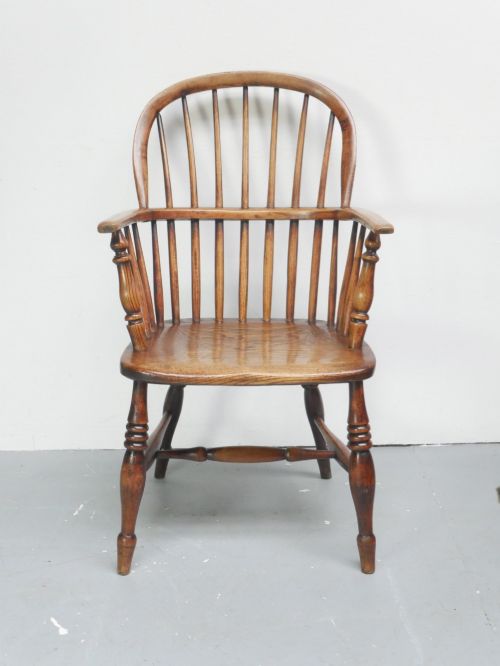
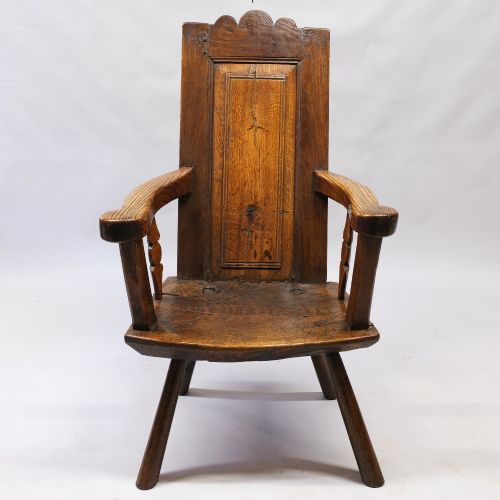
An oak fireside armchair serves as a sturdy domestic seat designed for warmth and heavy daily use by the hearth. These pieces range from vernacular Windsor and lambing designs to revival styles and Arts and Crafts armchairs.
The varieties encountered here span centuries of British and European rural and domestic woodworking, including stick back, panel backed, and wingback configurations. Regional traditions shape the timber selection and joinery, linking individual seats to specific rural workshops.
Many examples incorporate mixed woods alongside oak frames, utilising elm seats or beech spindles for structural strength and contrasting grain. Buyers selecting an oak fireside armchair typically seek practical domestic seating carrying authentic historical patination.
How they were made
Makers constructed these chairs primarily from solid oak, frequently combining it with elm for saddle seats or ash and beech for turned spindles and structural stretchers. Traditional joinery methods such as mortise and tenon, pegged joints, and wedged legs ensured the frame withstood continuous movement beside the hearth.
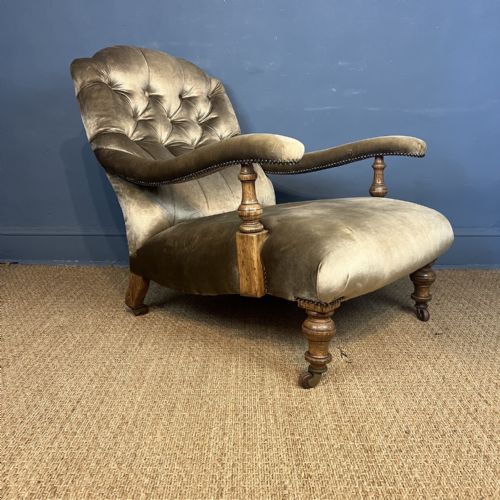
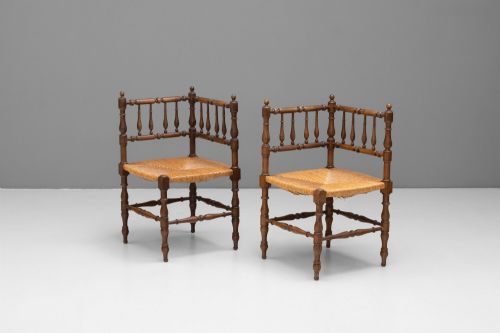
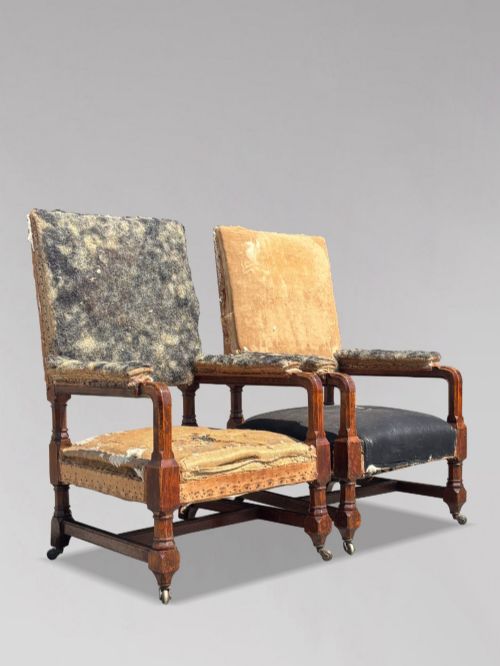
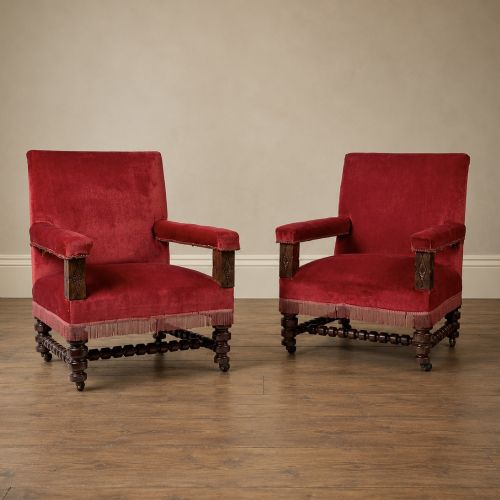
Upholstered versions integrated leather, fabric, or velvet fastened with brass tacks over stuffed pads, while wooden lambing variants relied entirely on panelled timber to block draughts. Turned components like bobbin or barley twist supports required a lathe, while vernacular stick backs depended on steam-bent wood and precise boring.
The listings here feature oak combined with elm, leather, brass, and velvet across vernacular and revival styles.
What varies in quality
Quality rests in the integrity of the timber, the purity of the surface patination, and the proportion of the frame. Heavy, thick oak panels and deeply dished elm seats demonstrate superior construction compared to lighter, replacement-heavy equivalents.
Robert Mouseman Thompson·Adolf Loos
The Oak Fireside Armchair Glossary
- Lambing chair
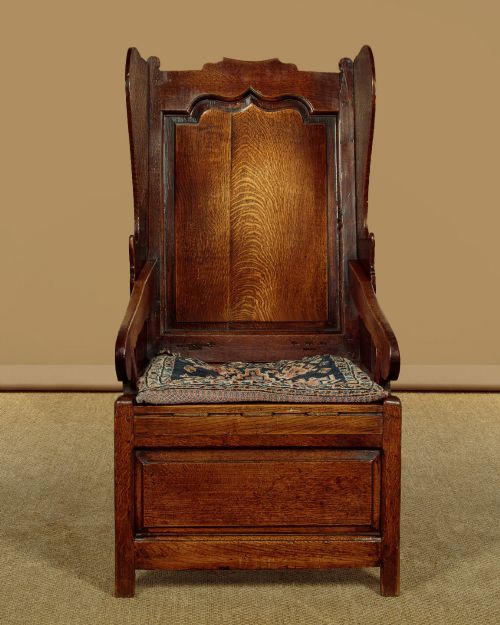
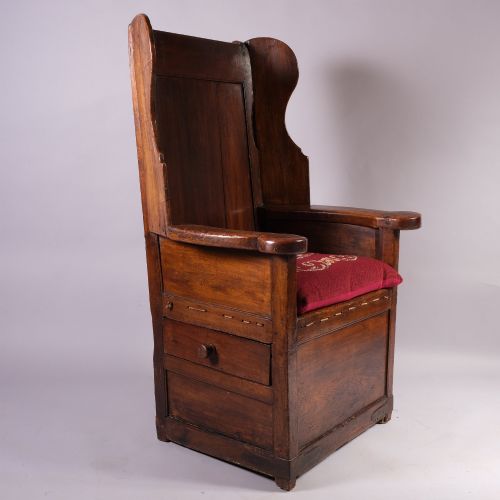
- A traditional vernacular armchair featuring solid wooden panel sides and a high back designed to shield the sitter from hearth draughts. These often include under-seat storage boxes.
- Windsor chair
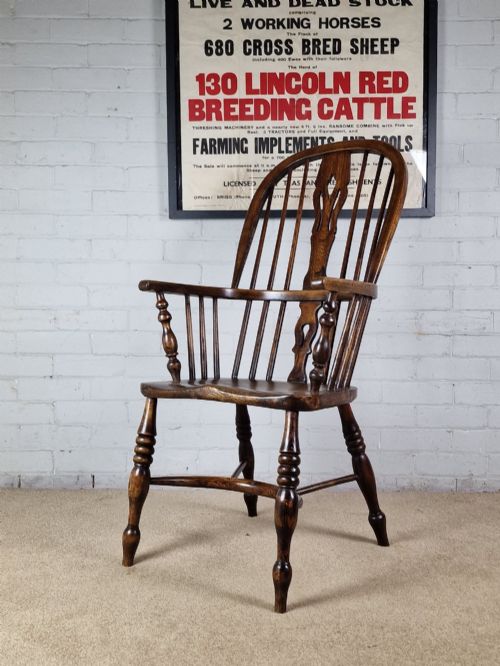
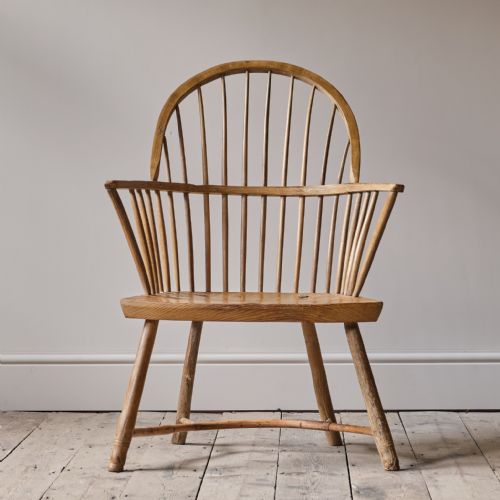
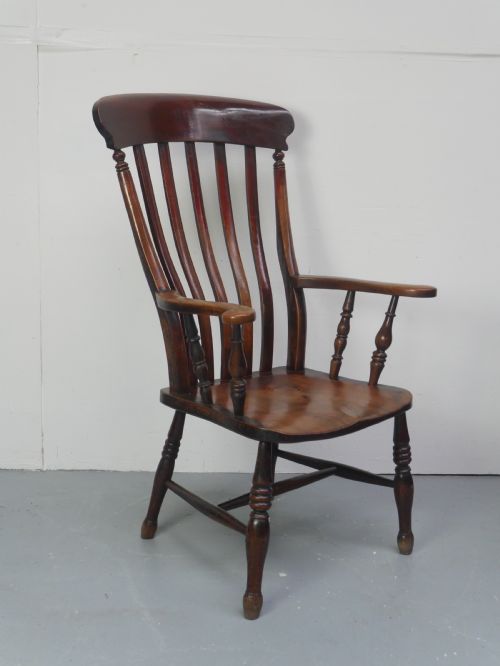
- A timber seat constructed with a solid elm saddle into which turned legs and spindle backs are wedged directly. Regional variations include hoop, stick, and slat back designs.
- Wainscot chair
- An early heavy wooden armchair constructed with panelled backs and joinery derived from cabinet-making techniques. They represent status and substantial carpentry from earlier centuries.
- Barley twist
- A type of decorative woodworking where the timber is turned into a helical spiral shape. This technique frequently appears on the legs and stretchers of revival and vernacular seating.
- Patina
- The deep, lustrous surface sheen developed on timber and leather over decades of handling, exposure to light, and polishing. It serves as a visual indicator of age and genuine use.
Oak Fireside Armchair: Frequently Asked Questions
What is a lambing chair used for?
A lambing chair was traditionally used by shepherds or farmers near the hearth, where the solid wooden wings blocked cold draughts from the open fire. The enclosed lower panels kept the occupant warm during long nights.
Over time, these seats migrated into domestic parlours and libraries, retaining their protective design and deep, comfortable proportions for reading or resting.
How do I tell a Windsor chair apart?
Windsor chairs are distinguished by their solid wooden saddle seats, into which the legs and back spindles are bored directly rather than held by a framed understructure. Regional varieties differ in their comb pieces, arm bows, and spindle counts.
Examining the turning style of the legs and the grain of the elm seat helps determine whether a Windsor chair originated in Lincolnshire, Wales, or other distinct woodworking centres.
Are these chairs comfortable for daily use?
These chairs are designed around sturdy vernacular ergonomics, offering upright support and deep wooden or upholstered seats suited for fireside relaxation. Many include padded leather or fabric cushions.
Because they originate from various centuries, seat heights and depths differ, so matching the chair dimensions to your living space ensures comfortable everyday seating.
How do I date an oak armchair?
Dating relies on observing construction methods, tool marks, timber shrinkage, and stylistic indicators such as Gothic revival tracery or Arts and Crafts simplicity. Pegged joints and hand-split oak boards usually suggest earlier rural craftsmanship.
Comparing the turning patterns on legs and stretchers against documented period examples helps narrow down whether a chair belongs to the eighteenth or nineteenth century.