



Vintage Pub Tankard
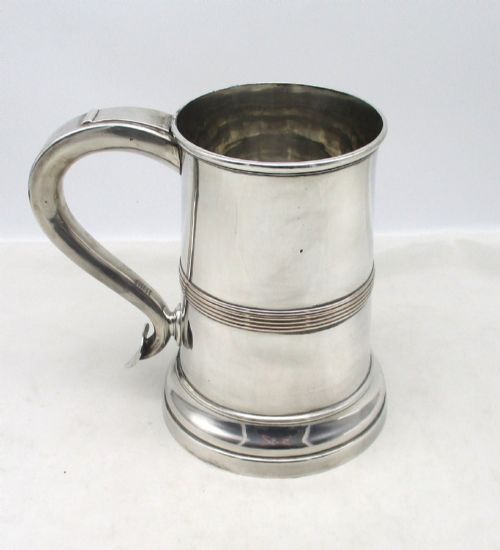
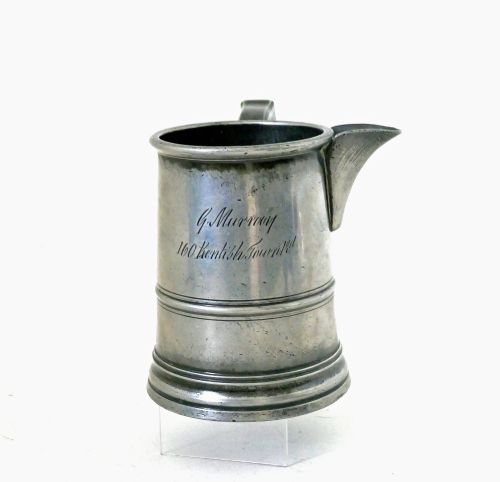
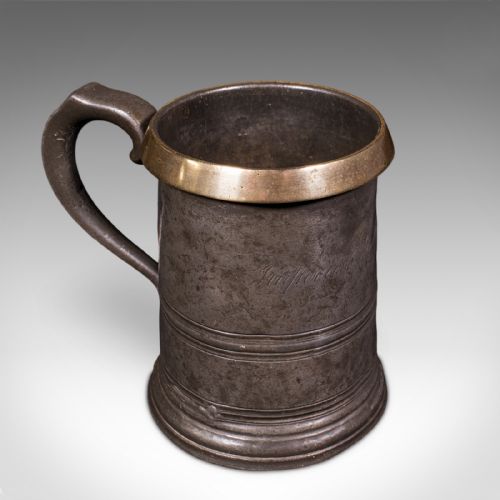
These vintage pub tankard pieces span pewter, copper, and silver, offering heavy tavern character for your home bar.
Vintage Pub Tankard
When you search for a vintage pub tankard, you are looking at utilitarian vessels used in public houses across the Georgian, Victorian, and nineteenth-century periods. These drinking vessels and measures were designed for heavy daily service in taverns and public houses, shaped to handle large volumes of ale and spirits.
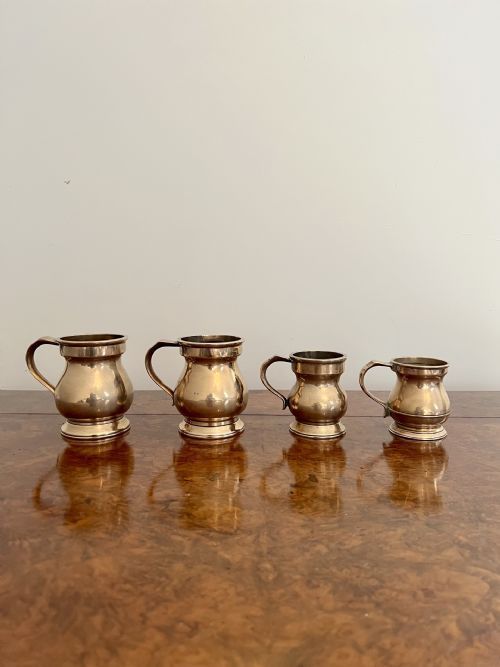
The pieces you encounter on this page range from quart jugs and spire flagons to bell-shaped tankards and graduated sets of copper measures. Most examples hail from the nineteenth century, with Victorian pieces dominating the selection alongside earlier Georgian forms.
Materials span traditional pewter, warm copper, brass, and Old Sheffield plate, reflecting the practical needs of publicans and brewers. Whether formed as a single public house tankard or assembled in matching sets, each item carries the marks of robust tavern use.
How they were made
Metalworking techniques for these tavern vessels relied heavily on casting and shaping metals such as pewter, copper, and brass. Pewter items were cast and often hand-finished, while copper measures were beaten and soldered to create rigid, liquid-tight containers.
Engraving was frequently utilised to apply inscriptions, capacity marks, and pub names directly onto the metal surface. Makers stamped touchmarks and verification ciphers into the pewter, recording capacity standards and official inspection stamps.
Capacity measures span quart jugs, half gallon spire flagons, and graduated sets marked with official verification ciphers.
What varies in quality
Quality in these tavern vessels depends on the thickness of the metal and the preservation of original form and surface texture. Heavier gauge pewter and substantial copper retain their structural integrity better through decades of handling and use.
Clear maker touchmarks, tavern inscriptions, and verification stamps elevate an example by providing a documented history of its origins. The crispness of cast details and the integrity of soldered joints distinguish working tavern gear from later decorative reproductions.
Frederic Sanders·Watts and Harton
The Vintage Pub Tankard Glossary
- Pewter
- A malleable metal alloy consisting primarily of tin, combined with copper, antimony, or lead, widely used for drinking vessels and tavern measures.
- Quart
- A traditional unit of liquid capacity equal to two pints, frequently stamped onto public house tankards.
- Flagons
- Large drinking vessels with handles and lids, often featuring tall spire or cylindrical profiles used for serving ale.
- Old Sheffield Plate
- A composite material made by fusing a thin layer of silver to a thicker copper base, popular for finer tavern serving pieces.
- Brewersiana
- Collectable items associated with the brewing and serving of beer, including public house tankards and measures.
Vintage Pub Tankard: Frequently Asked Questions
What is a public house tankard?
A public house tankard is a sturdy drinking vessel made of metal, designed for serving ale in commercial taverns and inns.
These pieces were built for durability and frequent use, featuring thick walls and comfortable handles for heavy service.
How do I identify a Victorian pewter measure?
Victorian pewter measures often feature official verification marks such as crown ciphers and capacity designations stamped into the metal.
Look for standard imperial measurements and maker touches that indicate commercial use in nineteenth-century public houses.
Were copper tankards used for drinking?
Copper tankards and measures were primarily utilised in pubs for measuring and transferring liquids rather than direct drinking.
Graduated sets allowed publicans to pour exact quantities of ale or spirits from larger casks into individual vessels.
How should I clean antique pewter?
Antique pewter requires gentle cleaning with mild soap and warm water to preserve its aged surface and historic patina.
Avoid aggressive metal polishes that remove original touchmarks and soften the characteristic dull grey finish of the alloy.