


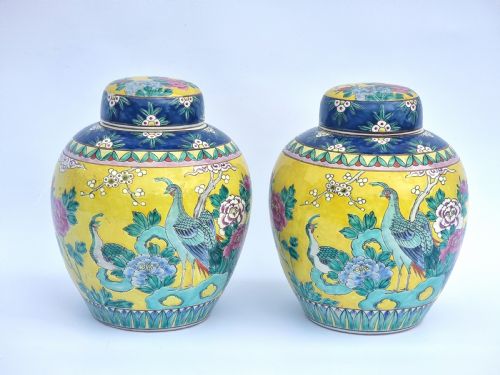

Vintage Porcelain Jars
These vintage porcelain jars range from nineteenth century apothecary vessels to striking art deco powder boxes, offering practical storage with distinct historical charm.
Vintage Porcelain Jars
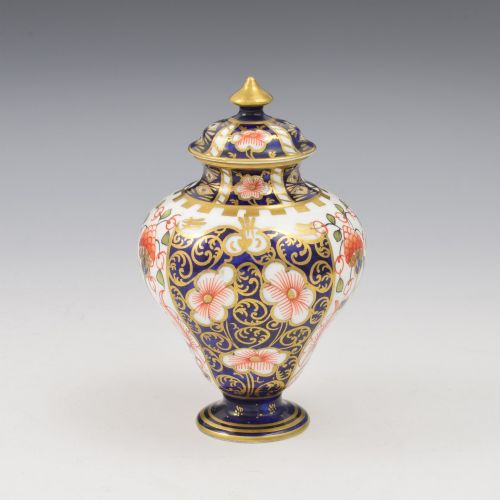
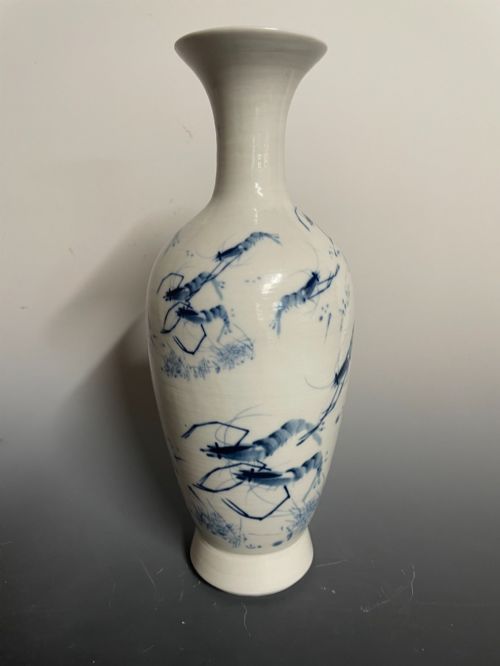
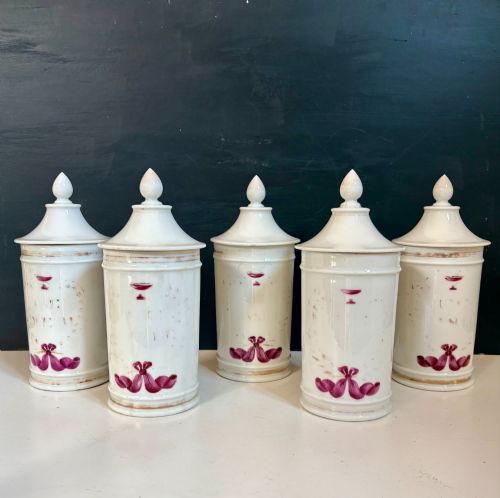
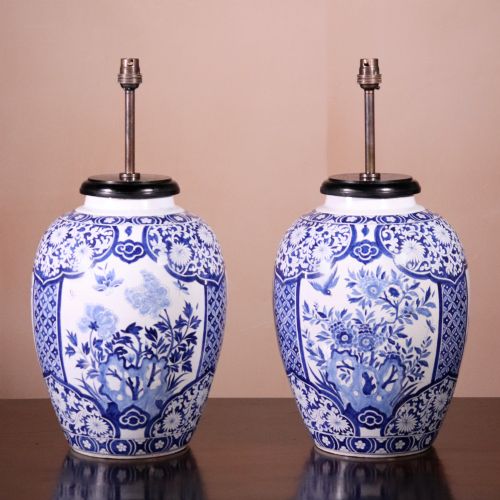
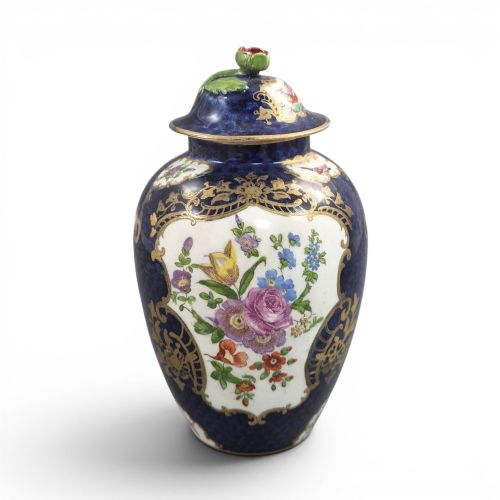
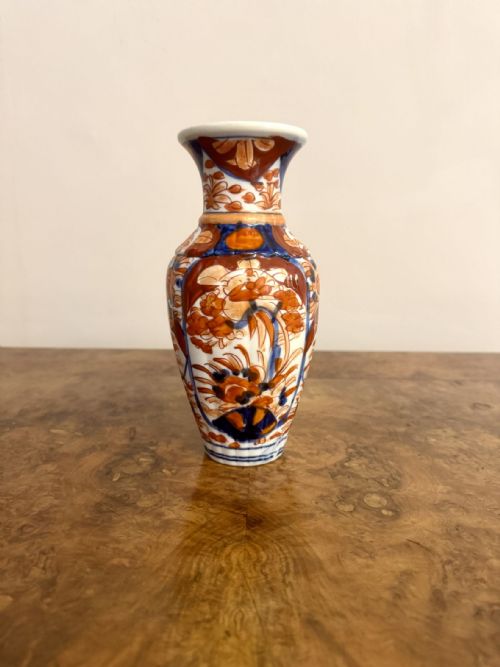
Vintage porcelain jars encompass a diverse selection of covered vessels, ginger jars, biscuit barrels, and apothecary containers originating from nineteenth century productions up to mid century creations. When exploring vintage porcelain jars, buyers frequently encounter pieces decorated with Japanese imari patterns, traditional Chinese blue and white motifs, and classic floral designs.
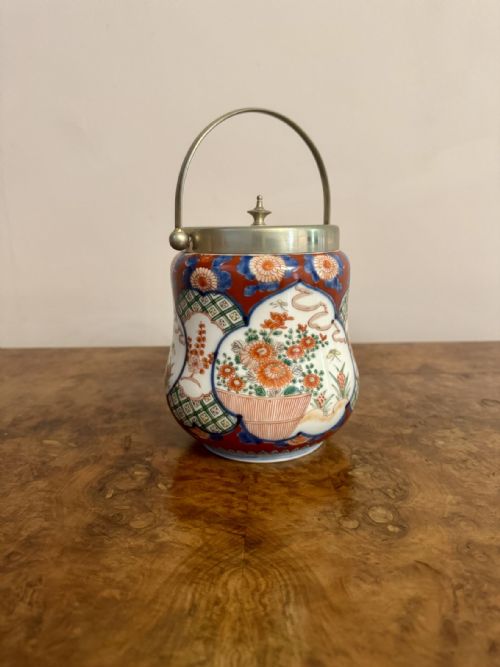
The functional forms span from lidded tea caddies and tobacco containers to dresser boxes and pot pourri urns. Many of these items incorporate fitted metal elements such as silver plate or brass mounts alongside ceramic bodies.
Materials and Construction
The manufacture of these pieces relies primarily on ceramic, earthenware, and fine porcelain bodies finished with coloured glazes and occasionally highlighted with gold leaf or enamel details. Artisans shaped these vessels using traditional throwing and moulding techniques before applying hand painted or transfer printed ornamentation.
Many lidded containers incorporate auxiliary components like silver plate hardware, brass mountings, and fitted covers to complete the functional design of the storage vessel.
Several powder boxes preserve the delicate charm of mid century dressing tables through tiny porcelain flapper figures perched atop their lids.
Assessing Craftsmanship
The distinction between standard commercial output and superior craftsmanship rests in the precision of the hand painting and the clarity of the underlying glaze. Pieces featuring intricate brushwork, such as detailed figurative scenes or delicate bird motifs, demonstrate a higher degree of artisan skill.
Furthermore, the integration of secondary materials like quality silver plate hardware or intricate brass fittings elevates the overall execution of the container.
Royal Crown Derby·Royal Worcester·Crown Devon·Carlton Ware·Meissen
The Vintage Porcelain Jars Glossary
- Biscuit barrel
- A covered ceramic container originally utilised for storing dry biscuits at the dining table. These pieces often feature swinging metal handles and decorative porcelain bodies.
- Ginger jar
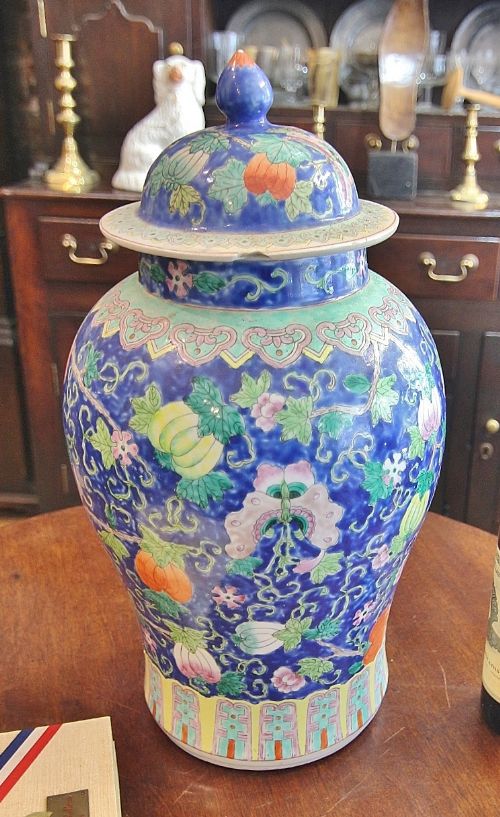
- A high shouldered storage vessel traditionally used for holding spices and preserves. These containers typically possess rounded bodies and matching domed covers.
- Imari
- A decorative style originating in Japan characterised by rich cobalt blue, iron red, and gold accents. This palette appeared frequently on export porcelain throughout the nineteenth century.
- Pot pourri
- A decorative lidded urn or vase perforated to release the scent of dried flowers placed inside. These vessels often exhibit elaborate hand painted botanical or bird motifs.
Vintage Porcelain Jars: Frequently Asked Questions
How were biscuit barrels used?
These lidded vessels sat upon dining tables during the Victorian and Edwardian eras to serve dry biscuits or small cakes to guests.
The fitted metal handles allowed hosts to pass the containers easily around the room during afternoon tea.
What is a ginger jar?
Originally designed in ancient China to store and transport spices, these round containers eventually became purely decorative household items.
The characteristic high shoulders and snug fitting covers protected the contents from moisture and pests.
How do I identify Imari porcelain?
Look for a distinct colour palette combining deep cobalt blue underglaze with iron red, green, and gold leaf overglaze details.
This decorative approach appeared widely on nineteenth century Japanese export wares and subsequent European imitations.
Are apothecary jars waterproof?
Most nineteenth century apothecary and storage containers feature glazed ceramic interiors intended for holding dry goods or liquids safely.
However, due to age and potential hairline fractures in the glaze, modern owners generally avoid storing actual food or liquids inside them.