


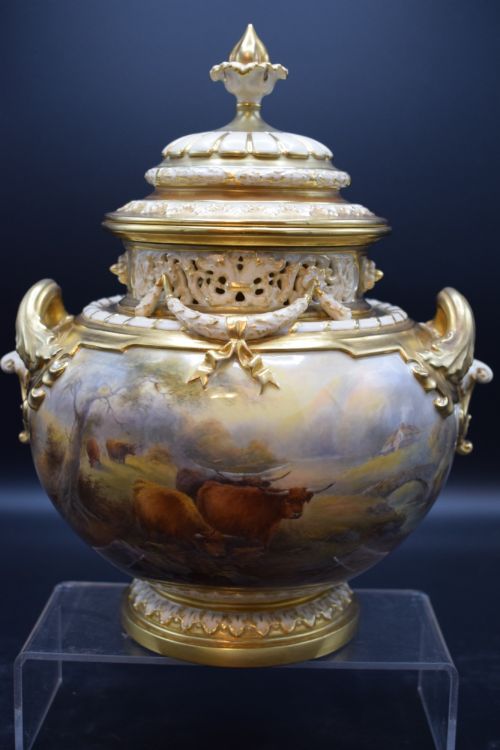
Highland Cattle Urns
Highland cattle urns are porcelain vessels painted with Scottish scenes, prized by collectors for their fine hand-painted detail.
Highland Cattle Urns
When you search for highland cattle urns, you encounter porcelain vases and decorative urns dating from the Edwardian period through the 1930s. The pieces you meet on this page are predominantly Royal Worcester vases and bow vases decorated with scenes of cattle in highland landscapes.
Forms range from smaller single vases to large urns with covers. The imagery on these porcelain bodies focuses squarely on pastoral Scottish scenes painted by specific artists.
Making highland cattle urns
These pieces utilise porcelain as a base material, painted with enamel colours to depict the cattle and scenery. Gilding and gold leaf are applied to accent the handles, rims, and borders of the vessels.
Techniques combine ceramic forming with fine brushwork executed by skilled painters. The application of gilt highlights frames the central pastoral artwork.
Highland Cattle Urns Retail Price Guide 2026
Typical asking prices for highland cattle urns among the pieces listed under this phrase on Sellingantiques today, from the lower quarter to the upper quarter. They describe what is for sale here now, not the wider market.
Every single cow painted on these porcelain urns appears utterly unfazed by the perpetual mist of the Scottish highlands.
Quality in highland cattle urns
The distinction between standard pieces and the finest examples rests upon the identity of the artist and the scale of the vessel. Works bearing signatures from recognised painters command greater attention from collectors.
The complexity of the form also shapes the work, moving from straightforward bow vases to large vases and covers with elaborate gilding.
Royal Worcester·Harry Stinton·John Stinton
The Highland Cattle Urns Glossary
- Porcelain
- A hard, white ceramic material fired at high temperatures. It serves as the smooth canvas for detailed enamel painting.
- Gilding
- The application of gold leaf or gold powder onto the ceramic surface. This technique adds metallic lustre to rims and handles.
- Enamel
- A decorative glass-based paint fused to the porcelain body through firing. It provides the permanent colour for the cattle landscapes.
- Bow vase
- A specific vessel shape characterised by a curved outline resembling an arch. These forms frequently appear in early twentieth-century porcelain production.
Highland Cattle Urns: Frequently Asked Questions
What are highland cattle urns?
These items are porcelain vases and decorative urns featuring hand-painted scenes of cattle in Scottish landscapes. They date mainly from the early twentieth century.
Most examples originate from the Royal Worcester factory and showcase the work of specialised landscape painters.
How were these urns used?
They served primarily as decorative table pieces and mantel ornaments in Edwardian homes. Their detailed artwork was meant to be admired up close.
Unlike utility ceramics, these vessels were ornamental focal points rather than functional containers.
How do I date these pieces?
Dating relies on factory marks stamped on the underside of the porcelain base, alongside stylistic clues. The active years of the painters also help narrow the timeframe.
The listings here span from 1900 through 1930, reflecting Edwardian and subsequent twentieth-century production.
How should I display them?
Place them in stable environments away from direct sunlight to protect the enamel colours and gilt highlights. Secure surfaces prevent accidental tipping of these porcelain vessels.
Allow enough surrounding space for the painted scenes and gilded details to be viewed clearly.