
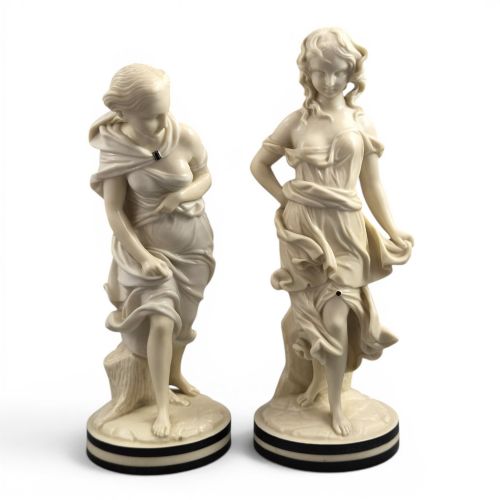
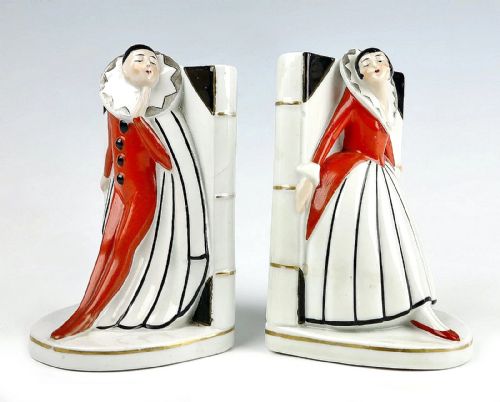


Vintage Porcelain Figurine Pair
These vintage porcelain figurine pair selections bring character and history directly to your mantelpiece through matched dual displays.
Vintage Porcelain Figurine Pair
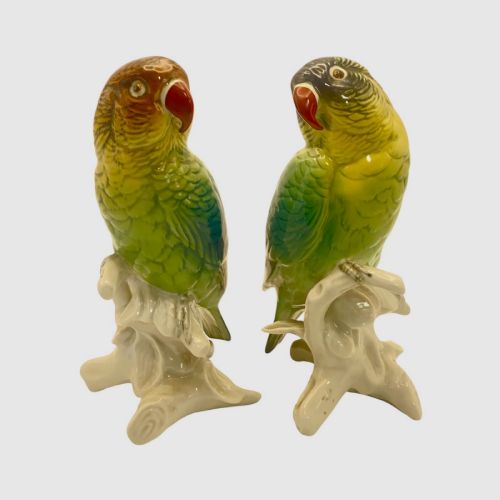
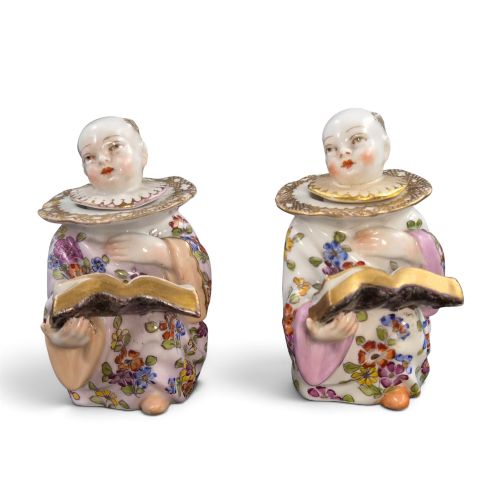
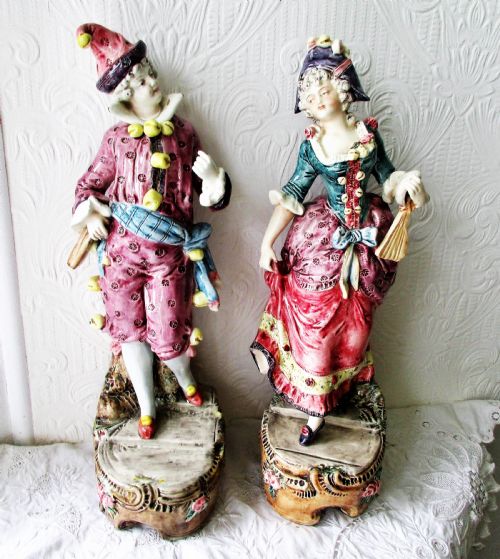
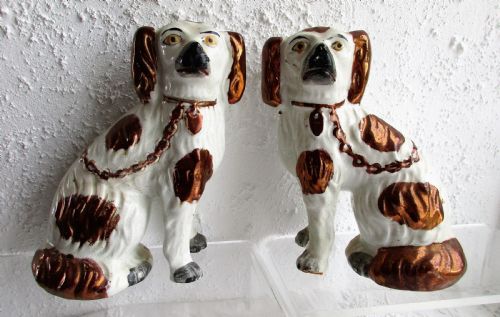
A vintage porcelain figurine pair comprises matched dual decorative objects shaped as human figures, animals, or birds, designed to be displayed together on mantels and tables. When searching for a vintage porcelain figurine pair, collectors encounter diverse forms spanning 19th Century Staffordshire pottery dogs, German Rococo revival figures, and Art Deco ceramic bookends.
The selections on this page originate predominantly from Victorian, Edwardian, and 1930s periods, incorporating British, French, and German workshop traditions. Buyers frequently find matched pairs of spaniels, greyhounds, musicians, harvesters, and market vendors modelled in glazed ceramic, earthenware, or bisque porcelain.
How they were made
Makers shaped these pieces using ceramic, earthenware, and hard-paste porcelain, frequently finishing surfaces with coloured enamel, glaze, or metallic gold leaf accents. Many nineteenth-century and early twentieth-century examples utilise unglazed bisque porcelain to capture fine facial expressions and delicate clothing details without surface reflection.
The manufacturing process combined slip casting or mould pressing with hand-modelled botanical elements like floral bocage bases. Artisans then applied hand-painted underglaze colours and overglaze enamel highlights before firing the works in high-temperature kilns.
What varies in quality
The sophistication of the glaze and the harmony between the two matched figures dictate the visual success of the pair. Finer pieces demonstrate careful attention to balanced proportions, clean gilding application, and detailed modelling on secondary elements like bases and clothing folds.
Karl Ens·Edmé Samson·Royal Worcester·James Hadley·Royal Dux Bohemia·Meissen·Richard Eckert·C. G. Schierholz·KPM·Alois Hampel·Mabel Lucie Attwell·Shelley·Ludwigsburg·Royal Copenhagen·Sitzendorf·Bow·Royal Capodimonte·T.J Jones
The Vintage Porcelain Figurine Pair Glossary
- Bisque porcelain
- Un-glazed white ceramic fired once to create a matte, porous finish resembling marble. This surface texture allows sculptors to highlight minute anatomical and textural details.
- Bocage
- A decorative background of clustered leaves and applied porcelain flowers surrounding a figure. This technique originated in eighteenth-century English and continental factories.
- Hard-paste porcelain
- A durable ceramic compound composed of kaolin and petuntse fired at extremely high temperatures. It produces a dense, bright white body impervious to liquids.
- Gilt
- A thin application of gold leaf or powdered gold paint applied to highlights, clothing trims, and bases. It adds reflective warmth to the finished decorative object.
Vintage Porcelain Figurine Pair: Frequently Asked Questions
How should I display my figures?
Place matched pairs symmetrically on mantelpieces, sideboards, or console tables to frame larger decorative items. Keeping them out of direct sunlight preserves the hand-painted enamel colours over time.
Ensure stable placement on flat surfaces away from high-traffic household areas. Grouping them with complementary ceramics enhances their visual impact in a room.
Were these figures meant for daily use?
Most figurines served purely decorative purposes within nineteenth-century and twentieth-century domestic interiors. Some specialised forms incorporated dual functions, such as inkwells, quill holders, or candlesticks.
Functional variations allowed Victorian households to combine ornamental display with practical desk or table accessories. These dual-purpose items combined artistic modelling with everyday utility.
How do I identify Victorian Staffordshire dogs?
Staffordshire pottery dogs typically feature seated spaniels or greyhounds finished with hand-painted copper lustre patches or simple black markings. They were produced in matched left and right orientations to sit facing each other on hearths.
Earlier nineteenth-century examples display heavier potting bodies and softer underglaze painting styles. Later Victorian versions often include gilt collars and more uniform moulding techniques.
What is the difference between bisque and glazed porcelain?
Bisque porcelain remains unglazed after its initial high-temperature firing, producing a matte finish with a texture similar to fine marble. This porous surface absorbs light and accentuates sculpted details like hair and lace.
Glazed porcelain receives a glassy coating before a secondary kiln firing, creating a smooth, shiny, and waterproof exterior. Glazing protects the underlying ceramic body and intensifies the brilliance of applied enamel colours.