




Vintage Porcelain Dogs
These vintage porcelain dogs bring character to a mantelpiece, offering the timeless appeal of Staffordshire pairs, German lamps and Chinese foo dogs.
Vintage Porcelain Dogs
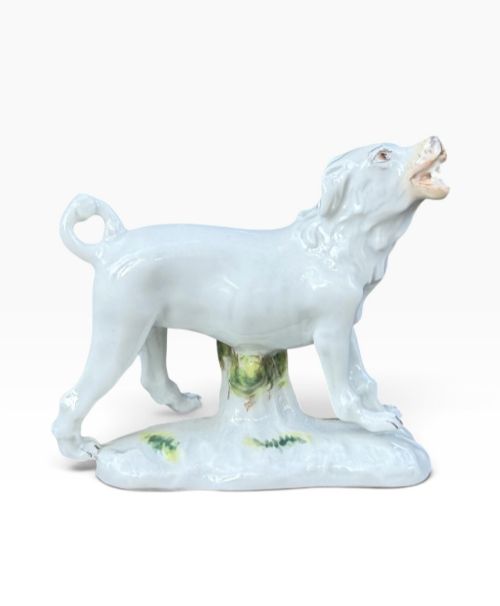
When searching for vintage porcelain dogs, collectors encounter a diverse range of figures, from Victorian Staffordshire spaniels and greyhounds to Art Deco groupings and Chinese foo dogs. These ceramic and porcelain pieces serve primarily as decorative objects, mantel ornaments, table lamps and trinket boxes.
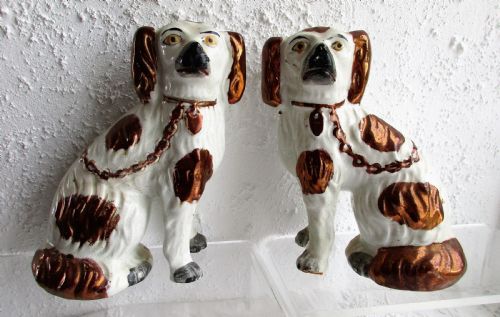
The versions most commonly met on this page are Staffordshire pottery spaniels and poodles, often modelled as pairs designed to sit at either side of a fireplace or window. Alongside these British mantel dogs appear continental figures from German factories and Asian ceramic sculptures spanning the Qing Dynasty and Japanese periods.
How they were made
The pieces on this page rely on ceramic bodies shaped into moulds or modelled by hand, then finished with glaze, enamel colours and occasionally gold leaf or gilt details. Earthenware and parian bodies also appear alongside true porcelain, creating varied surface textures from glossy white finishes to hand painted polychrome decoration.
Makers utilised high temperature kiln firings to set the glazes and enamels, resulting in the durable metallic sheens seen on copper lustre Staffordshire examples and the smooth translucency characteristic of blanc de chine figures.
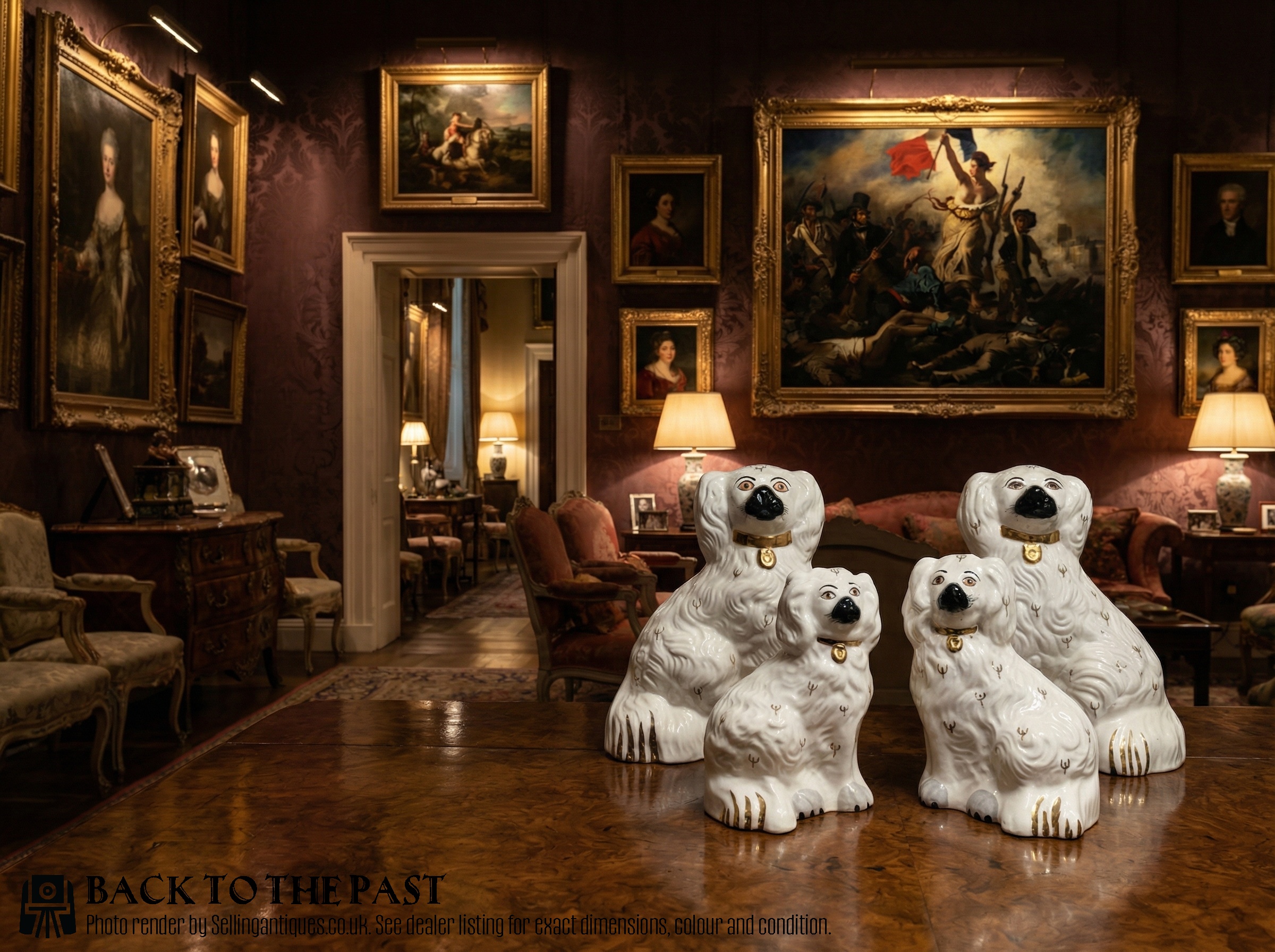
Several spaniels wear polite expressions while guarding the mantelpiece.
What varies in quality
The distinction between ordinary output and the finest examples rests upon the crispness of the modelling and the precision of the hand painting. Superior pieces display finely rendered facial expressions, clean separation of moulded details such as fur and paws, and carefully applied enamel pigments that remain vibrant.
Consistency in the glaze application and the balance of paired figures also separate standard decorative ware from more collectable works. Greater artistic ambition in the sculptural posture elevates figures like greyhounds, setters and hunting dogs beyond simple mantel ornaments.
Meissen·Derby·Wedgwood and Co Ltd·Royal Capodimonte Factory·Royal Dux·Beswick
The Vintage Porcelain Dogs Glossary
- Staffordshire pottery
- Earthenware figures produced in the English county of Staffordshire, widely known for seated spaniels and poodles meant for domestic hearths.
- Foo dog
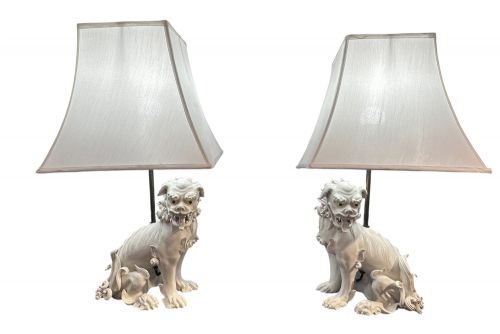
- Chinese guardian lion figures traditionally placed outside temples, rendered here in porcelain and enamel as decorative sculptures and lamp bases.
- Parian
- A fine white unglazed biscuit porcelain resembling marble, often utilised for nineteenth century sculptural groups and animal figures.
- Copper lustre
- A metallic glaze technique producing a reflective, copper coloured sheen across the surface of earthenware and pottery.
- Blanc de chine
- A Chinese white porcelain originating from Dehua, valued for its creamy glaze and smooth texture on figures and lion dogs.
Vintage Porcelain Dogs: Frequently Asked Questions
How do I display Staffordshire dogs?
Traditional pairs look best placed symmetrically on either side of a fireplace mantelpiece, bookshelf or sideboard. Their original purpose was to guard the hearth.
Ensure they sit at eye level where the hand painted details and glaze finishes can be appreciated properly in natural light.
What is a comforter spaniel?
Comforter spaniels refer to nineteenth century Staffordshire pottery dogs modelled after Queen Victoria's favourite pet, Dash. These figures typically sit upright with expressive painted eyes and gilt highlights.
Collectors often find them in matched pairs facing inward toward each other.
Are all these dogs porcelain?
The selection includes true porcelain alongside earthenware, ceramic and parian body types. Staffordshire pieces are typically pottery or earthenware rather than hard paste porcelain.
Each material yields a different weight and surface finish, from glossy enamels to matte unglazed biscuit ware.
How are foo dogs different?
Foo dogs are stylised Chinese guardian lions rather than domestic hound breeds. They feature distinct curly mannes, fierce expressions and often rest one paw upon a brocade ball.
These pieces appear as glazed porcelain sculptures, enameled figures or converted table lamps.