
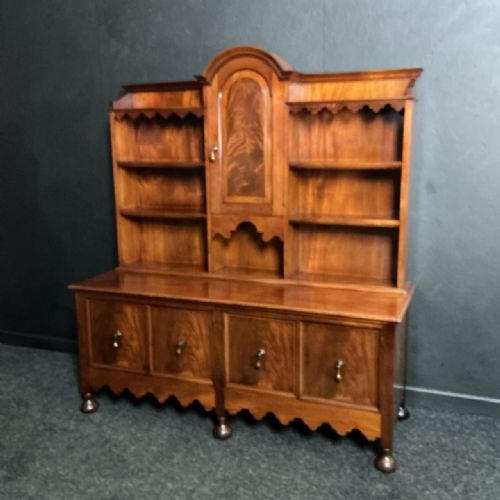
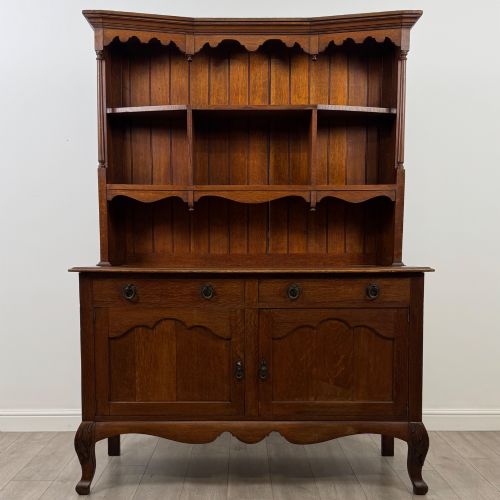
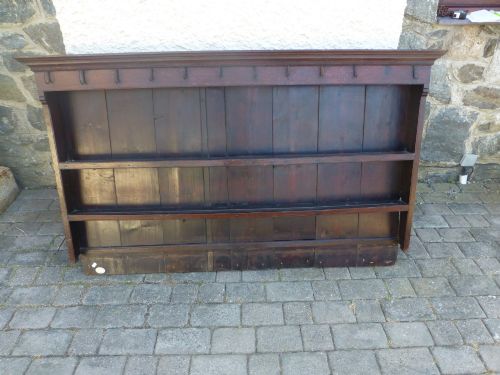
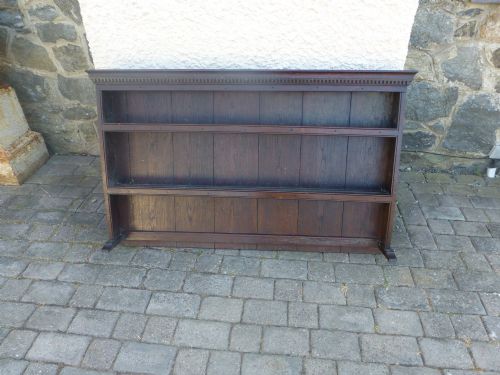
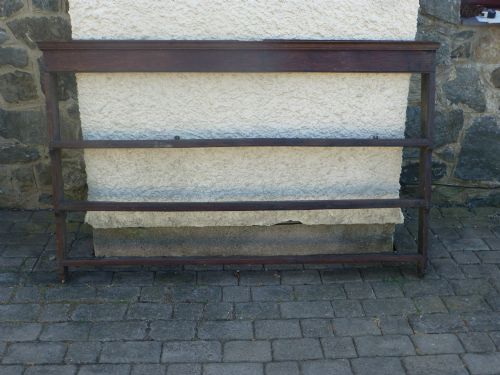
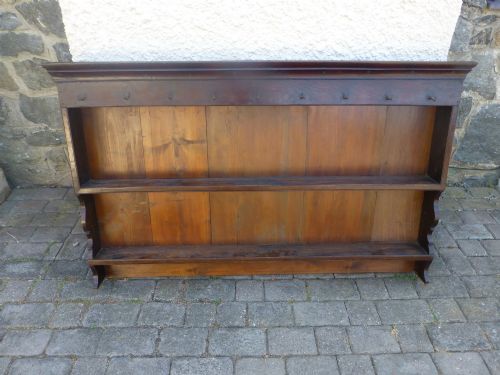
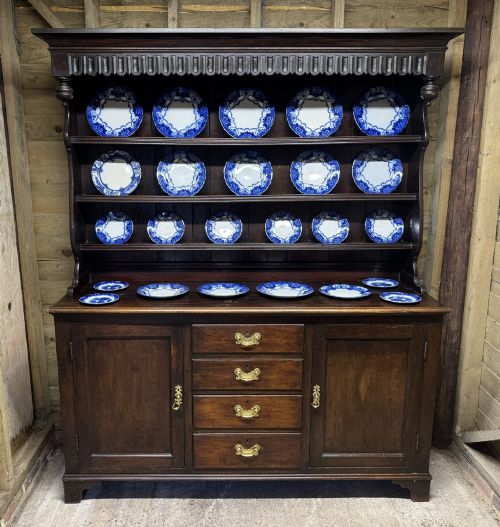

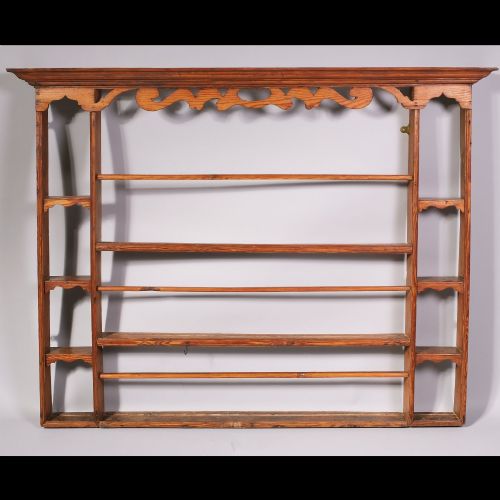
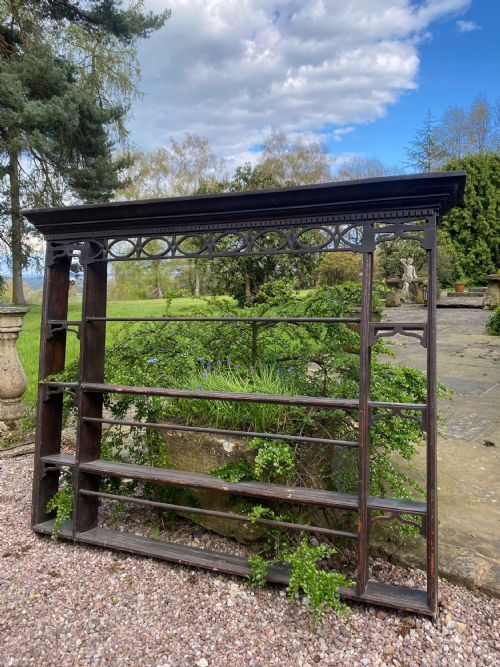
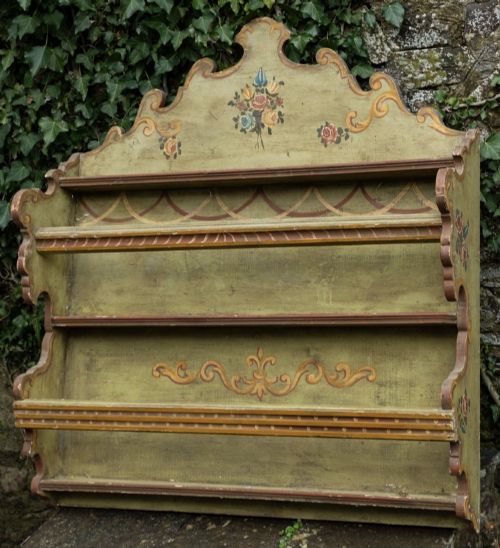
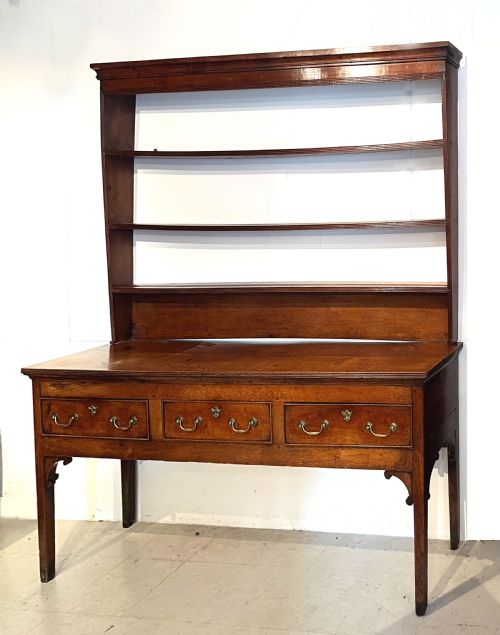


Vintage Plate Display Shelf
A vintage plate display shelf puts ceramics centre stage on a wall, offering traditional storage for everyday earthenware.
Vintage Plate Display Shelf
A vintage plate display shelf provides timber storage designed to hold plates upright against a wall. These pieces range from simple hanging wall racks to large two-part dressers complete with integrated display tiers.
The selections on this page draw from 17th-century craftsmanship through to Edwardian designs, spanning English, French, and country styles. Oak variants predominate, alongside mahogany, pine, and painted wood.
Buyers encounter dedicated plate racks alongside wall-mounted shelving and substantial Welsh dressers. Each configuration holds domestic plates securely within grooved wooden ledges.
Materials and construction methods
Carpenters constructed these shelves predominantly in solid oak, pine, and mahogany, utilising timber matched to regional domestic workshops. Painted finishes, marquetry details, and brass fixtures appear across various periods.
Joinery techniques involve pegged joints, carved mouldings, and fitted plate grooves designed to prevent ceramics from slipping. Cabinetmakers built these racks to bear the substantial weight of heavy earthenware and stoneware plates.
Listings feature periods from the 17th century to the Edwardian era, constructed in oak, mahogany, pine, and painted wood.
Distinctions in quality
Quality rests in the choice of timber and the crispness of any carved detailing, distinguishing vernacular country items from formal urban cabinetwork. Superior examples retain original backboards, uniform pegging, and well-proportioned cornices.
The integrity of the plate grooves and the structural stability of the hanging brackets determine daily utility. Pieces retaining an undisturbed surface patina demonstrate superior preservation over time.
The Vintage Plate Display Shelf Glossary
- Delft rack
- A wall-mounted wooden shelf featuring grooved ledges specifically intended for displaying ceramic plates. These units often form the upper section of a traditional dresser.
- Welsh dresser
- A large kitchen furniture piece comprising base cupboards combined with an open upper plate rack. This form evolved to store and display domestic tableware.
- Marquetry
- Decorative woodwork employing fitted wood veneers to create intricate patterns across flat surfaces. Craftsmen utilised this technique on select refined display racks.
- Overmantel
- A decorative mirror or shelving structure designed to mount directly above a fireplace. Some examples incorporate display ledges akin to plate racks.
Vintage Plate Display Shelf: Frequently Asked Questions
How do I hang a heavy wooden plate rack safely?
Secure the frame directly into wall studs or masonry using appropriate heavy-duty fixings. Distribute weight evenly across the mounting points to support the load of ceramic plates.
Ensure the backboards and hanging brackets remain structurally sound before loading ceramics onto the upper ledges.
Can these shelves support heavy ceramics?
Most antique plate racks utilise sturdy timbers like oak and mahogany designed to bear substantial earthenware weight. The integrated plate grooves prevent dishes from sliding forward during everyday use.
Check the depth of the display ledges to ensure thicker historical plates fit comfortably without tipping.
What is the difference between a plate rack and a dresser?
A plate rack functions as a standalone wall-mounted shelving unit designed solely for displaying ceramics. A dresser combines this upper rack structure with a base cabinet or sideboard.
Both forms serve the same practical purpose of keeping tableware accessible within domestic kitchens and dining rooms.
How do I clean and maintain antique wood display shelves?
Dust the timber regularly with a soft, dry cloth to prevent grime accumulation on carved mouldings and ledges. Apply traditional beeswax periodically to nourish the wood and preserve the surface patina.
Avoid using modern liquid silicone polishes that can degrade historical wood finishes over time.