
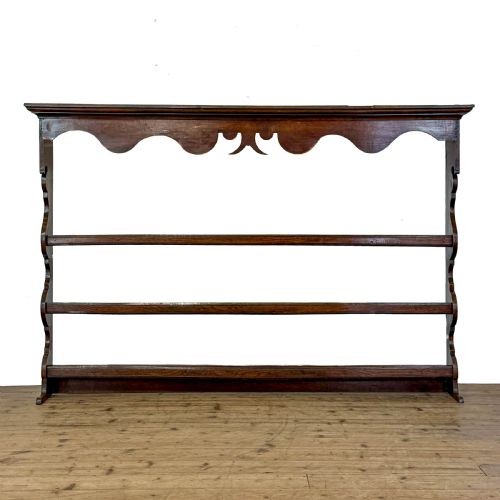


Brown Wooden Delft Rack
A brown wooden delft rack brings practical display space and honest character to any room, offering traditional charm for daily use.
Brown Wooden Delft Rack
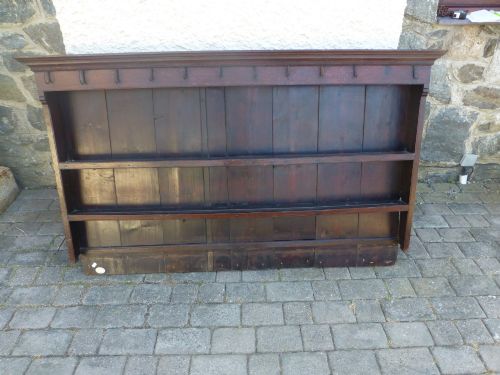
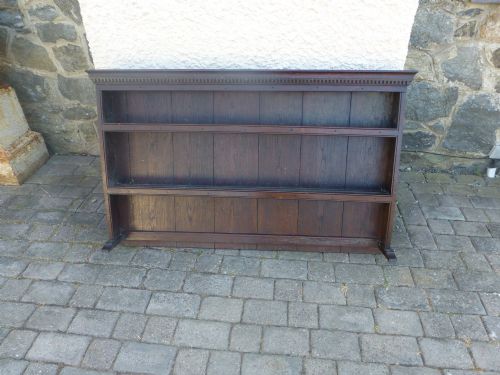
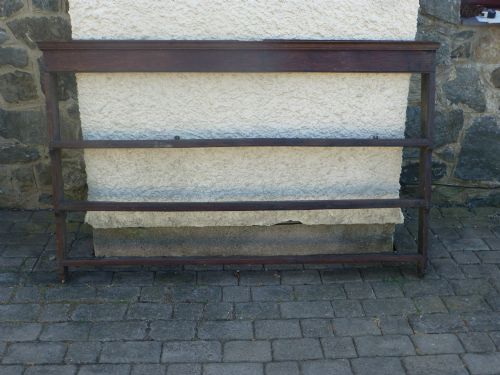
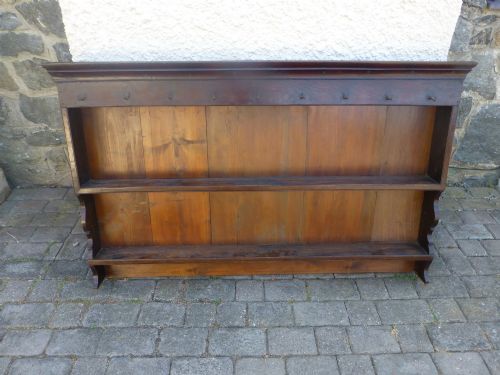
A brown wooden delft rack is a wall-mounted or dresser-top fixture designed to display plates and platters securely in an upright position. The examples found here take the form of plate racks, dresser racks, and wall shelves built during the eighteenth and nineteenth centuries.
The version most commonly met on this page is the oak dresser plate rack originating from the Georgian period. These pieces reflect English country and Dutch traditional styles, often incorporating hanging arrangements alongside open shelving.
Makers constructed these sturdy items primarily to organise tableware while keeping it within easy reach in domestic kitchens and dining spaces. Their straightforward timber construction provides both utility and a distinct historic presence.
How they were made
Craftsmen built these racks using solid timbers such as oak, pine, walnut, and fruitwood, selecting native woods suited to sturdy domestic joinery. Some pieces incorporate iron fixings for structural support and hanging.
Workshops applied decorative techniques like marquetry inlay and architectural details, including Corinthian columns on specific Georgian examples. The construction relies on traditional carpentry methods designed to bear the weight of heavy ceramic plates.
Listings feature oak, pine, walnut, and fruitwood across the eighteenth and nineteenth centuries, spanning Georgian and English country styles.
What varies in quality
The standard of a brown wooden delft rack depends heavily on the choice of timber and the crispness of any applied architectural detailing. Pieces featuring refined elements like inlay or carved columns demonstrate a higher level of workshop ambition than plain utility items.
Proportion and structural integrity also separate fine examples from simpler provincial work. Racks that retain their original hanging points and balanced shelving proportions offer a more satisfying presence.
The Brown Wooden Delft Rack Glossary
- Delft rack
- A shelving unit specifically designed for displaying ceramic plates and platters upright. These fixtures hang on walls or sit atop wooden dressers.
- Marquetry
- Decorative veneer work formed by fitting pieces of contrasting wood into a surface to create patterns. This technique appears on selected nineteenth-century examples.
- Fruitwood
- Dense timber gathered from fruit-bearing trees, utilised by cabinetmakers for cabinetry and smaller wooden furnishings. It provides a warm tone and smooth finish.
- Corinthian columns
- Classical architectural columns featuring ornate carved capitals decorated with acanthus leaves. They appear as decorative supports on sophisticated eighteenth-century country furniture.
Brown Wooden Delft Rack: Frequently Asked Questions
How were these plate racks used?
Households utilised these racks to store and exhibit ceramic plates, platters, and bowls safely within the kitchen or dining room. The stepped or grooved shelves kept dishes from sliding forward.
Beyond simple storage, they allowed families to display their best delftware and earthenware as a feature of the room's interior.
How do I date a wooden delft rack?
Dating relies on examining the timber species, construction methods, and stylistic details such as mouldings or column supports. Eighteenth-century pieces often display pegged oak joinery and simpler country proportions.
Later nineteenth-century examples might incorporate decorative marquetry inlay or different secondary woods like pine alongside the primary oak.
How do I hang a heavy antique rack?
Hanging a heavy wooden rack requires locating secure wall studs or using appropriate heavy-duty fixings matched to the weight of the timber. Because these shelves were built to hold dense ceramic plates, the wall mounting must be entirely secure.
Professional installation is often recommended to support the substantial combined weight of the oak frame and any displayed collection.