
Vintage Plant Art
Vintage plant art brings together botanical watercolours and handcrafted stands, offering a direct link to the interior aesthetics of the Edwardian and Arts and Crafts periods.
Vintage Plant Art
Vintage plant art encompasses botanical watercolours and works on paper alongside the structural stands, tables, and planters designed to display greenery within a home. These items date from the nineteenth century through the Art Deco era, capturing a period when horticulture and interior design intersected closely.
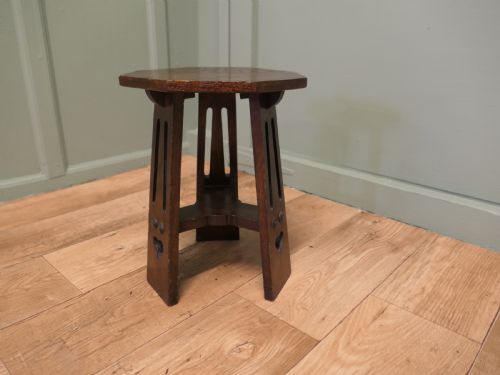
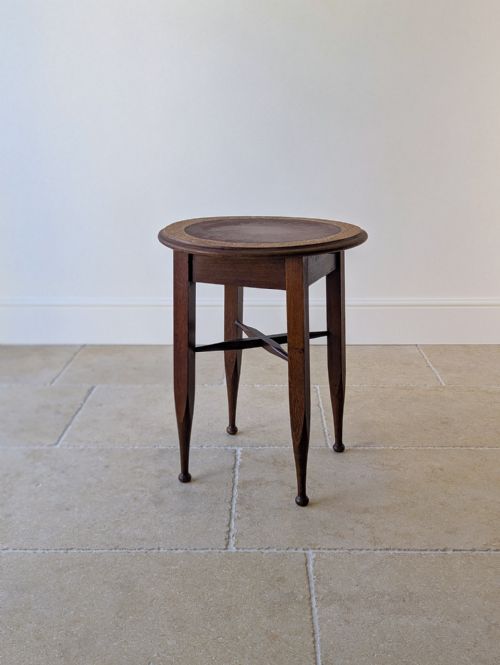
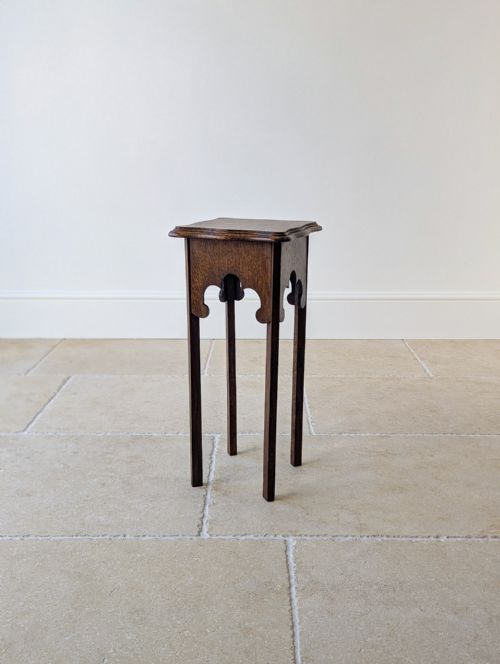
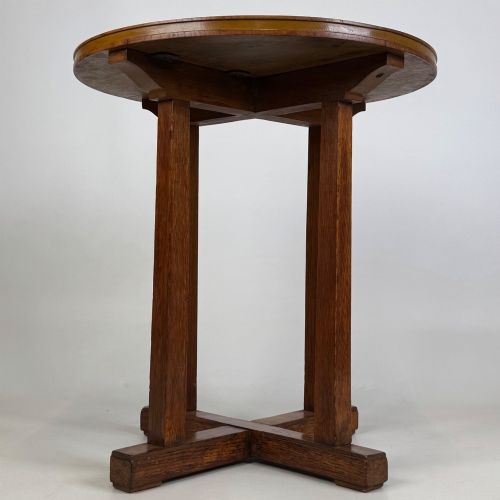
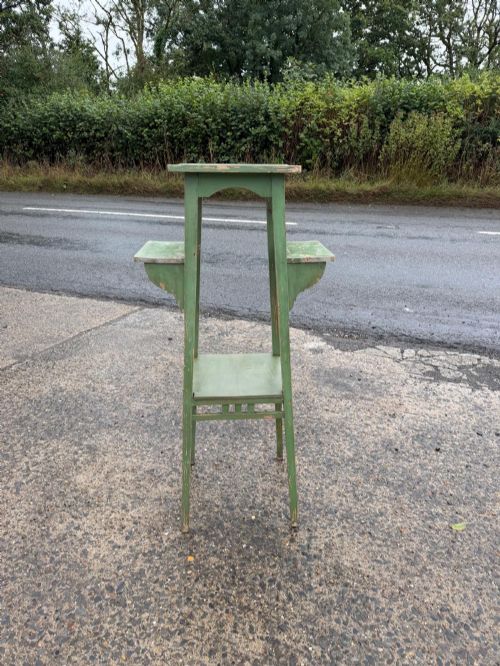
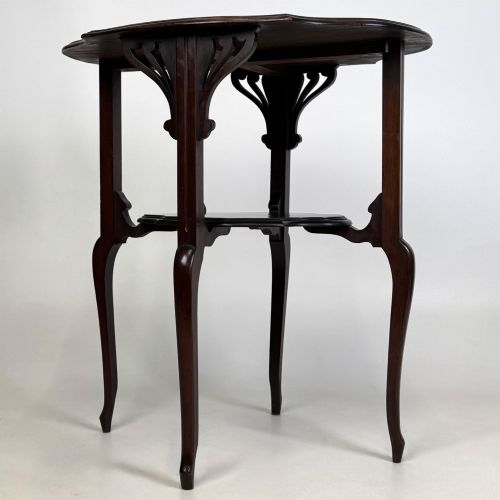
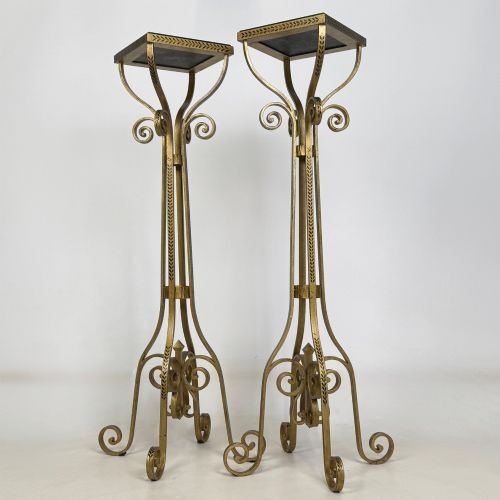
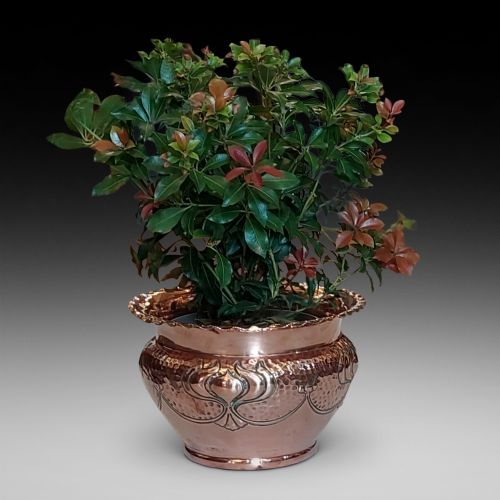
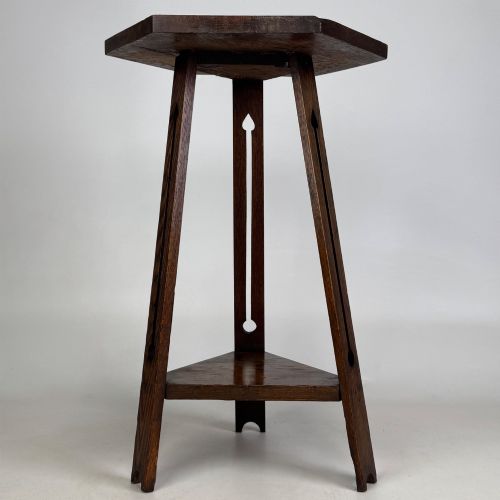
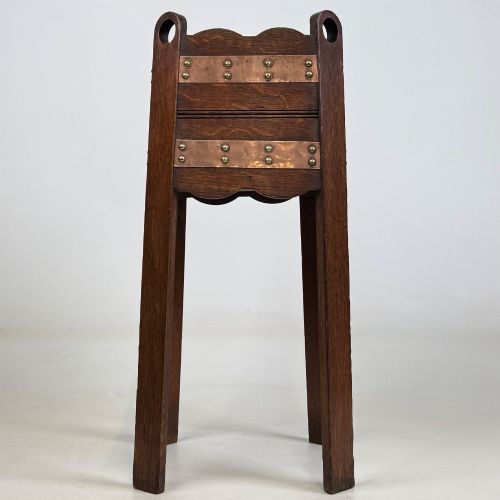
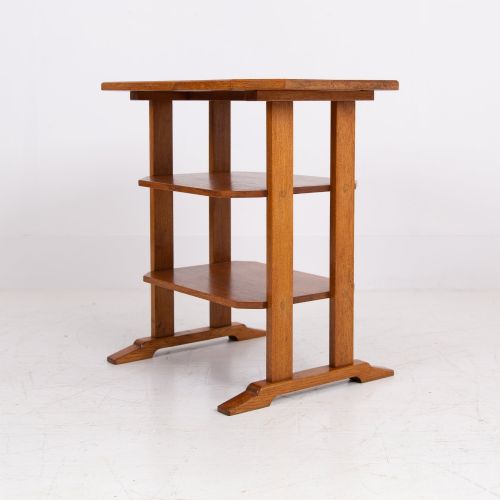
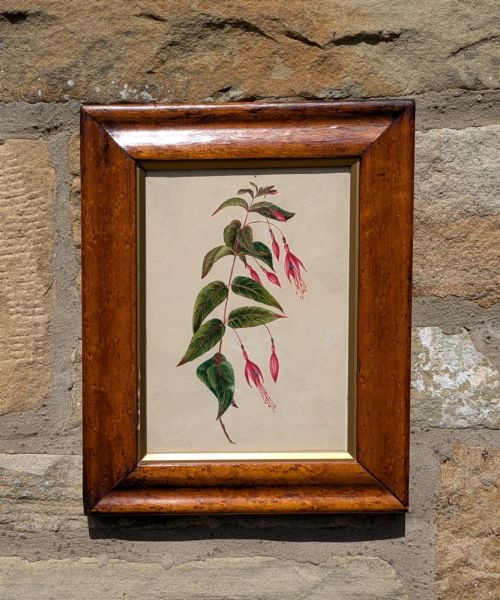
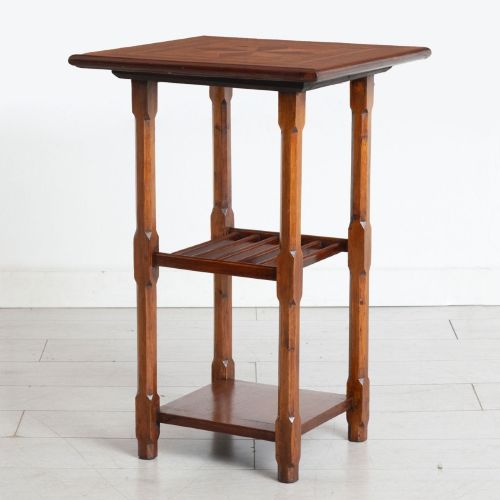
Buyers searching for vintage plant art will most frequently encounter oak plant stands, occasional tables, and copper or brass jardinieres. Pieces bearing specific botanical watercolours or needlework depictions of flora sit alongside utilitarian vessels intended to house potted specimens.
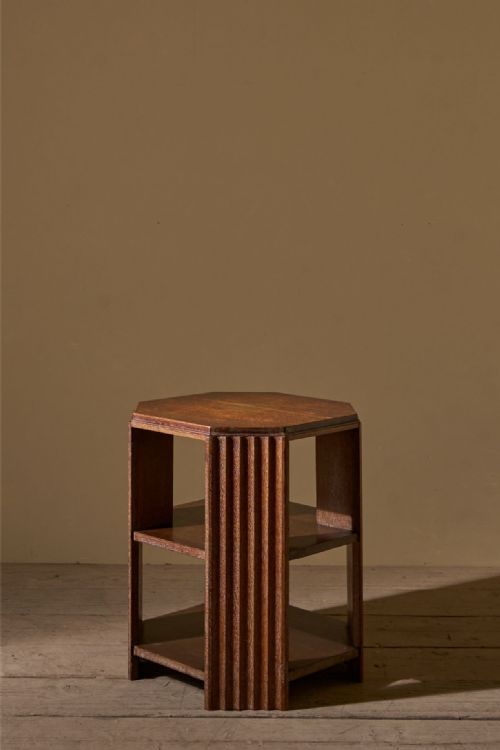
Origins span distinct stylistic movements such as Arts and Crafts, Art Nouveau, and Aesthetic Movement, with many items originating from British workshops and schools of design. Forms range from simple octagonal tables and tiered stands to heavy metal vessels and framed botanical studies.
Materials and construction
Oak, mahogany, walnut, and beech form the primary wooden structures, often shaped through chip carving, joinery, and the distinct ideals of the Arts and Crafts movement. Metal elements utilise hammered copper, brass, and cast iron, frequently displaying patinated surfaces and riveted construction.
Works on paper employ watercolour, gouache, and pencil to render botanical subjects on paper or card, sometimes framed behind glass. Secondary materials include marble tops, ceramic tile insets, and painted finishes applied to wood and plaster.
Assessing quality
Quality rests upon the integrity of the material and the skill of the maker, distinguishing mass-produced items from pieces executed by notable workshops or named designers. Hand-beaten metalwork, precise chip carving, and thoughtful timber selection elevate a piece above standard domestic joinery.
In botanical art and needlework, the fineness of the draughtsmanship and the preservation of the pigments dictate the calibre of the work. The harmony between a botanical vessel and its supporting stand, or the clarity of a watercolour study, determines the overall merit of the object.
Shapland and Petter·Liberty and Co·Archibald Knox
The Vintage Plant Art Glossary
- Jardiniere
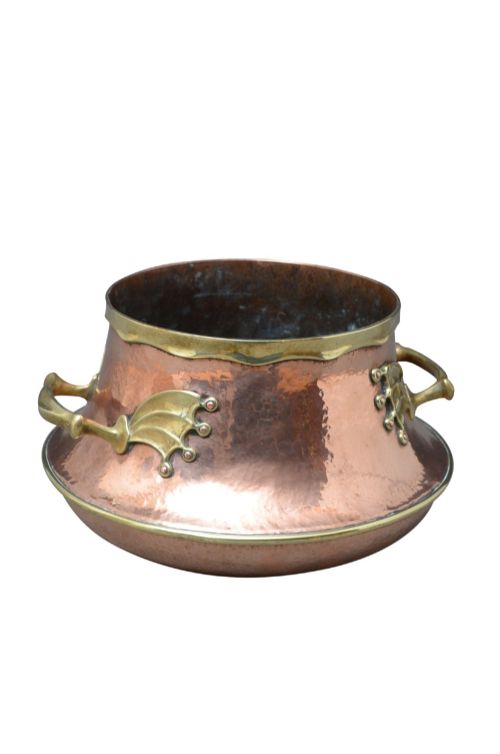
- A large decorative pot or receptacle for plants or flowers. These vessels are frequently constructed from hammered copper or brass.
- Arts and Crafts
- A design movement advocating traditional craftsmanship and simple forms. Objects from this tradition often utilise solid oak and exposed construction methods.
- Botanical watercolour
- A detailed painting depicting plant life with scientific accuracy and artistic skill. Such studies date from the nineteenth century and early twentieth century.
- Occasional table
- A small, versatile table designed for specific, intermittent use within a room. Common forms include octagonal and two-tier variants.
- Chip carving
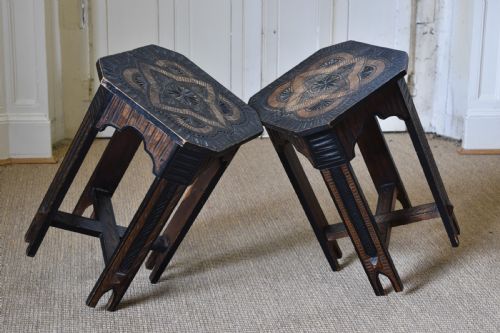
- A style of carving where small chips are removed from a flat wooden surface to create geometric patterns. This technique appears frequently on nineteenth-century and Edwardian small furniture.
Vintage Plant Art: Frequently Asked Questions
What is vintage plant art?
Vintage plant art encompasses historical botanical watercolours, framed plant studies, and the decorative stands or jardinieres used to display greenery.
These pieces reflect the design priorities of late nineteenth-century and early twentieth-century interiors, bridging fine art and horticulture.
How were plant stands used?
Plant stands and jardinieres functioned as domestic display furniture designed to elevate potted ferns and flowering plants within living spaces.
They allowed homeowners to incorporate living flora into interior decoration, often matching the surrounding oak or mahogany furniture.
How do I date an oak plant stand?
Dating relies on stylistic indicators such as structural joinery, the presence of Arts and Crafts or Art Nouveau motifs, and timber choice.
Pieces often bear characteristics of specific design movements active between the late Victorian era and the nineteen-thirties.
Where were botanical watercolours displayed?
Botanical studies and watercolour paintings were typically framed and hung in parlours, studies, or libraries to demonstrate an interest in natural history.
They served both decorative and educational purposes in homes of the period.