


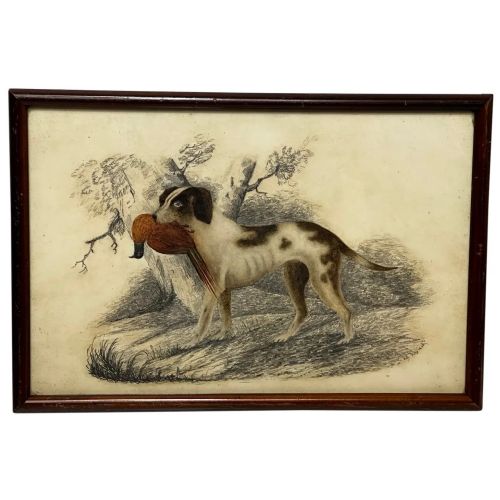


Early Victorian Picture
Early victorian picture works bring domestic history directly into a room, capturing the quiet faces, ships and sporting scenes of the nineteenth century.
Early Victorian Picture
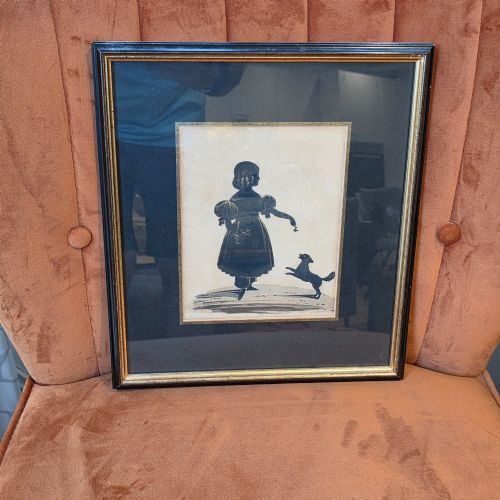
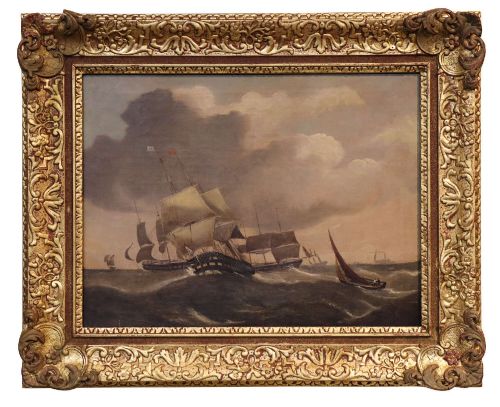
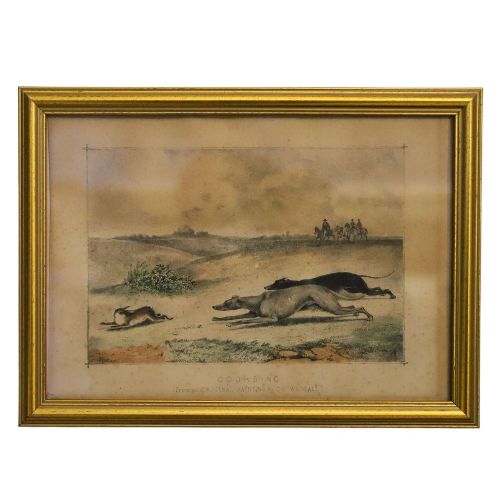
An early victorian picture captures the visual culture of the nineteenth century through a diverse range of media including portraits, maritime scenes and sporting subjects. Buyers searching for an early victorian picture encounter framed works that span delicate cut paper silhouettes, detailed oil paintings on canvas and hand-coloured lithographs.
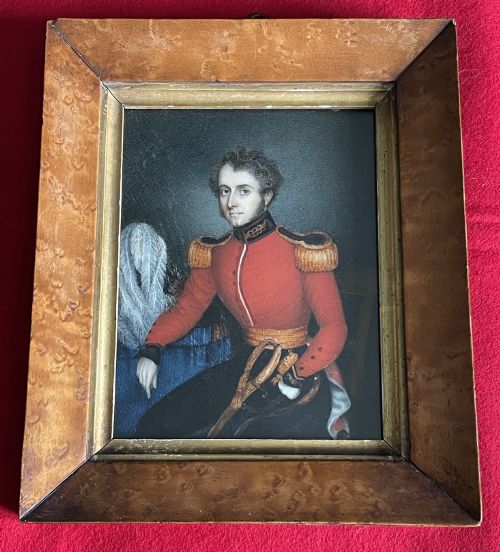
The selections on this page feature framed artwork, portrait miniatures, shadow boxes and decorative prints created during the mid-nineteenth century and associated periods. These pieces reflect the varied aesthetic tastes of the era, moving from precise military and civilian portraits to lively depictions of field sports and coastal views.
Most examples found here combine traditional framing materials with period techniques, presenting authentic glimpses into historical domestic spaces. Whether looking at a watercolour portrait of a young lady or an architectural oil painting, the focus remains on tangible records of nineteenth-century life.
How they were made
Makers utilised canvas, paper and glass as primary supports, applying oil paint, watercolours and ink to build up rich imagery. Giltwood and bird's eye maple provided the framework for display, enclosing delicate compositions of tinsel, decoupage and needlepoint.
Gold leaf accented frames and specific pictorial elements, adding light and depth to maritime landscapes and portrait miniatures. Cut paper silhouettes combined precise scissor work with subtle watercolour washes to define human and animal forms.
Nineteenth-century makers sometimes turned humble seashells into elaborate marine dioramas behind glass, bringing the entire ocean floor into the parlour.
What varies in quality
The distinction between standard examples and exceptional pieces rests upon the surety of the brushwork and the precision of the medium. Finer works display meticulous detail in facial expressions, rigging on ships or feather patterns in sporting scenes, whereas simpler items rely on more generic execution.
Original framing enhances the integrity of an early victorian picture, particularly when matching giltwood or bird's eye maple surrounds are preserved. The harmony between the artwork and its period housing determines the overall coherence of the piece.
William James Hubard·C. H. Weigall·Lewis J Wood·H. P. Parker·Wiliam Ousey Lindley
The Early Victorian Picture Glossary
- Silhouette
- A solid shape of a subject, usually a profile, filled in with a dark colour or cut from paper. These profiles gained immense popularity during the early nineteenth century as affordable likenesses.
- Lithograph
- A print produced from a flat stone or metal plate treated to repel ink everywhere except where desired. This technique allowed for the mass reproduction of artistic works and sporting scenes.
- Diorama
- A three-dimensional scene built up within a box or enclosure, often utilising shellwork or mixed media. Such pieces created depth and perspective behind glass.
- Decoupage
- The art of decorating a surface by applying cut-out paper details and coating them with varnish. Victorian makers used this method to build elaborate theatrical and decorative prints.
Early Victorian Picture: Frequently Asked Questions
What defines an early victorian picture?
An early victorian picture encompasses artwork produced during the mid-nineteenth century, reflecting the domestic and artistic tastes of the period.
These pieces include oil paintings, watercolours, silhouettes and lithographs housed in original frames.
How were these pictures displayed?
Victorian households hung these framed artworks and shadow boxes in parlours and studies to showcase family likenesses or favourite sports.
Many featured giltwood or bird's eye maple frames designed to complement the interior decor of the home.
Are needlepoint pictures common?
Needlepoint pictures form part of the broader category of nineteenth-century textile and thread art preserved from the era.
These hand-stitched compositions often depicted domestic scenes, animals or landscapes.
How do I identify a portrait miniature?
Portrait miniatures present small-scale likenesses of individuals, often painted on card or ivory and set into compact frames.
They require close inspection to appreciate the fine brushwork and intimate detail characteristic of nineteenth-century personal mementos.