
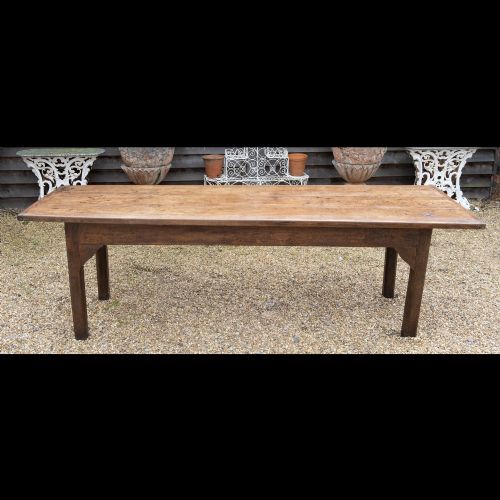
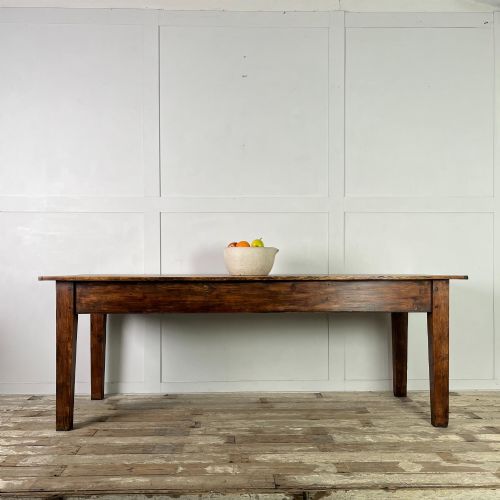
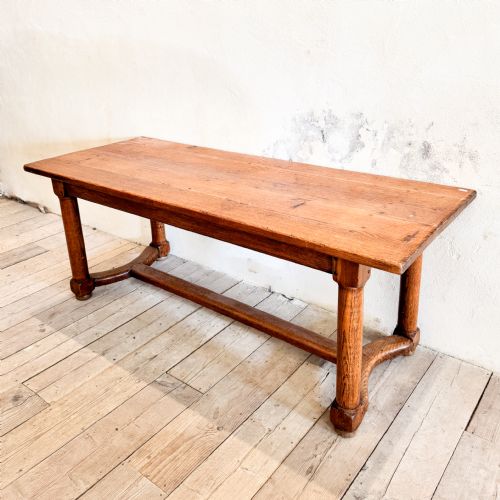
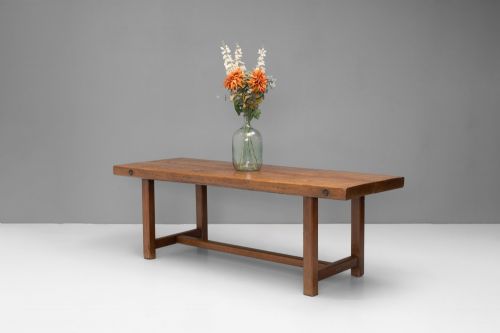
Vintage Plank Top Table
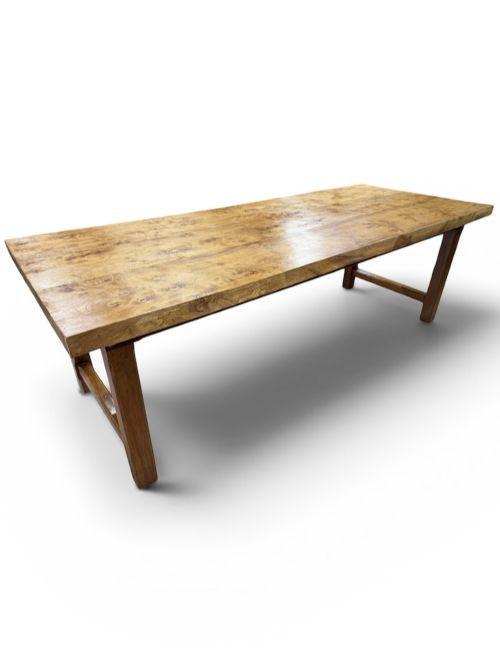
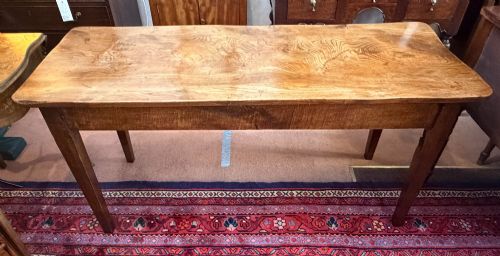
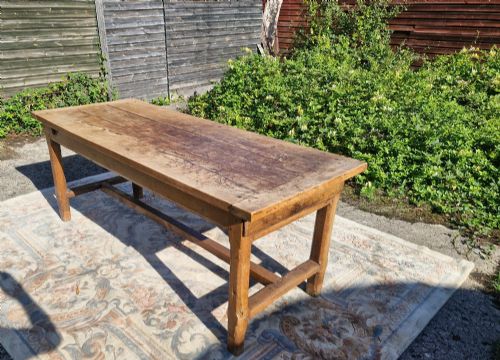
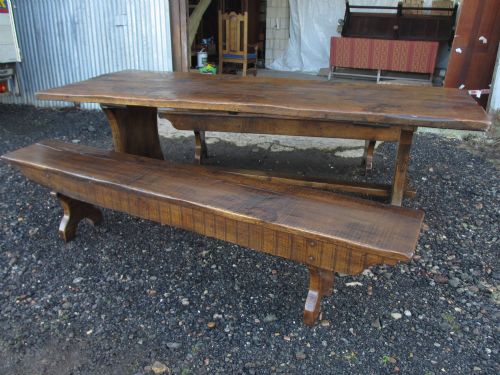
A vintage plank top table brings solid wood and honest joinery into daily use, offering a sturdy surface shaped by decades of practical living.
Vintage Plank Top Table
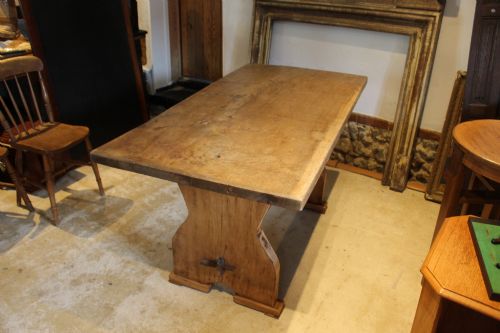
When you search for a vintage plank top table, you find heavy utilitarian boards joined to support shared meals and domestic work. The pieces listed now span from the eighteenth century through the Edwardian period, drawing on regional vernacular traditions.
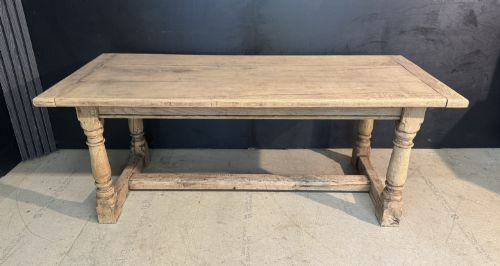
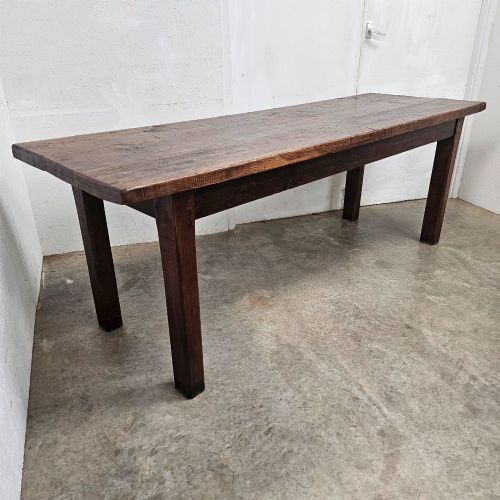
You are most likely to meet a nineteenth century farmhouse or refectory form built for a kitchen or dining room. These surfaces arrive in oak, pine, elm, chestnut, and fruitwood, often showing the marks of past labour across the timber.
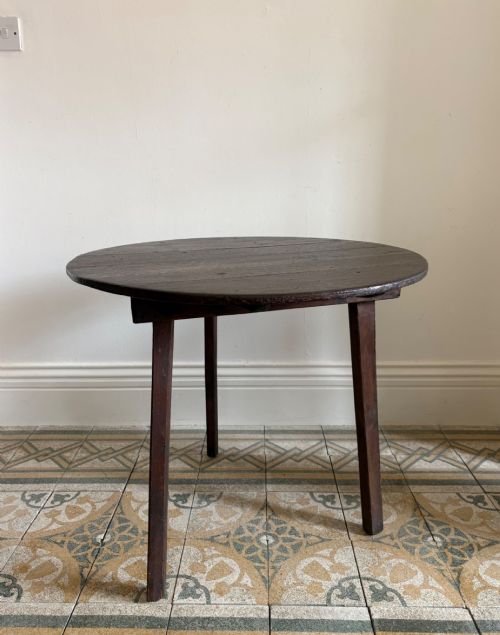
Makers produced these designs for heavy use in farmhouses, taverns, and large kitchens, resulting in substantial dining tables, smaller coffee tables, and occasional side pieces. The enduring appeal lies in the visible grain and the honest construction of joined planks.
How they were made
Joiners selected sturdy native hardwoods and softwoods like oak, pine, and elm, cutting thick boards to form stable table tops. These planks were often joined using cleats or breadboard ends to manage natural wood movement over time.
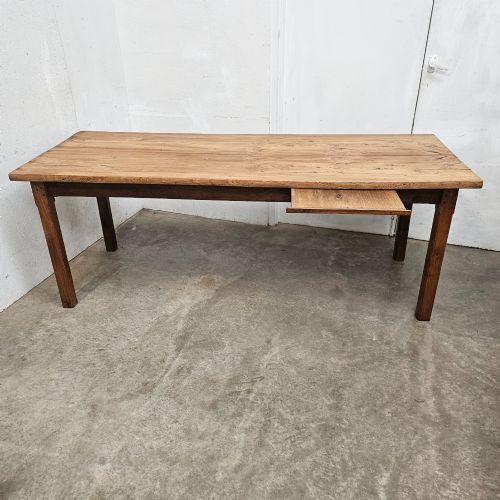
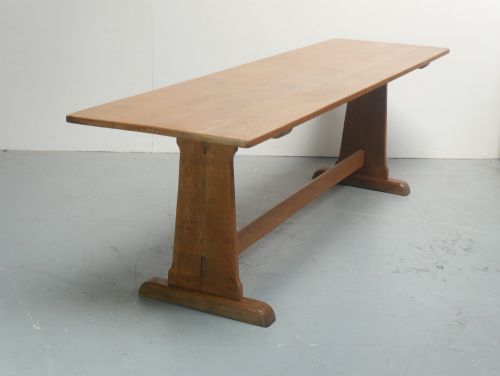
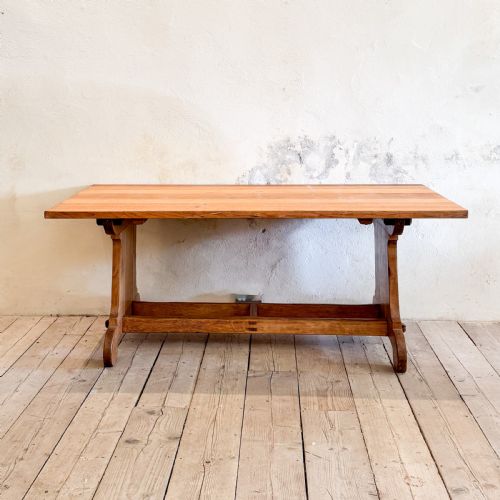
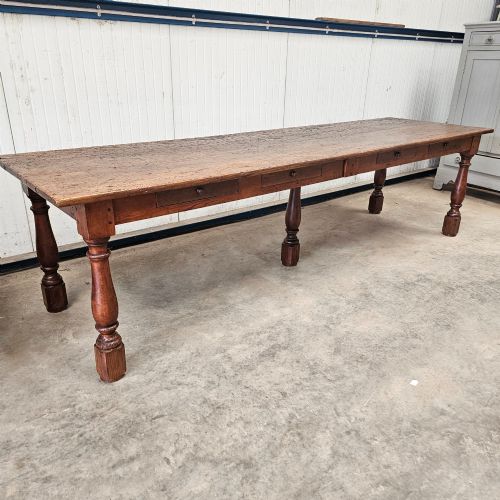
Frames combined sturdy timber legs with stretcher bases, trestle ends, or occasional iron bracing to ensure rigid support beneath heavy loads. Carpenters sometimes integrated drawers into the pine or fruitwood aprons for practical storage.
Surfaces were left plain or treated with simple finishes that allowed the natural grain of chestnut, cherry, and oak to show through. Over decades, daily cleaning and friction burnished the wood to a tactile finish.
What varies in quality
The distinction between ordinary and exceptional examples rests on the selection of timber and the integrity of the original construction. Heavy oak and chestnut boards demonstrate greater structural endurance than lighter secondary woods.
Proportion and scale dictate the standing of a piece, particularly where long refectory formats or multi-board tops maintain balance without excessive sag. Original bases, whether trestle ends or turned legs, preserve the historical character of the table.
The Vintage Plank Top Table Glossary
- Plank top
- A table surface constructed from wide boards joined side by side rather than a single sheet of timber. This method was essential for creating wide dining surfaces before modern industrial milling.
- Refectory table
- A long, narrow dining table traditionally used in communal dining halls and later adopted for domestic kitchens. These forms typically feature strong stretcher rails between the legs for added stability.
- Cleat
- A transverse piece of wood fixed across the ends of parallel planks to prevent warping. This technique accommodates the natural expansion and contraction of solid timber.
- Trestle
- A support structure consisting of a horizontal beam joined to two vertical feet. This design allows maximum legroom along the length of the table.
- Apron
- The framing timber fixed beneath the table top that connects the legs and provides lateral strength. It frequently houses utilitarian drawers in farmhouse variants.
Vintage Plank Top Table: Frequently Asked Questions
How do I clean a vintage wood table?
Wipe surfaces down using a damp cloth without harsh chemical detergents. Dry the timber thoroughly immediately afterwards to protect the grain.
Apply natural beeswax periodically to nourish dry wood and maintain a gentle lustre. Avoid placing hot dishes directly onto the bare planks to prevent marking.
Are these tables suitable for daily dining?
Solid timber construction makes these pieces exceptionally durable for family meals and heavy kitchen tasks. The thick boards absorb daily wear while retaining their structural integrity.
Use protective mats under wet glasses and plates to preserve the historic finish. Regular use simply adds to the established patina of the wood.
How do I date an antique table?
Examine the underside and joints for tool marks left by hand saws and adzes. Hand-cut joinery and timber shrinkage patterns indicate earlier eighteenth and nineteenth century origins.
Compare the leg turnings and stretcher arrangements against known period styles like Georgian or Victorian country. Secondary woods used in drawer construction also help narrow down the manufacturing era.
What is a two board top?
A two board top consists of just two wide planks joined down the centre to form the entire surface. This construction requires exceptionally mature trees yielding wide timber.
Such tops are valued for their clean appearance and the visual impact of the matching grain patterns. They indicate higher grade material selection in vernacular furniture.