

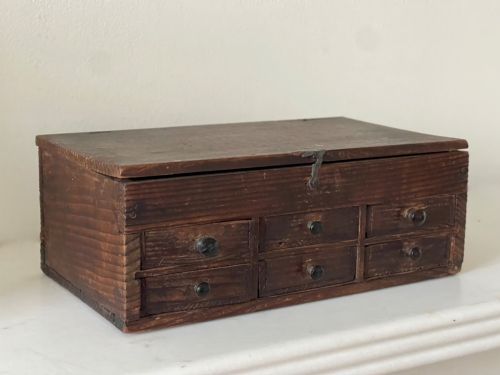
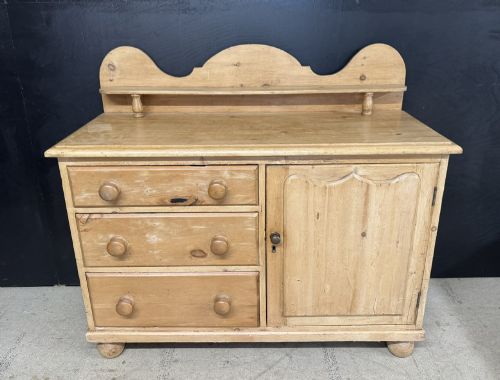
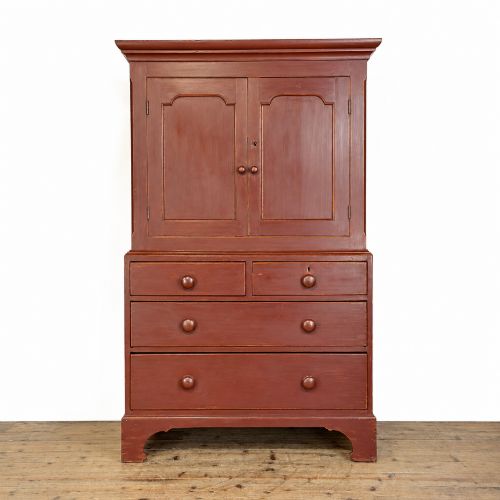
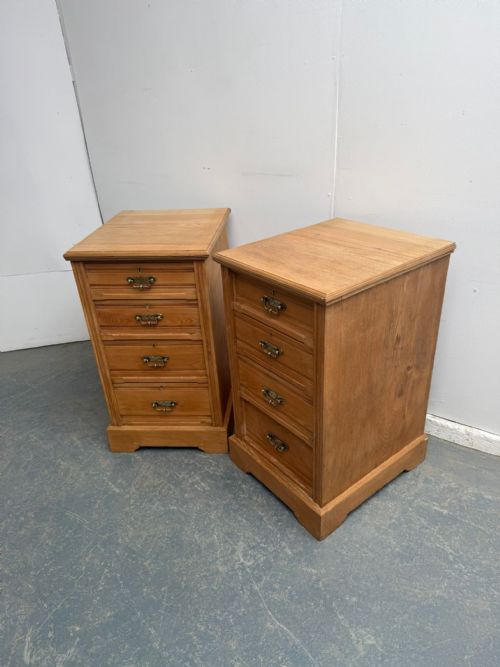
Vintage Pine Drawers Cabinet
These vintage pine drawers cabinet pieces offer practical storage with honest character, shaped by utilitarian workshop and domestic origins.
Vintage Pine Drawers Cabinet
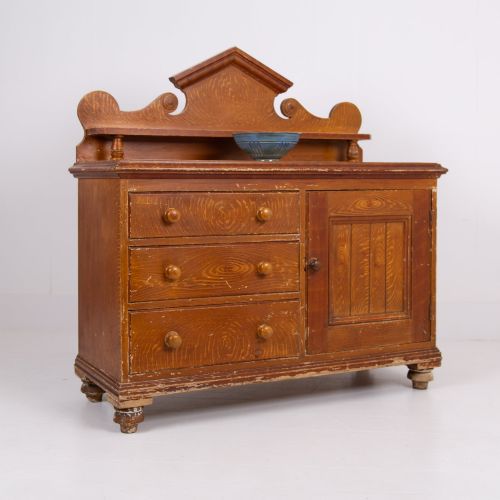
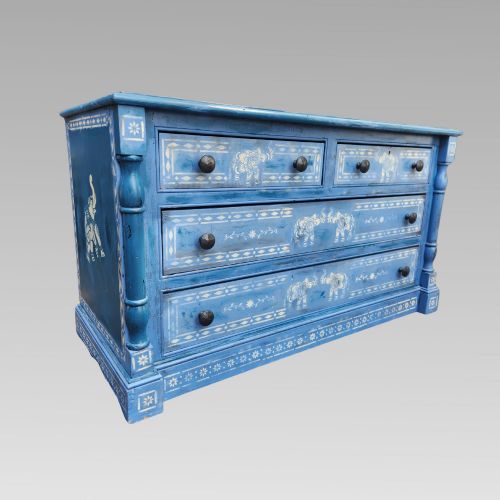
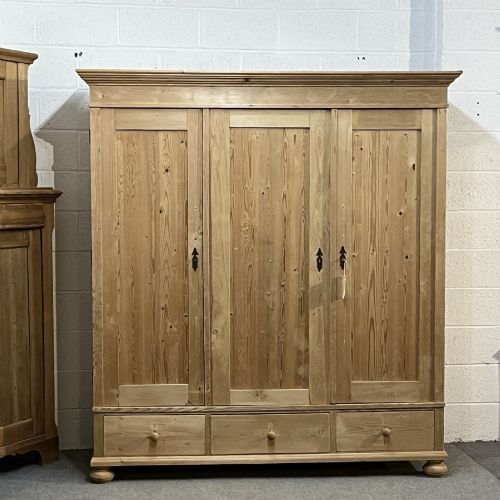
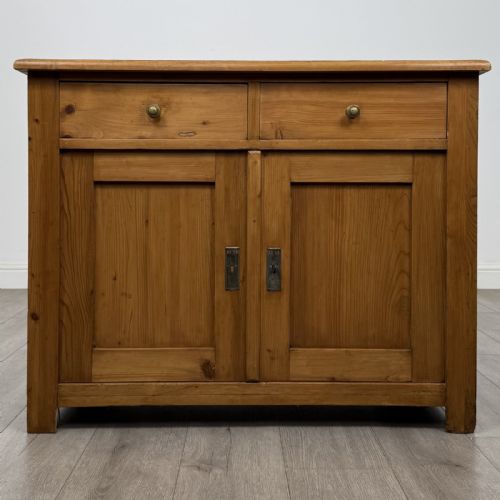
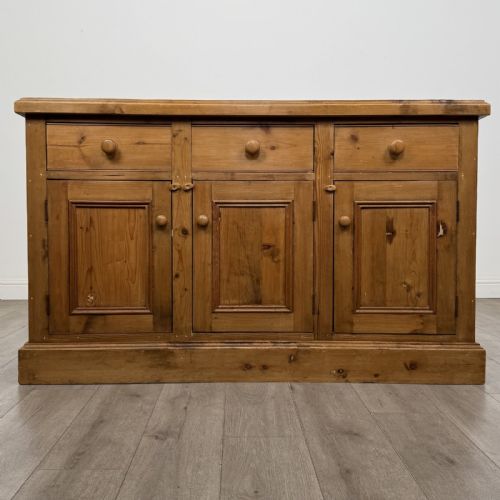
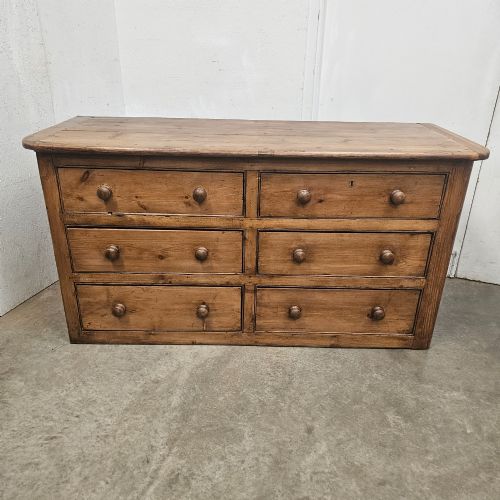
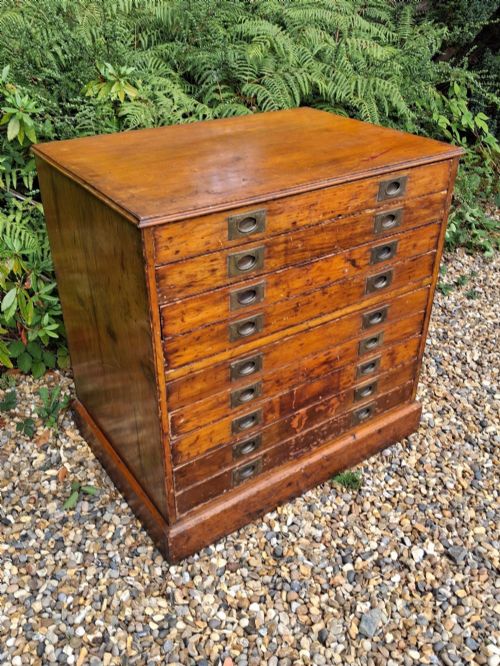
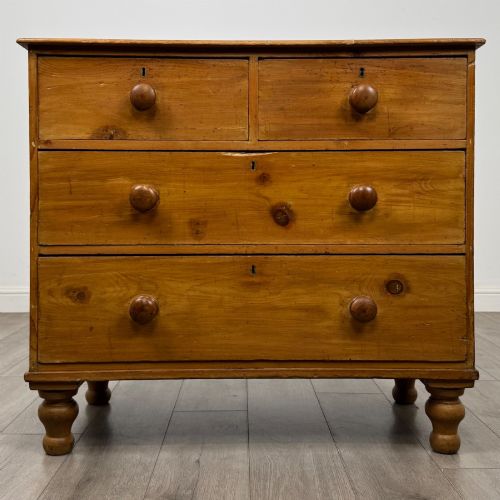
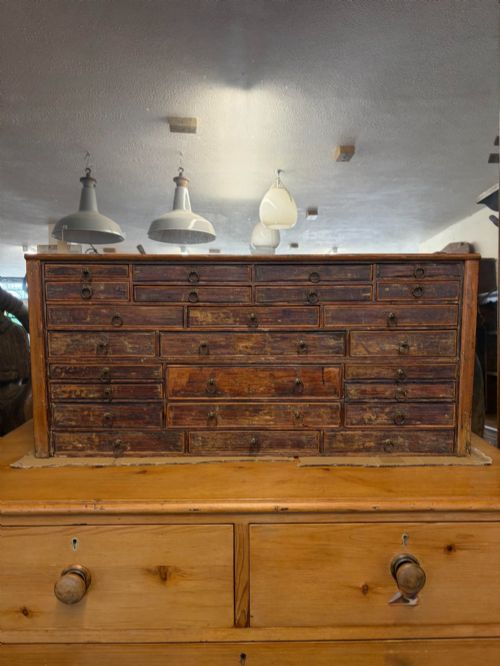
A vintage pine drawers cabinet brings together functional storage pieces that span from the Georgian and Victorian eras through the early twentieth century. Buyers seeking this phrase encounter a diverse assortment of forms, ranging from domestic chests of drawers and bedside cabinets to large banks of drawers, shop fittings, and apothecary chests.
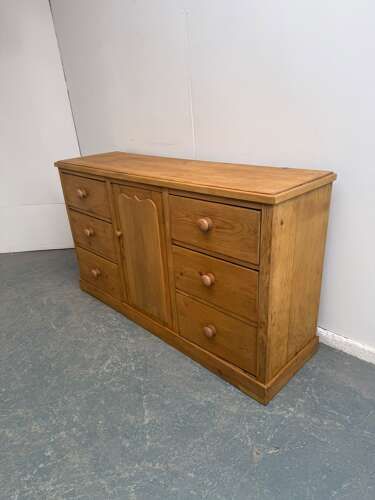
The selection leans heavily towards nineteenth-century examples and Victorian utilitarian forms, alongside Edwardian and 1920s office or workshop furniture. Common manifestations include multi-drawer banks, kitchen dresser bases with drawers, filing drawers, and specialised collectors cabinets.
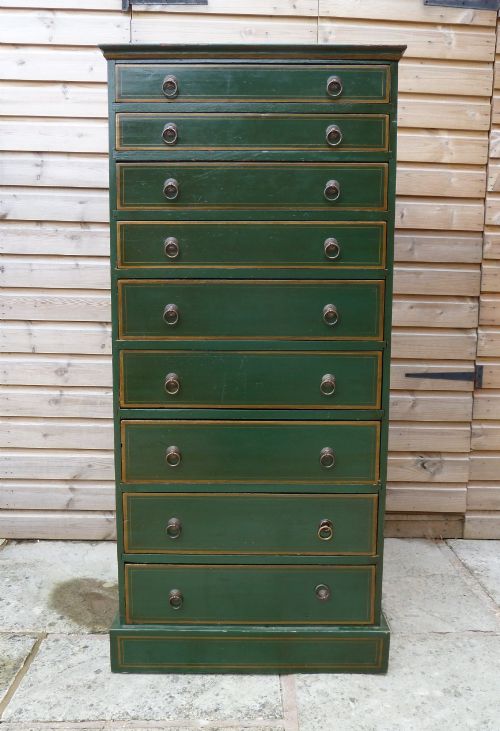
Origins stretch across English, Welsh, Swedish, French, and Hungarian workshops, showing both domestic household utility and commercial trade use. Most pieces retain either a waxed pine finish or original paint in colours such as white, cream, blue, or green.
How they were made
Construction relies primarily on solid pine and deal timber, frequently augmented with hardwood components, ash, or stained finishes. Metal elements such as iron and brass feature prominently as handles, pulls, and structural fixings.
Surfaces receive traditional treatments ranging from clear wax polishing to layered historical paint in various colours. Glass panels appear in glazed bookcase cabinets, while ceramic and metal details complete functional storage compartments.
Vintage Pine Drawers Cabinet Retail Price Guide 2026
Typical asking prices for vintage pine drawers cabinet among the pieces listed under this phrase on Sellingantiques today, from the lower quarter to the upper quarter. They describe what is for sale here now, not the wider market.
Listings feature pine and deal cabinets spanning the Georgian, Victorian, and Edwardian periods, constructed with brass, iron, glass, and ceramic elements.
What varies in quality
Quality rests in the integrity of the original form and the scale of the piece, from modest three-drawer chests to monumental fifty-drawer shop fittings. Original paint finishes that survive intact elevate a piece above those stripped or repainted later.
The complexity and scale of internal configuration distinguish standard domestic chests from specialised apothecary, seed, and collectors cabinets. Hardware originality, such as period brass handles and matching drawer pulls, marks the distinction between ordinary utility items and finer workshop survivors.
Luxmore's of Ilfracombe·D Napier and Sons
The Vintage Pine Drawers Cabinet Glossary
- Pine
- A softwood timber commonly utilised across European furniture making for its workability and strength. It forms the primary structural body of most nineteenth-century utilitarian cabinets and chests.
- Deal
- A historical term for fir or pine timber used extensively in British and European workshop construction. Stained and polished deal appears frequently on nineteenth-century collectors cabinets.
- Bank of drawers
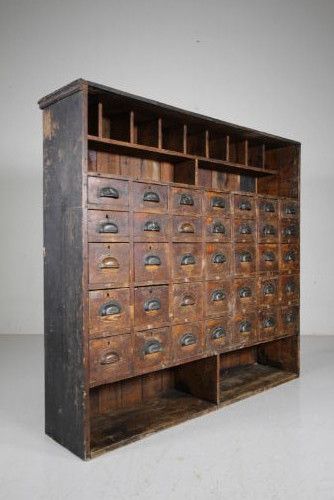
- A large multi-drawer storage unit designed for commercial, trade, or workshop use rather than domestic bedrooms. These configurations range from fifteen to fifty drawers.
- Shop fitting
- Heavy-duty commercial furniture built for retail environments, including multi-drawer counters and display units. They often display original painted surfaces from nineteenth-century interiors.
- Waxed finish
- A traditional protective coating applied to timber surfaces to nourish the wood and produce a soft sheen. This finish is characteristic of English and Hungarian country furniture.
Vintage Pine Drawers Cabinet: Frequently Asked Questions
What is a bank of drawers?
A bank of drawers is a large, multi-drawer unit originally built for commercial, trade, or institutional sorting rather than domestic bedrooms. These pieces provide extensive compartmentalized storage.
They appear in various sizes, ranging from small seed chests to shop fittings featuring dozens of individual drawers.
How do I care for waxed pine furniture?
Waxed pine requires gentle maintenance using traditional beeswax to nourish the timber and preserve its surface sheen. Avoid placing these pieces in direct sunlight or near excessive heat sources to prevent timber movement.
Regular light dusting keeps the waxed surface protected without stripping the historical patina.
Are painted finishes on these cabinets original?
Many pieces retain their original painted surfaces in colours like white, cream, blue, or green, applied during their working life in shops or homes. Other pieces were stripped or left in bare waxed pine.
Original paint survives in varying states of wear, reflecting decades of genuine commercial or domestic use.
Where were these cabinets used originally?
These cabinets served diverse roles across domestic kitchens, Victorian workshops, apothecaries, and retail shops. Specialised forms functioned as artist chests, florist seed storage, and filing units.
Their robust construction allowed them to transition successfully from commercial utility into modern homes.