




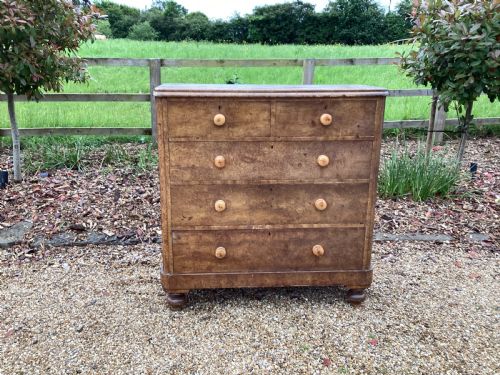
Turned Knob Pine Chest
A turned knob pine chest offers honest storage with characteristic wooden pulls and warm timber grain.
Turned Knob Pine Chest
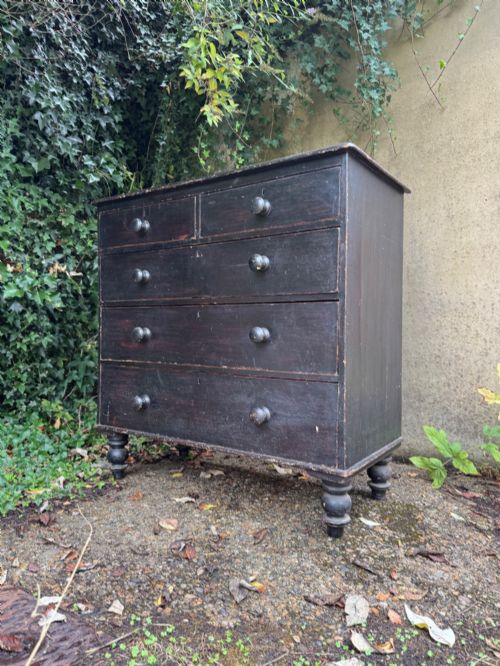
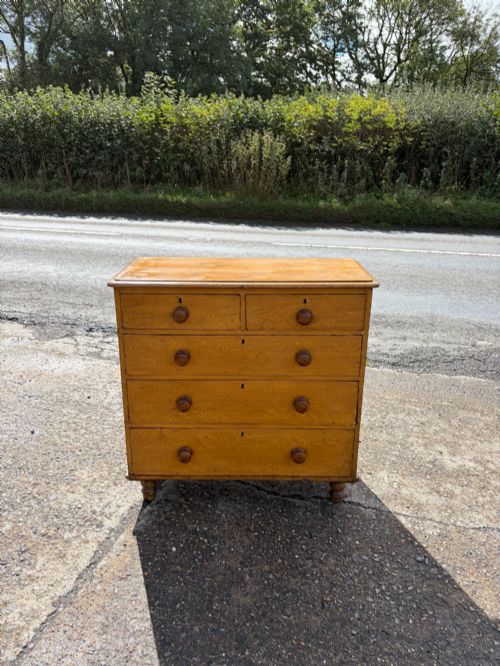
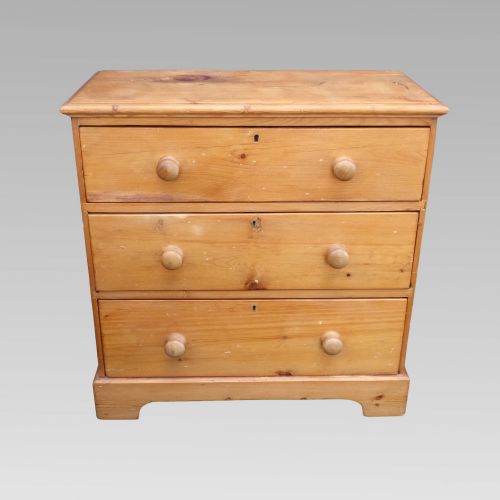
When you search for a turned knob pine chest, you look at sturdy storage furniture built largely during the Victorian period and the nineteenth century. These chests of drawers typically feature robust timber construction fitted with characteristic turned wooden handles, often standing on matching turned feet.
Most examples encountered here originate from the nineteenth century, ranging from mid-Victorian pieces to later Arts and Crafts interpretations. They appear in various configurations including three-drawer and five-drawer formats, finished with wax, paint, or exposed grain.
How they were made
These chests rely primarily on solid pine timber for carcases and drawer construction, shaped and joined by nineteenth-century cabinet makers. Handles and feet are turned on a lathe from matching wood, while secondary elements incorporate brass, iron, and bone.
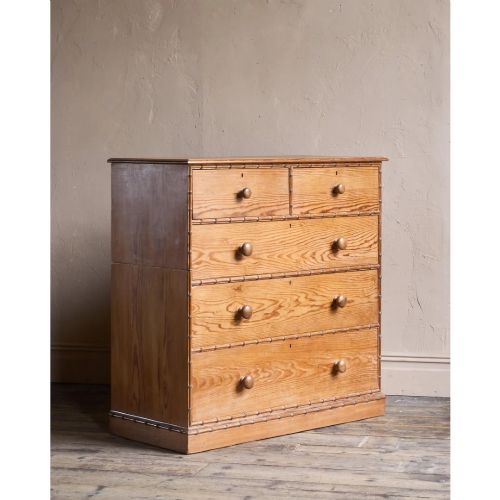
Surfaces receive traditional treatments such as wax polishing to protect the timber or historical paint finishes. Some pieces feature specialised decorative techniques, including faux bamboo detailing executed during the Victorian era.
Turned Knob Pine Chest Retail Price Guide 2026
Typical asking prices for turned knob pine chest among the pieces listed under this phrase on Sellingantiques today, from the lower quarter to the upper quarter. They describe what is for sale here now, not the wider market.
Some chests arrive with faux bamboo detailing, proving nineteenth-century makers could not resist a spot of botanical theatre.
What varies in quality
The distinction between standard and superior pieces rests upon the retention of original fittings, particularly the turned knobs and feet. Chests retaining their complete set of original wooden pulls command greater interest from buyers seeking authenticity.
Construction depth and drawer configuration also dictate standing, with larger multi-drawer formats and clean, dry-scraped surfaces demonstrating the skill of the original workshop. Finer execution shows in the crispness of the turned details and the preservation of early painted or waxed finishes.
Howard and Sons
The Turned Knob Pine Chest Glossary
- Pine
- A softwood commonly used throughout the nineteenth century for carcases and drawer construction. It accepts wax and paint finishes readily.
- Turned Knobs
- Circular wooden handles shaped on a lathe, forming the defining hardware of these chests. They match the timber of the carcase or feet.
- Victorian
- The period spanning the reign of Queen Victoria, covering much of the nineteenth century when these chests were built. Pieces from this era reflect diverse regional styles.
- Waxed
- A surface treatment applied to timber to nourish the grain and provide a soft sheen. This finish protects the pine while highlighting natural characteristics.
- Arts and Crafts
- A design movement valuing handcraft and simple materials, represented here by waxed pine chests dating around nineteen ten.
Turned Knob Pine Chest: Frequently Asked Questions
What periods do these chests come from?
The pieces available date primarily from the nineteenth century, specifically the Victorian era and around nineteen ten. They represent traditional cabinet making methods of those periods.
Constructed from pine, these chests span early Victorian examples through to later Arts and Crafts interpretations.
How were these chests finished originally?
Surfaces were typically treated with clear wax to protect the pine timber and enhance the grain. Alternatively, some pieces received historical paint finishes or specialised decorative treatments.
Original surface treatments survive to varying degrees, with some examples retaining their early waxed or painted appearance.
Are the turned knobs always original?
While many chests retain their original turned wooden knobs and matching feet, replacements do occur over time. Listings specifically note the presence of original fittings.
Checking for consistency in timber colour and wear helps determine if the knobs belong to the original construction.
Where should I place a pine chest?
These chests suit bedrooms, hallways, or living spaces requiring practical storage with traditional character. Their warm timber tones blend easily with various interior schemes.
Keep wooden furniture away from direct heat sources to protect the pine and any historical wax or paint finishes.