
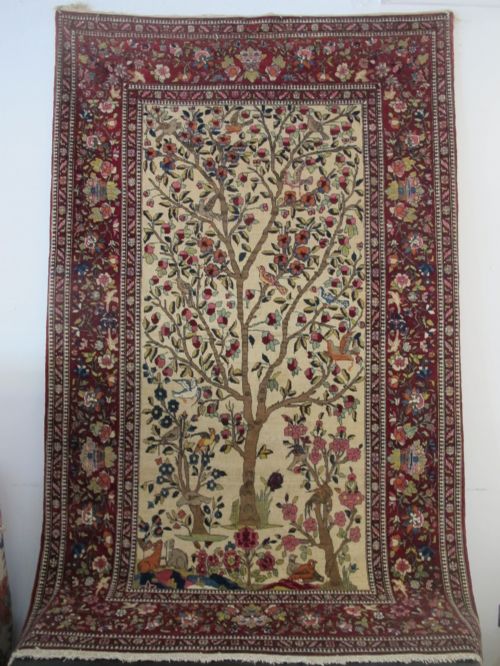


Vintage Pictorial Carpet
A vintage pictorial carpet brings narrative and human presence into a room, capturing stories in wool and silk.
Vintage Pictorial Carpet
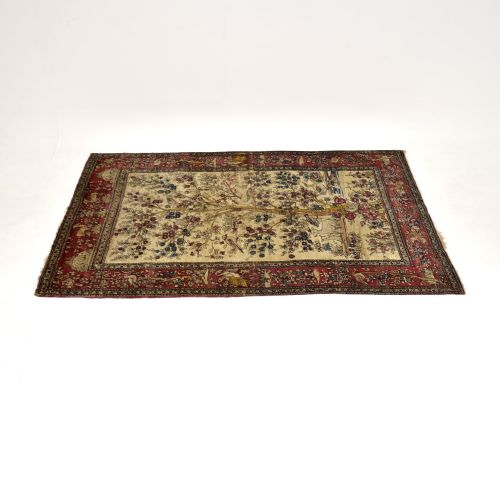
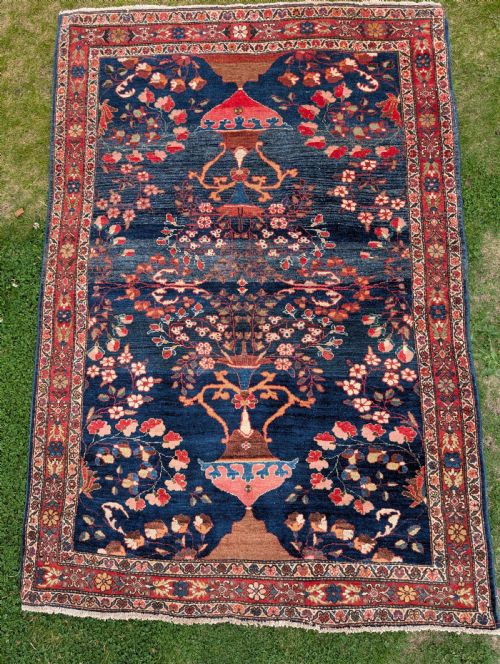
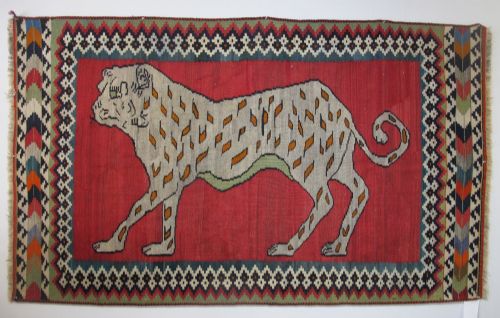
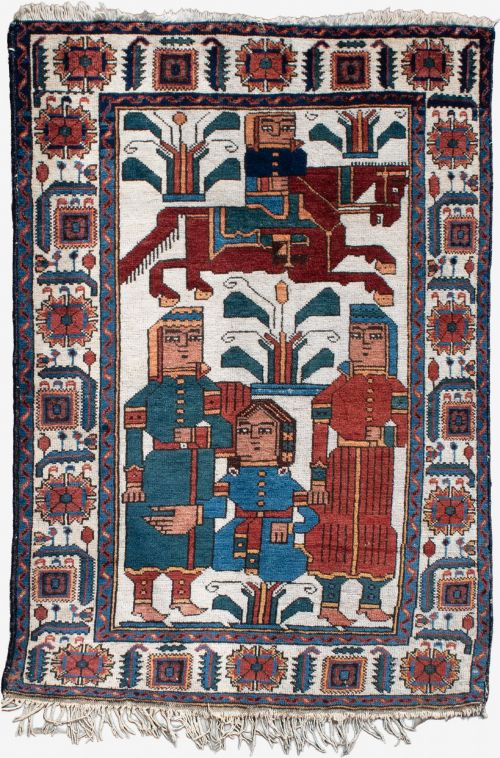
A vintage pictorial carpet represents a distinct narrative branch of textile weaving, depicting figures, animals, and architectural scenes rather than purely geometric or floral motifs. When searching for a vintage pictorial carpet, buyers encounter pieces originating primarily from Persian weaving centres like Kashan, Isfahan, Kirman, and Tabriz, alongside Afghan, Baluch, and Caucasian workshops.
The pieces available span several decades from the late nineteenth century through to the 1930s, showcasing diverse regional aesthetics. Buyers are most likely to meet wool pile rugs and carpets, occasionally employing silk details, that translate historical portraits, royal figures, or local fauna into woven art.
Materials and construction methods
These floor coverings rely heavily on natural wool and cotton foundations, with certain urban workshops incorporating silk to add fine detail and luminosity to the pictorial elements. Natural dyes provide the underlying palette, creating depth and tone that mature gracefully over the decades.
Weavers knot the pile by hand onto warp and weft foundations, employing techniques specific to regions such as Isfahan, Kashan, or Baluch tribal areas. This meticulous hand-knotting allows for the intricate resolution required to render recognisable human and animal forms within the pile.
Object forms on this page include room-sized carpets, compact mats, and dedicated prayer rugs utilising diverse regional knotting traditions.
Evaluating quality in pictorial textiles
Knot density and the precision of the pictorial rendering dictate the upper echelon of these textiles. Master weavers in urban centres achieved lifelike expressions and proportions in portraits and animal scenes, whereas simpler tribal interpretations prioritized bold graphical impact over fine detail.
The integrity of the foundation and the stability of the natural dyes further separate standard examples from exceptional ones. Even wear across the pile and crisp definition in complex borders indicate superior material selection and expert initial execution.
Mohtasham Kashan·Ahmadi Isfahan
The Vintage Pictorial Carpet Glossary
- Pile
- The vertical or slanted loops of yarn that form the usable surface of a carpet. This soft upper layer absorbs wear and displays the woven design.
- Warp
- The stationary lengthwise threads stretched on a loom before weaving begins. These parallel threads carry the structural load of the entire textile.
- Weft
- The horizontal threads passed alternately over and under the warp threads to lock the knots in place. Together with the warp, they form the sturdy foundation grid.
- Kilim
- A flat-woven carpet or rug produced without a pile. These pieces rely on interlocking weft techniques to create crisp, geometric patterns.
- Prayer rug
- A small rug featuring a niche design, traditionally used for daily Islamic prayers. The central arch directs the user's focus during devotion.
Vintage Pictorial Carpet: Frequently Asked Questions
How were pictorial carpets displayed historically?
Many fine pictorial carpets were produced as decorative floor coverings for prominent homes and public buildings, receiving regular foot traffic.
However, due to their intricate figural designs and narrative importance, owners often hung them on walls to protect the detailed wool and silk pile from wear.
How do I distinguish regional styles?
Urban workshops in centres like Isfahan and Kashan generally produce refined floral and figural compositions with high knot counts. Tribal and village pieces from Baluch, Afghan, or Caucasian regions tend to feature more stylized, geometric interpretations of people and animals.
Border designs, colour choices, and the handling of the pile offer further clues to a carpet's specific geographic origin.
How do I care for a vintage rug?
Protect the textile by vacuuming gently with a suction-only attachment, avoiding the rotating brush bars that can damage older pile. Keep the rug out of direct sunlight to prevent natural dyes from fading over time.
Rotate the piece periodically to ensure even exposure and wear across the surface.