




Woven Pictorial Tapestry
A woven pictorial tapestry brings complex narrative scenes and historical figures directly onto interior walls through centuries of textile artistry.
Woven Pictorial Tapestry
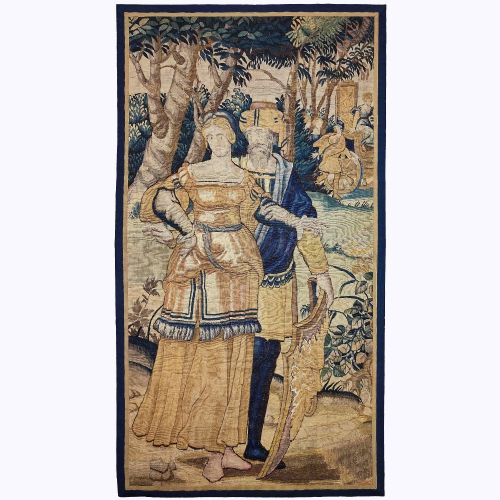
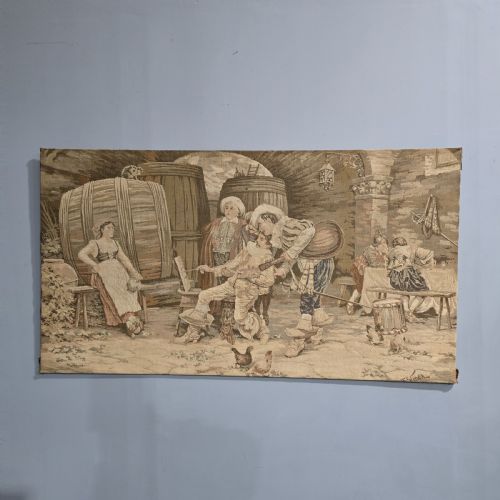
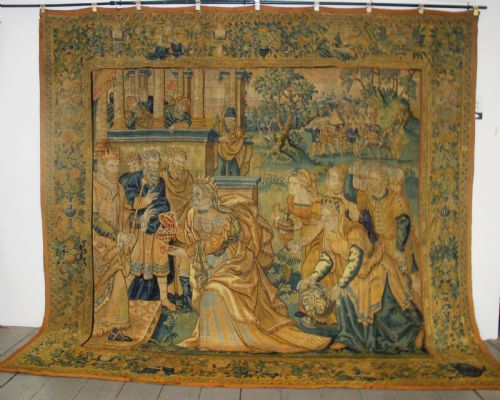
A woven pictorial tapestry forms a substantial wall hanging or rug depicting figurative and narrative subjects from European and Persian traditions. You will encounter sixteenth-century Flemish panels alongside later nineteenth-century French Aubusson styles and twentieth-century pictorial Kashan rugs.
The range spans monumental Renaissance wall art mounted on wood boards to smaller needlework pieces and signed compositions. These textiles serve primarily as decorative wall art, transforming rooms with detailed figural and botanical imagery.
Early sixteenth-century examples sit alongside later nineteenth and twentieth-century revivals, offering diverse scales from intimate panels to room-sized architectural hangings.
How they were made
Craftsmen utilised fine wool, silk, cotton, and linen yarns, hand-weaving complex pictorial compositions over vertical or horizontal looms. Many pieces combine wool foundations with silk highlights to achieve tonal depth and facial detail in the imagery.
Needlework variants involve stitching pictorial designs onto existing fabric grounds, while woven examples build the image directly through the interweaving of warp and weft threads. Specialised workshops occasionally mounted completed textiles onto wood boards for structural stability.
The listings span from sixteenth-century Flemish Renaissance panels to twentieth-century Persian Kashan rugs, utilising wool, silk, cotton, linen, and wood boards.
What varies in quality
Quality rests in the precision of the pictorial rendering, the complexity of the narrative scheme, and the survival of the original dyestuffs. Finer pieces demonstrate superior control over facial expression, perspective, and tonal gradation across the wool and silk yarns.
The integrity of the textile weave and the fidelity of the historical style, whether Flemish Renaissance or French Baroque, dictate the standing of an individual piece.
Mohtasham Kashan
The Woven Pictorial Tapestry Glossary
- Aubusson style
- A French weaving tradition known for pastoral and architectural scenes. These designs often mimic grand wall hangings from royal chateaux.
- Flemish Renaissance
- A sixteenth-century artistic movement originating in Flanders. It produces dense, multi-layered narrative compositions featuring elaborate borders.
- Needlework tapestry
- A textile created by hand stitching yarn onto a canvas or linen ground rather than utilising a loom. This technique allows for painterly control over the finished image.
- Kashan rug
- A knotted pile carpet originating from central Persia. Pictorial examples frequently depict historical personages and elaborate figural portraits.
Woven Pictorial Tapestry: Frequently Asked Questions
How do I hang a large tapestry safely?
Large textiles require even weight distribution across the upper edge to prevent distortion of the weave. Attaching a hidden fabric sleeve along the back allows a sturdy wooden batten to support the piece.
Professional conservators recommend avoiding direct sunlight and maintaining stable humidity levels in the room. This protects delicate wool and silk fibres from degradation over time.
What is the difference between a rug and a wall hanging?
Pictorial rugs feature a dense knotted pile designed to withstand foot traffic, though many finer pictorial examples are preserved purely as wall art. Wall hangings utilise flat-weave tapestry or needlework techniques intended specifically for vertical suspension.
Both categories share narrative pictorial themes, but their foundational structure and pile depth differ significantly. This distinction dictates whether a piece belongs on the floor or the wall.
How are sixteenth-century panels distinguished from later revivals?
Sixteenth-century Flemish panels display characteristic colour palettes derived from natural dyes, alongside characteristic border designs typical of the Renaissance period. The handling of perspective and figurative proportions also follows period conventions distinct from later copies.
Nineteenth-century revival pieces often utilise altered chemical dye formulas and standardised mechanical or hand techniques. Examining the reverse side reveals clues regarding the age of the yarn and the tightness of the weave.
Can pictorial rugs be cleaned at home?
Household cleaning methods risk damaging historic wool and silk fibres through excessive moisture and harsh detergents. Professional textile conservators should handle any deep cleaning requirements for antique pieces.
Routine maintenance involves gentle surface dusting with a soft brush or low-suction vacuum applied through a protective mesh screen. This preserves the delicate needlework and pile without loosening the structure.