




Vintage Pharmacy Box
A vintage pharmacy box is a fitted wooden chest or cabinet designed to hold medical bottles and remedies, prized for its intricate internal compartments and surviving glassware.
Vintage Pharmacy Box
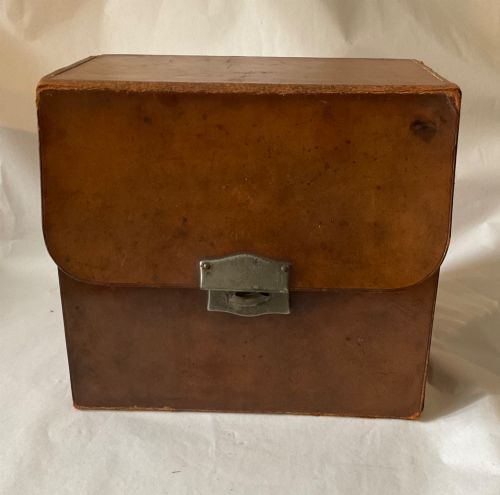
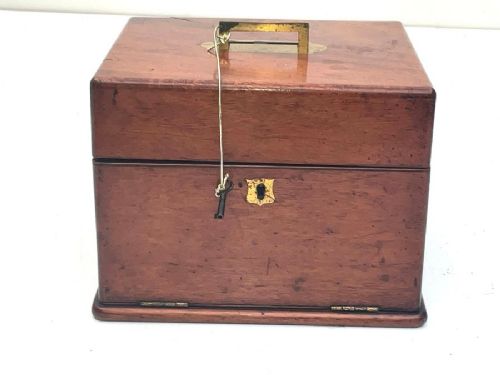
A vintage pharmacy box takes the form of a fitted wooden chest or travelling case, built to hold medical bottles, scales and remedies securely. When you search for a vintage pharmacy box, you encounter pieces spanning the Georgian, Regency and Victorian periods.
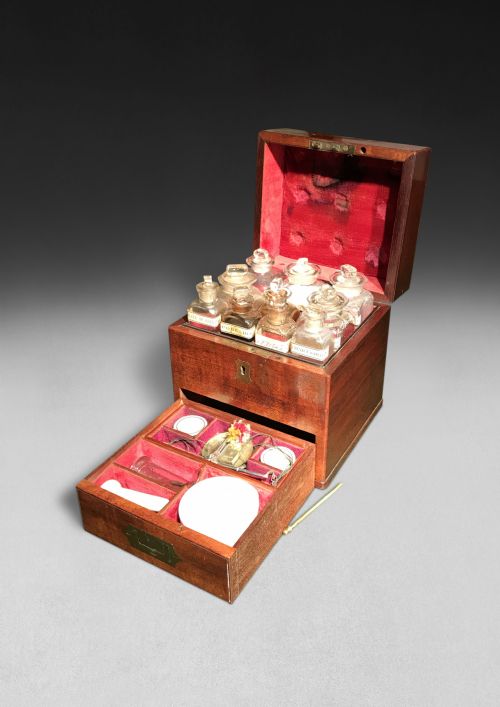
The most common forms on this page include mahogany travelling cases equipped with internal bottles and drawers, alongside countertop display cabinets and veterinary storage units. These pieces range from simple utilitarian chests to inlaid mahogany cabinets with complete glass contents.
Origins trace back through the nineteenth century, encompassing scientific instruments and folk art alongside commercial chemist items. Each piece reveals how medicines were stored and transported by practitioners of the era.
Materials and construction
Makers utilised dense timbers such as mahogany and bentwood for the primary case construction, often incorporating boxwood for smaller implements like pill rounders. Brass mounts, hinges and carrying handles reinforce the corners and lids of travelling boxes designed for regular movement.
Interiors are frequently lined with velvet or leather to cushion fragile glass bottles and scientific instruments. Hand-painted finishes and inlaid wood details appear on selected storage boxes and display cabinets.
Listings span the 1800s, Georgian, Regency, Victorian, 1890, 1910 and 1920 periods, utilising mahogany, brass, glass, velvet, leather, paint and metal.
Assessing quality and completeness
Quality rests primarily on the survival and originality of internal fittings, such as fitted glass bottles, drawers and precision beam scales. Boxes retaining their original velvet or leather linings and complete internal contents command greater interest.
The sophistication of the exterior cabinetwork also distinguishes finer examples, particularly where mahogany carcasses feature deliberate inlay work and robust brass hardware. Simpler folk art storage boxes rely on decorative hand painting rather than cabinetmaker joinery.
Oertling
The Vintage Pharmacy Box Glossary
- Apothecary box
- A fitted wooden chest designed to contain medical bottles, scales and drugs for dispensing remedies. These boxes feature complex internal layouts with sliding lids and hidden drawers.
- Pill rounder
- A wooden tool used in pharmacy to roll and shape medicinal pastes into uniform pills. Boxwood was typically chosen for this dense, hardwearing implement.
- Beam scale
- A precision weighing instrument utilising a central balance beam for measuring small quantities of powder or ingredients. Examples include pieces by makers such as Oertling.
- Campaign case
- A portable box or chest built for travel, featuring recessed brass handles and reinforced corners to withstand frequent movement. These cases date predominantly from the Georgian and Regency periods.
- Bentwood
- Wood that has been heated and bent into curved structural forms, seen on decorative storage boxes from the nineteenth century.
Vintage Pharmacy Box: Frequently Asked Questions
What is inside a vintage pharmacy box?
These boxes typically contain a fitted interior with glass medicine bottles, small drawers for powders, and sometimes pill rounders or scales. Many retain their original arrangement of compartments designed to hold liquid remedies safely.
Some examples also include specialised tools and glassware used by chemists and medical practitioners during the nineteenth century.
How do I date a Georgian box?
Georgian pieces often feature solid mahogany construction, hand-cut dovetail joints, and characteristic brass campaign hardware. Inlaid woodwork and simpler, functional proportions also point towards late eighteenth or early nineteenth century manufacture.
Examining the style of the internal bottles and any accompanying paperwork or maker signatures helps narrow the period further.
Were these boxes used for travel?
Many pharmacy chests were built as travelling cases for doctors, military officers or households on the move. Sturdy mahogany carcasses, recessed brass handles and secure locking mechanisms allowed them to endure transport.
Countertop display cabinets and larger wall-mounted pharmacy units were instead intended for static use inside a chemist shop or surgery.
How do I clean the interior velvet?
Velvet and leather linings require gentle maintenance to preserve the fabric without damaging the surrounding wood. Light dusting with a soft brush removes surface debris accumulated over the decades.
Avoid liquid cleaners and moisture, as older adhesives and wooden partitions beneath the fabric can warp or stain easily.
What is the difference between an apothecary box and a cabinet?
Apothecary boxes are generally portable chests with hinged lids and fitted compartments designed to close up completely. They were easily carried by practitioners or stored on tables.
Cabinets usually refer to larger countertop or wall-hanging display units featuring glass doors, intended to remain in one fixed location within a shop or surgery.