




Brass Mahogany Medicine Chest
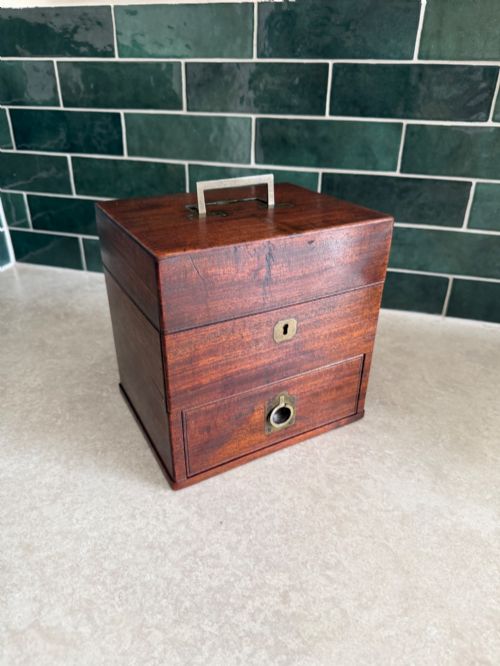
These brass mahogany medicine chest examples are compact travelling pharmacies designed to carry remedies safely across rooms and oceans.
Brass Mahogany Medicine Chest
A brass mahogany medicine chest represents a fitted portable cabinet designed to hold medicinal bottles, scales, and compounding tools securely during travel. When searching for a brass mahogany medicine chest, buyers encounter pieces spanning the Georgian, Regency, and Victorian eras, alongside traditional Chinese cabinet forms.
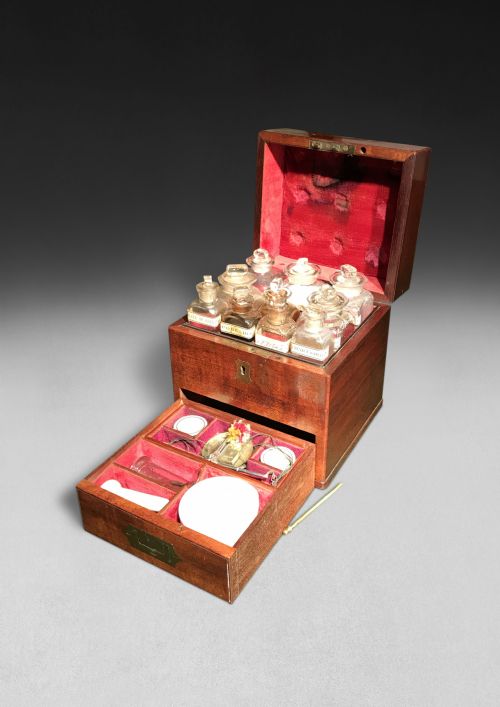
Most examples appear as portable travelling cases or tabletop apothecary boxes constructed from dense timber and reinforced with metal corners. Interiors usually feature dedicated slots for glass bottles, small drawers for powders, and sometimes velvet or leather linings.
How they were made
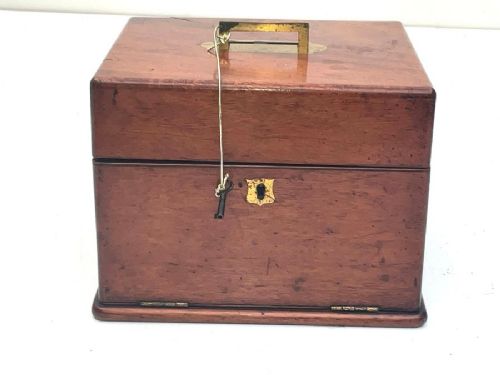
Cabinetmakers built these boxes using solid hardwood framing, applying rich mahogany veneers to exterior surfaces for durability and appearance. Brass mounts, flush handles, and corner brackets provided structural protection during transport while adding functional contrast to the dark timber.
Interiors required precise joinery to create snug compartments for fragile glass bottles, ceramic jars, and paper labels. Some iterations incorporated hidden drawers and secondary locking mechanisms secured by brass hardware.
Some miniature campaign boxes pack an entire apothecary shop into a space barely larger than a novel.
What varies in quality
Quality rests on the completeness of the internal fittings, such as original glass bottles, stoppers, and mixing equipment. Boxes retaining their original ceramic containers, velvet linings, and working brass locks command greater interest than heavily altered examples.
The precision of the cabinetwork and the thickness of the mahogany timber dictate the overall standard of construction. Superior pieces demonstrate tight joints, well-fitted secret compartments, and robust brass hardware that withstands repeated opening.
The Brass Mahogany Medicine Chest Glossary
- Apothecary box
- A portable wooden container fitted with glass bottles and compartments for storing medicinal preparations. These boxes served doctors, travellers, and households needing immediate access to remedies.
- Campaign case
- Furniture or equipment built specifically for travel, typically featuring recessed brass handles and reinforced corners. These items were designed to endure rough movement during military or civilian journeys.
- Campaign hardware
- Recessed brass handles and corner plates fitted flush with wooden surfaces to prevent snagging during transit. This metalwork characterises portable furniture from the Georgian and Victorian periods.
- Fitted interior
- An internal layout organised with specific partitions, slots, and small drawers tailored to hold fragile vessels and instruments securely. In medicine chests, these partitions protected glass bottles from shifting.
Brass Mahogany Medicine Chest: Frequently Asked Questions
What did these chests hold?
These chests contained glass bottles for liquid medicines, small drawers for powders, scales, and mixing mortars. Doctors and travellers relied on them to dispense remedies on the move.
Many examples still retain their original glass bottles and ceramic jars, showing how the internal spaces accommodated various medical supplies.
How do I date a chest?
Dating relies on the style of the brass hardware, the dovetailing of the drawers, and overall cabinet design. Georgian and Regency pieces often feature simpler lines compared to elaborate Victorian variants.
Examining the construction methods of the internal partitions and secondary woods helps place the chest within its historical period.
Were these used by doctors?
Physicians, naval surgeons, and wealthy travellers used these portable pharmacies to treat illnesses away from home. They allowed practitioners to carry necessary compounds across long distances.
Some boxes served domestic households, acting as a central repository for family medicines in the eighteenth and nineteenth centuries.
Where were they placed?
Owners kept them on tabletops, desks, or floors depending on the size of the specific cabinet. Their portable nature meant they moved between rooms or accompanied owners on journeys.
Larger veterinary cabinets and floor units remained static in professional settings, whereas smaller travelling cases accompanied individuals on coaches and ships.