




19th Century Medical Chest
A 19th century medical chest holds the remedies of the past, offering solid mahogany craftsmanship and fitted glass bottles that collectors prize for their precision.
19th Century Medical Chest
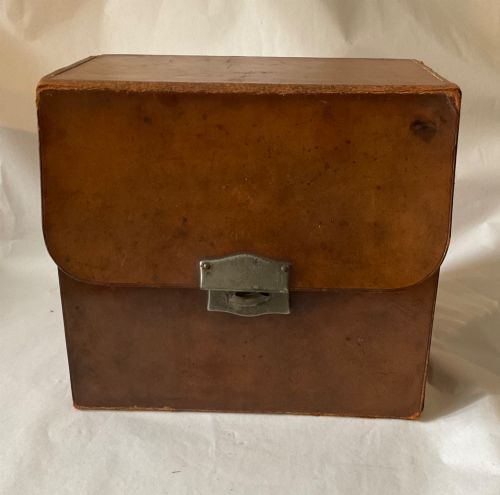
A 19th century medical chest encompasses fitted mahogany boxes, travelling cases, and banks of drawers designed to store remedies. These pieces trace back to Regency, Georgian, and Victorian periods.
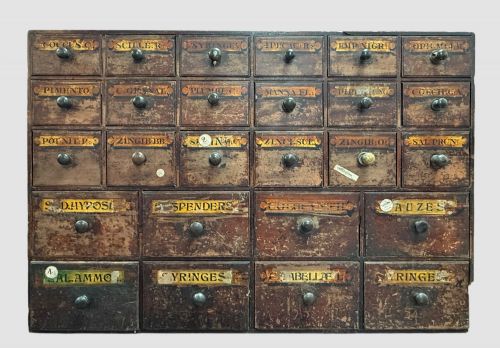
Buyers encounter various forms, including apothecary boxes, chemist cabinets, pharmacy storage units, and specialised instrument cases for dentistry or optometry.
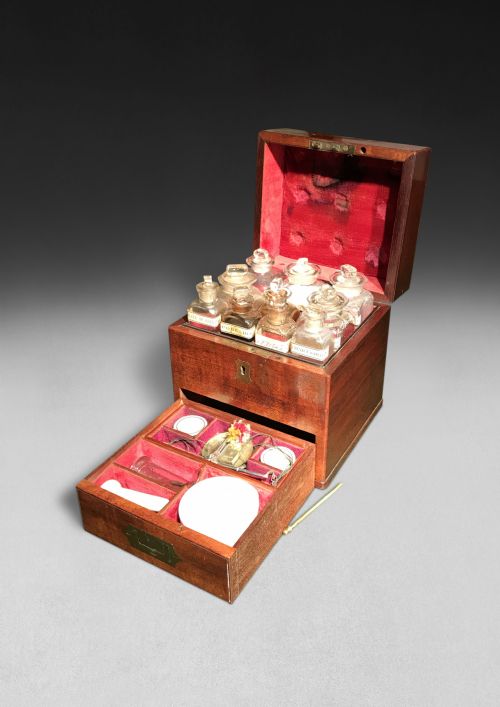
Many examples contain their original glass bottles and internal drawers, reflecting the domestic and professional storage needs of the era.
How they were made
Carpenters constructed these pieces primarily from solid mahogany and pine, occasionally utilising burr walnut for decorative exterior surfaces.
Workshops fitted the wooden boxes with brass carrying handles, locks, and corner brackets to withstand travel and daily handling.
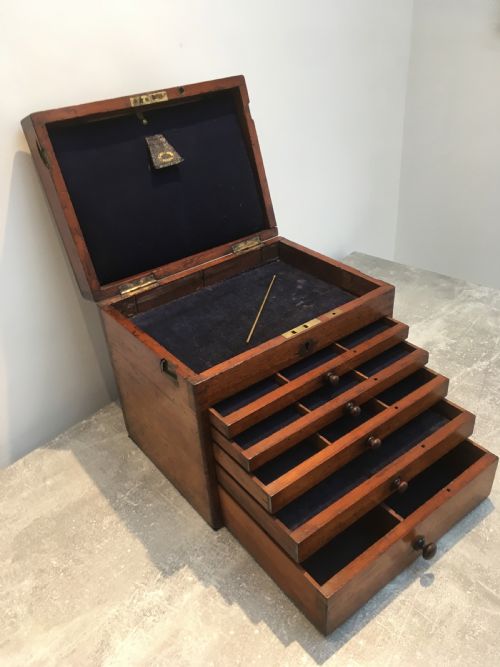
Interiors often feature velvet or leather linings, designed to cushion fragile glass bottles and scientific instruments securely within custom compartments.
Some wooden pharmacy boxes outlived their pills to store buttons, stamp collections, and very small secrets.
What varies in quality
The degree of internal completeness distinguishes standard storage boxes from superior examples fitted with original glass bottles and intact paperwork or labels.
Cabinetwork complexity separates simple wooden containers from elaborate apothecary banks of drawers and inlaid mahogany travelling cases with secret compartments.
Materials dictate the tier of the piece, where polished hardwoods and quality brass hardware outlast simpler pine constructions.
The 19th Century Medical Chest Glossary
- Apothecary box
- A fitted wooden container designed to hold medicinal ingredients, scales, and dispensing bottles. These portable units served domestic households and travelling physicians.
- Bank of drawers
- A multi-tiered set of small drawers used in pharmacies and surgeries for organising powders, pills, and herbs. They provide substantial storage in a compact footprint.
- Travelling case
- A portable chest constructed for mobility, featuring recessed brass handles and secure locking mechanisms. Physicians took these on house calls.
- Optician test kit
- A specialised wooden cabinet housing lenses and optical instruments for sight testing. These scientific instrument cases date from the Victorian era.
19th Century Medical Chest: Frequently Asked Questions
What did they use these chests for?
Physicians and households utilised these chests to store, transport, and dispense medicines, tinctures, and healing powders.
They kept remedies organised securely behind locked wooden doors and fitted lids during travel.
Are original bottles usually included?
Some surviving cabinets retain their original collection of glass bottles, stoppers, and small measuring scales.
Others lost their glass contents over decades of subsequent use and repurposing.
How do I identify a Regency chest?
Regency examples display specific cabinet-making traits from the early part of the century, typically featuring clean lines in solid mahogany.
They often include fitted internal compartments designed specifically for apothecary scales and medicine bottles.
Where should I place one at home?
These chests fit well on sturdy sideboards, desks, or tabletops where the wood grain and brass hardware remain visible.
Smaller boxes sit easily on shelves, while larger banks of drawers function as standalone storage furniture.