


Vintage Pewter Candlesticks
These vintage pewter candlesticks bring solid weight and enduring metalwork to a table, offering centuries of domestic design from Stuart forms to Art Deco lines.
Vintage Pewter Candlesticks
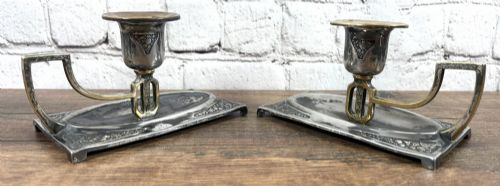
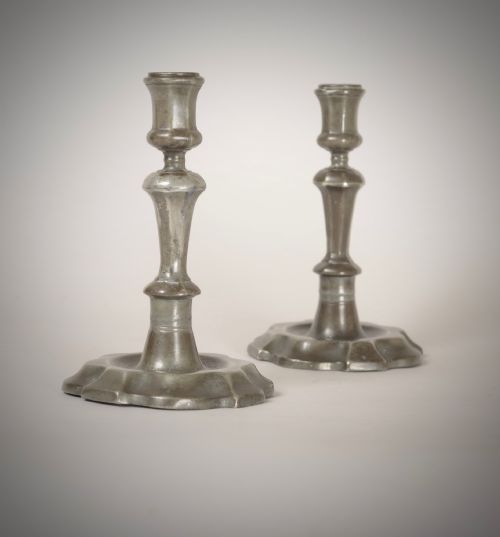
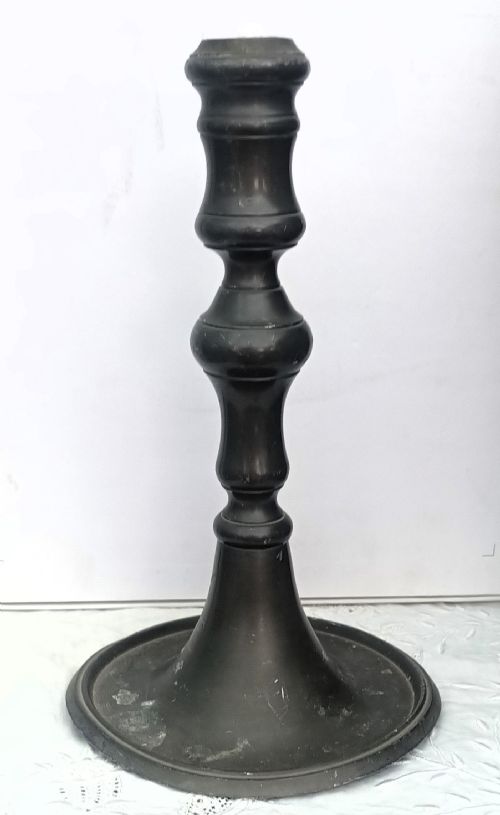
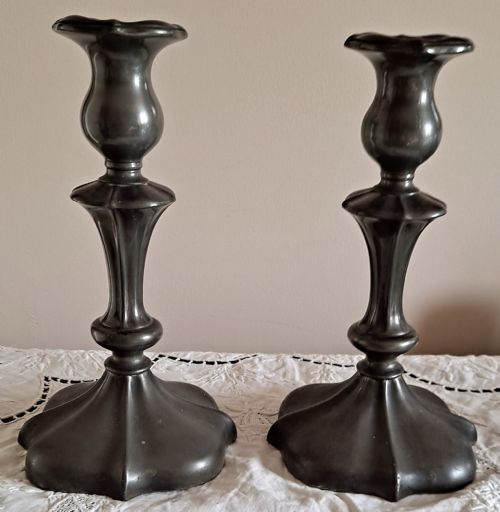
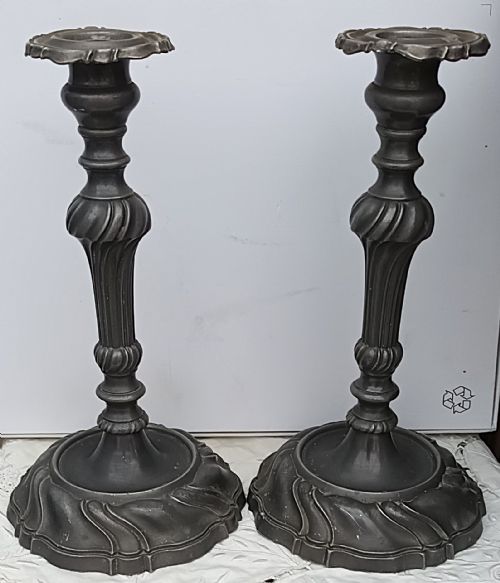
Vintage pewter candlesticks span several centuries of metalworking, with examples stretching from the seventeenth century through the Georgian and Victorian eras into the twentieth. You will frequently encounter pairs shaped by the distinctive movements of their time, including Stuart, Arts and Crafts, Art Nouveau, and Art Deco styles.
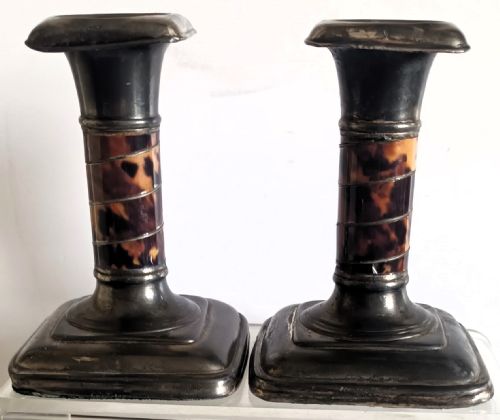
The selection here encompasses both plain metal holders and pieces enriched with contrasting materials like tortoiseshell and enamel. Most entries take the form of traditional candlesticks or candle holders designed to support domestic lighting in domestic interiors.
How they were made
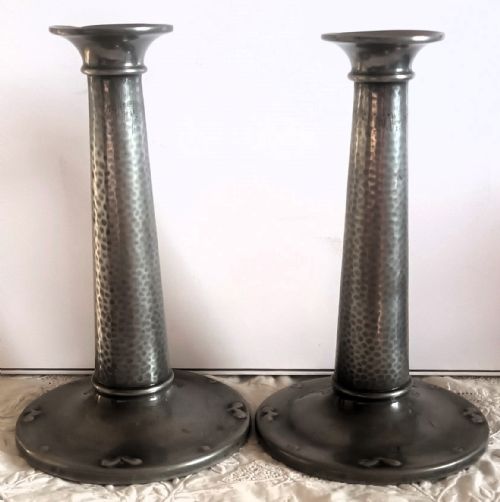
These pieces rely primarily on pewter as a foundational metal, shaped through casting and hammering techniques characteristic of each period. Artisans frequently combined the dull grey metal with contrasting elements, such as inlaid tortoiseshell or vibrant enamel panels.
Certain twentieth-century designs integrate decorative brass components or utilise specific maker designs, such as the Tudric alloy associated with Liberty & Co. The manufacturing methods reflect the prevailing aesthetic of each era, moving from early Stuart forms to fluid Art Nouveau curves.
Listings feature periods spanning from the seventeenth century through to 1930, utilising pewter alongside brass, enamel, and tortoiseshell.
What varies in quality
The distinction between standard examples and finer pieces rests on the crispness of the casting and the integrity of the design. Makers who applied specific decorative treatments, such as enamel work or tortoiseshell insets, introduced a higher degree of craftsmanship.
Proportion and surface finish also define the better examples, where the pewter retains a pleasing patination rather than looking overworked. The reputation of the designer or the specific workshop involved plays a significant role in setting certain pieces apart from ordinary domestic hardware.
WMF·Archibald Knox for Liberty·Alexandre Clerget
The Vintage Pewter Candlesticks Glossary
- Pewter
- A malleable metal alloy composed chiefly of tin, historically mixed with copper, antimony, or lead. It provides a subdued grey finish that takes well to casting and polishing.
- Tudric
- A trade name used by Liberty & Co. for a brand of high-quality pewter produced during the early twentieth century. This alloy often featured distinctive Arts and Crafts or Art Nouveau motifs.
- Stuart
- A seventeenth-century design style associated with the reigns of the Stuart monarchs. Pieces from this period typically display robust, simplified proportions.
- Rococo
- An ornate style popular during the eighteenth and nineteenth centuries, characterised by asymmetrical scrollwork and shell motifs. Victorian interpretations of this style often appeared in domestic metalware.
- Art Nouveau
- An international design movement from the late nineteenth and early twentieth centuries known for sinuous, organic lines inspired by natural forms.
Vintage Pewter Candlesticks: Frequently Asked Questions
How do I clean vintage pewter candlesticks?
Pewter generally requires minimal intervention to preserve its historic surface and dark grey patination. Avoid harsh metal polishes that strip away the age of the metal.
A soft cloth and gentle soapy water suffice for removing dust and surface grime. Dry the metal thoroughly afterwards to prevent spotting.
How can I tell the age of pewter?
Age is typically judged by the style of the casting, the weight of the metal, and any touchmarks or maker stamps present on the base. Earlier seventeenth and eighteenth-century examples tend to have simpler, heavier forms.
Stylistic markers like Art Nouveau whiplash lines or Art Deco geometric facets help date twentieth-century items. Comparing the construction details against documented periods clarifies the timeline.
Why do some have enamel or tortoiseshell?
Makers during the Arts and Crafts and Victorian periods sought to elevate plain metal by incorporating contrasting textures and rich colours. Enamel provided vibrant panels while tortoiseshell added organic warmth.
These decorative additions were hallmarks of higher-end design workshops aiming for artistic distinction. They turn utilitarian lighting into decorative works of art.