

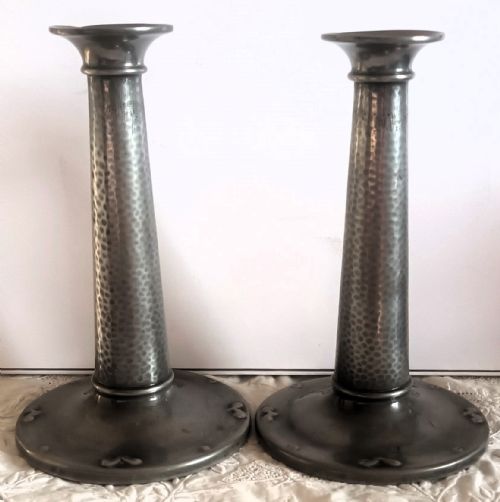
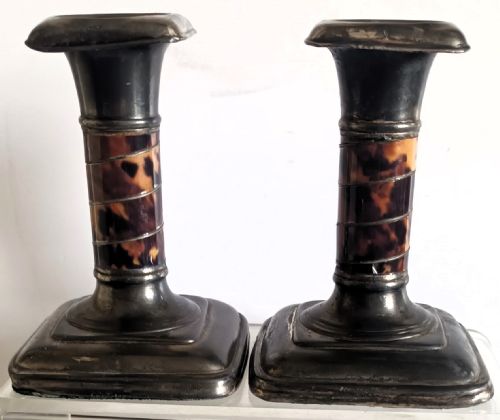


Pewter Taper Holder
These pewter taper holder examples bring tactile weight and honest metalwork to a room, offering functional charm from centuries past.
Pewter Taper Holder
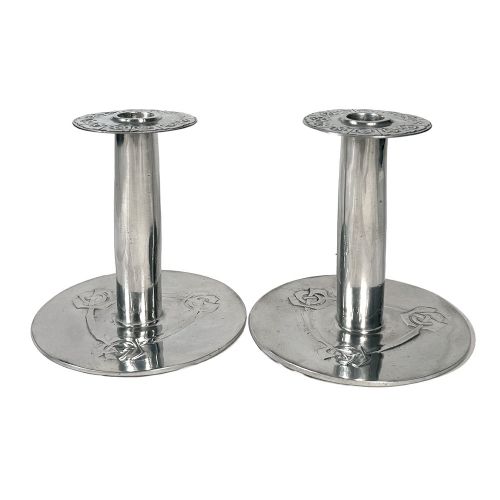
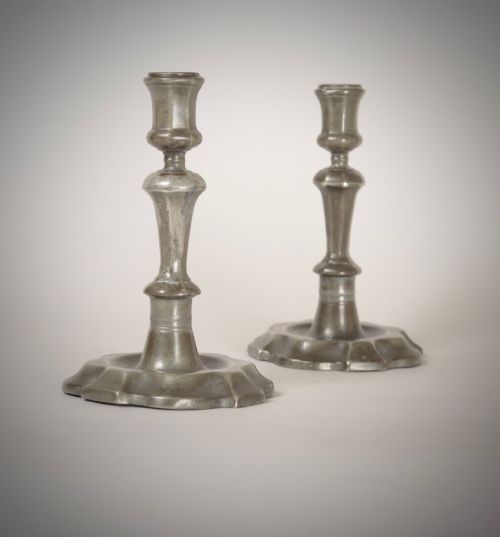
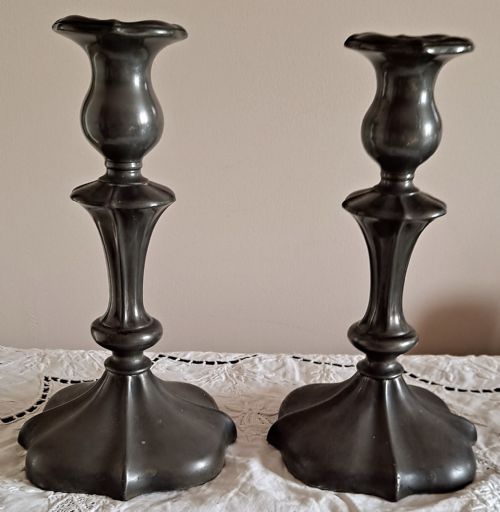
When searching for a pewter taper holder, a collector encounters domestic lighting pieces designed to burn slender wax tapers or candles securely. The examples on this page span several distinct eras, stretching from the 17th century through the Georgian and Victorian periods into the early 20th century.
Earlier centuries are represented by simpler Stuart and 18th-century forms, while later Victorian items occasionally incorporate mixed media such as tortoiseshell. Every piece serves as a tangible link to historical domestic illumination.
How they were made
The primary material across these listings is pewter, a durable metal alloy shaped to form the body and base of each taper holder. Makers utilised traditional metalworking techniques to cast and finish the metal components, achieving solid structures.
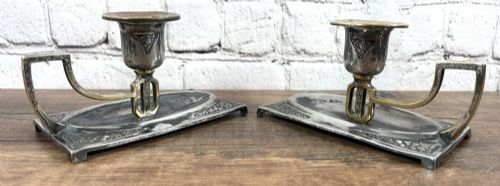
Certain pieces integrate contrasting materials like brass, enamel, and tortoiseshell to elevate the visual appeal of the pewter work. These decorative additions reflect the specific aesthetic values of periods such as the Arts and Crafts and Art Nouveau movements.
Pewter Taper Holder Retail Price Guide 2026
Typical asking prices for pewter taper holder among the pieces listed under this phrase on Sellingantiques today, from the lower quarter to the upper quarter. They describe what is for sale here now, not the wider market.
Some Victorian makers could not resist mixing industrial pewter with delicate tortoiseshell, giving humble candlelight a distinctly biological shell texture.
What varies in quality
Quality in these items rests upon the clarity of the design and the integrity of the metal casting. Pieces designed by notable figures exhibit a deliberate artistic vision that distinguishes them from standard production work.
The integration of secondary materials like enamel or tortoiseshell also influences the character of a piece. Finer examples maintain crisp detailing in the pewter and harmonious proportions across the pair.
Archibald Knox for Liberty and Co·WMF
The Pewter Taper Holder Glossary
- Pewter
- A malleable metal alloy composed principally of tin, historically used for domestic vessels and lighting. It develops a muted grey patina over time.
- Taper holder
- A compact lighting device designed specifically to hold a thin wax taper rather than a thick household candle. These are often small in scale and easily moved.
- Arts and Crafts
- A design movement valuing handcraftsmanship, simple forms, and honest materials over mass production. It heavily influences the 1900 and 1910 pieces here.
- Art Nouveau
- An international style characterised by organic, flowing lines and plant-inspired motifs. It appears on several Victorian and 1900 candlesticks in this collection.
- Stuart
- A period spanning the 17th century, associated with early British domestic metalware. Pieces from this era display straightforward, utilitarian construction.
Pewter Taper Holder: Frequently Asked Questions
What is a pewter taper holder?
A pewter taper holder is a small domestic lighting device designed to support a slender wax taper securely.
These pieces were used historically for moving light around a home or for sealing letters with wax.
How do I date a pewter taper holder?
Dating relies on stylistic clues, such as the flowing organic lines of Art Nouveau or the robust simplicity of Arts and Crafts design.
Materials combined with the pewter, like tortoiseshell or enamel, also point toward specific periods like the Victorian era or 1900.
Were these items made in pairs?
Many examples on this page are listed as pairs, which were intended for symmetrical placement on mantelpieces or tables.
Single pieces also exist, particularly from earlier periods like the 17th century.
How should I clean pewter?
Pewter generally requires minimal intervention to preserve the historic surface and subtle grey patina.
Avoid aggressive polishing, using only a soft dry cloth to remove dust from the metal and any inset materials.