


Vintage Pet Portrait Painting
A vintage pet portrait painting captures the distinct character of a cherished animal through traditional oil or pastel work.
Vintage Pet Portrait Painting
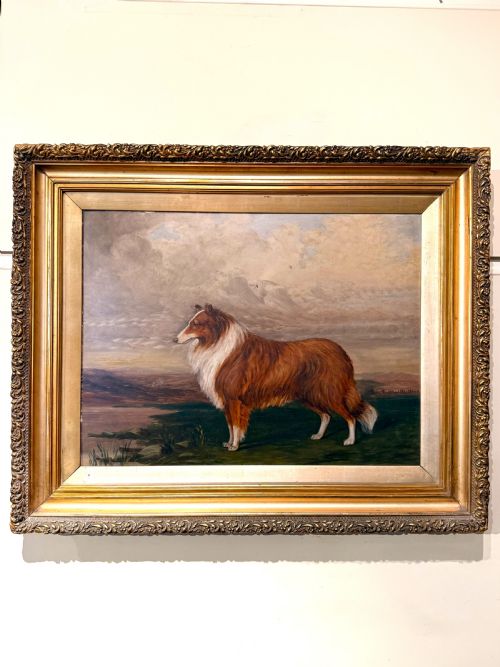
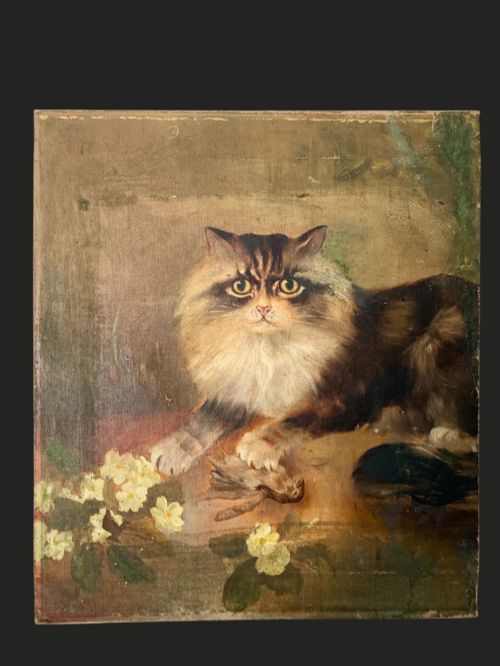
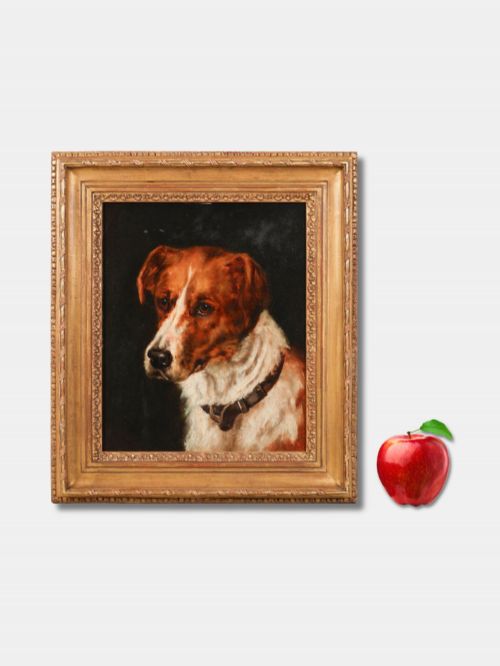
A vintage pet portrait painting is an artwork focusing on dogs, cats and other animals, rendered across the nineteenth and twentieth centuries. These pieces record beloved individual animals, ranging from working terriers and spaniels to domestic cats and kittens.
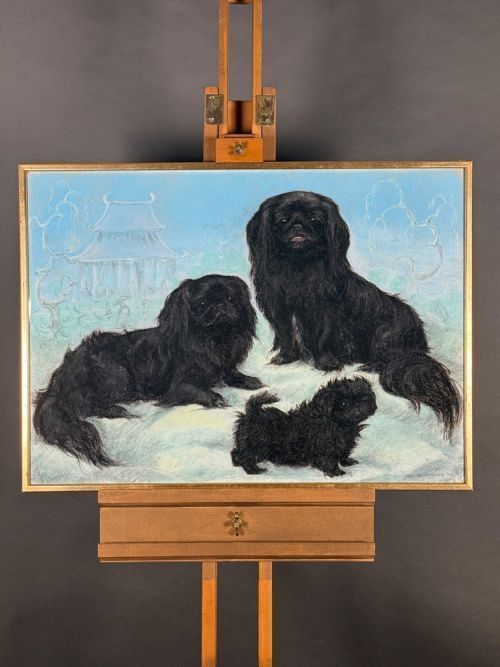
The selection includes naive school interpretations alongside academic realism and mid-century works. Dogs and cats appear singly, in pairs, or in larger groups, often captured in interiors or simple courtyard settings.
Most examples originate from British and European hands, employing oil paint on canvas, panel or board, alongside occasional pastels and watercolours. Framed artwork forms the primary bulk of what appears in this category.
Materials and methods
Artists relied primarily on oil paint applied to canvas, wooden board or wood panel, building up depth through layered brushwork. Some works utilise oil pastels or standard pastels on paper to achieve softer textures in fur and expression.
Supports often incorporated traditional preparation methods, including gesso layers on wooden panels to create a stable painting surface. Finished works were typically housed in wooden frames, occasionally enhanced with gold leaf detailing.
Listings feature works spanning from the nineteenth century through the 1960s, executed in oil, pastel and watercolour.
Assessing quality and execution
Quality rests upon the artist's ability to render anatomical accuracy, personality and texture in the animal's coat. Stronger pieces display confident brushwork and acute observation, whereas simpler examples lean towards naive charm.
The handling of light within interiors and the preservation of the original support material significantly influence the overall standard. Frame integrity and the compatibility of the period mount also shape the finished appearance.
William Barraud·Agnes Augusta Tallboys·Florence Mabel Hollams·Frank Owen Salisbury·Samuel John Carter
The Vintage Pet Portrait Painting Glossary
- Naive school
- An aesthetic characterised by a flat perspective and untutored charm rather than strict academic proportions. These works often carry an honest, direct appeal.
- Oil on board
- A painting executed on a rigid wooden or composition board rather than stretched canvas. This surface provided a stable alternative frequently utilised for smaller studies.
- Gesso
- A plaster mixture applied to wood panels to create a smooth, prepared surface for oil painting. It seals the wood and provides a bright foundation.
- Oil pastels
- A medium combining pigment with a binder of oil and wax, allowing for rich colour application. They yield a buttery texture distinct from traditional dry pastels.
Vintage Pet Portrait Painting: Frequently Asked Questions
What animals appear most often?
Dogs and cats dominate the available subjects, ranging from specific breeds like terriers, spaniels and pekingese to domestic kittens.
Artists recorded both working animals and household companions, often highlighting individual names and familiar domestic settings.
How do I date these paintings?
Dating relies on stylistic clues, framing methods, and the type of support substrate, such as canvas or board.
Inscribed dates, artist signatures and biographical records help place works accurately within the nineteenth or twentieth century.
Where should I hang one?
These works suit traditional living spaces, studies or hallways where smaller framed artworks can be appreciated closely.
Direct sunlight should be avoided to protect oil paint, pastels and paper supports from fading over time.
Are pastels as durable as oils?
Pastel drawings on paper require protective glazing to prevent damage to the delicate pigment layers.
Oil paintings on canvas or board prove more robust, though both media benefit from stable indoor humidity levels.