




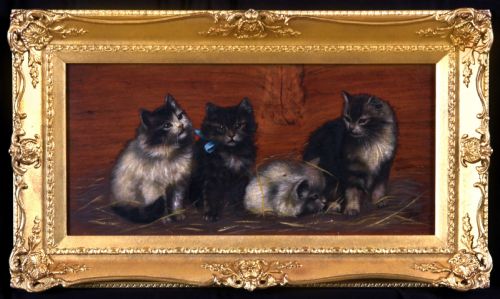

Gold Framed Cat Art
Gold framed cat art brings together antique feline subjects and gilded surrounds, offering characterful animal portraiture from the nineteenth and early twentieth centuries.
Gold Framed Cat Art
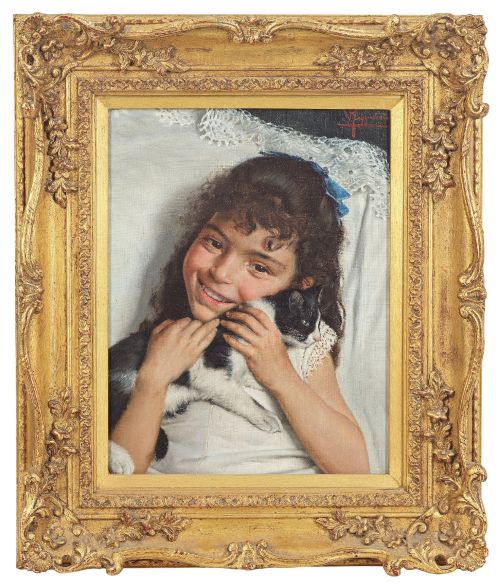
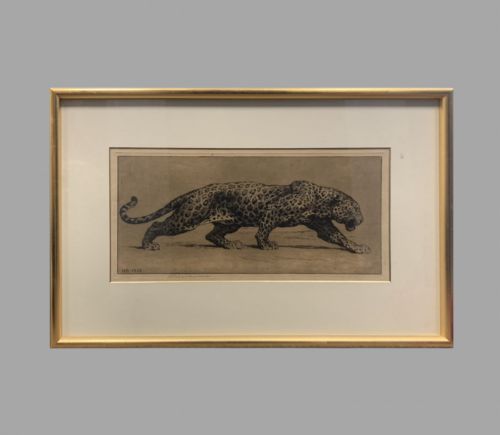
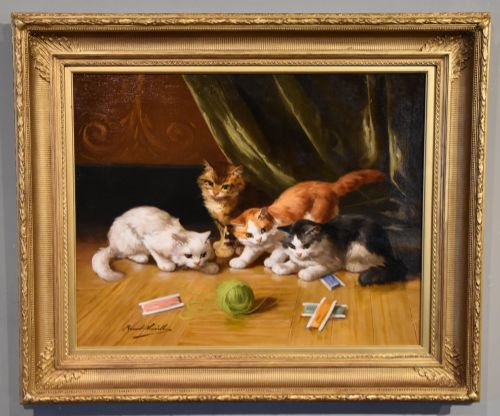
Gold framed cat art encompasses oil paintings, etchings, and prints depicting felines within period gilt surrounds. These works range from provincial English school portraits to detailed Victorian animalier studies.
The pieces most frequently met on this page date from the nineteenth century and the early decades of the twentieth century. Traditional realism and Victorian genre styles dominate the selection.
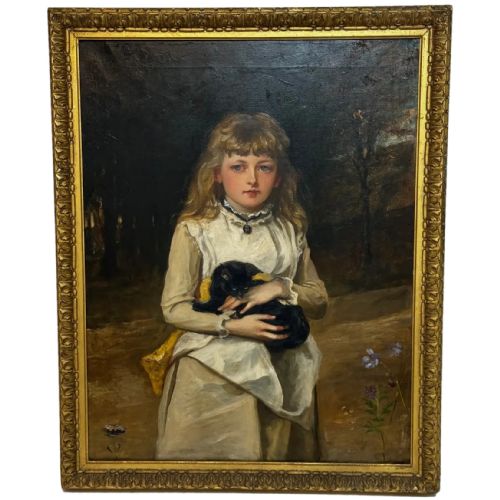
Subjects vary from solitary kittens and tea party groupings to cats with fish and domestic scenes with children. The frames are typically wood with gesso detailing, finished in gilt.
How they were made
The artworks themselves rely on oil on canvas, oil on panel, and oil pastels, alongside printed paper and etched plates. Artists applied pigments to primed surfaces to capture the texture of fur and the play of light.
Gilt wood and gesso frames provide the characteristic metallic border for these works. Craftsmen carved wooden mouldings and applied plaster gesso before gilding the surface to achieve a bright finish.
Listings feature oil on canvas, gesso, and wood materials across nineteenth and twentieth century periods.
What varies in quality
The distinction between standard works and exceptional pieces rests upon the anatomical precision of the animal and the expressiveness of the brushwork. Master painters render fur textures and feline expressions with convincing realism.
The craftsmanship of the gilt surround also contributes to the overall merit of the piece. Hand-carved wooden frames with intricate gesso ornamentation hold greater distinction than simpler later mouldings.
Vittorio Reggianini·Herbert Dicksee·Alfred Arthur Brunel de Neuville·Charles Burton Barber·Agnes Augusta Talboys·Henry Weigall·Horatio Henry Couldery·Francisco Jose Domingo y Marques·Louis Wain·Bessie Bamber
The Gold Framed Cat Art Glossary
- Animalier
- Art depicting animals with realistic attention to their anatomy and behaviour. This classification applies to nineteenth-century painters who specialised in domestic and wild creatures.
- Gesso
- A plaster mixture applied to wood before gilding to create smooth surfaces for decorative relief. It allows craftsmen to fashion ornate borders.
- Etching
- A printmaking technique where lines are incised into a metal plate with acid before being inked and pressed onto paper. Herbert Dicksee utilised this method for his feline subjects.
- Victorian Genre
- Painting that depicts scenes from everyday domestic life, often featuring children and pets together. These works capture social narratives of the period.
Gold Framed Cat Art: Frequently Asked Questions
What periods do these pieces come from?
The works span the nineteenth century and the early twentieth century, including Victorian examples and items dated around nineteen twenty and nineteen thirty.
Most items reflect the artistic standards of traditional realism popular during these decades.
How should I display gilt framed art?
Gilded frames require placement away from direct sunlight to protect both the canvas and the gold finish from environmental damage.
Hanging them on neutral walls allows the metallic lustre and the painted subject to stand out clearly.
Are the frames original to the artwork?
Some pieces retain their period gilt wood surrounds, whilst others may have been re-framed at a later date to match the aesthetic of the artwork.
Examining the backboards and the mitred joints helps determine the age of the framing relative to the painting or print.
What mediums are used in these feline artworks?
Artists employed oil on canvas, oil on panel, and oil pastels, alongside paper for etchings and prints.
The backing materials and application techniques vary according to whether the piece is a unique painting or a printed edition.