
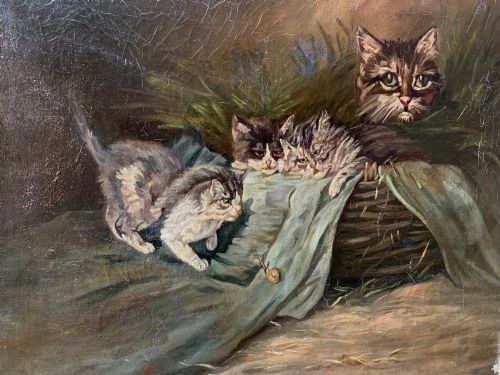
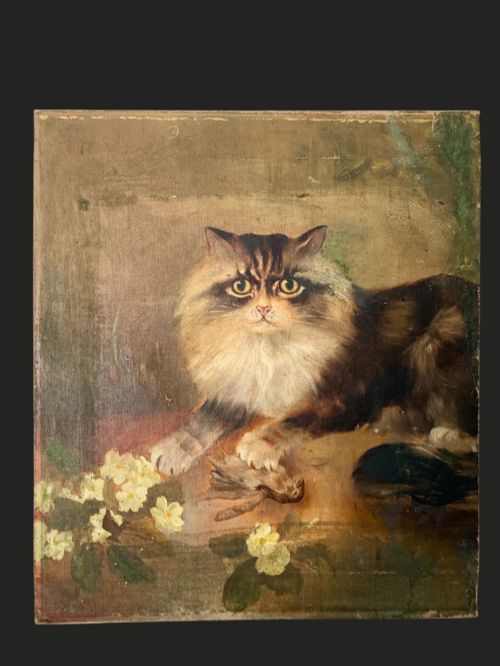
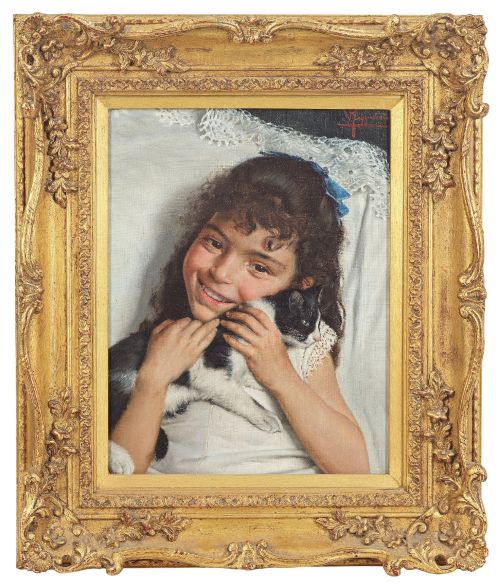
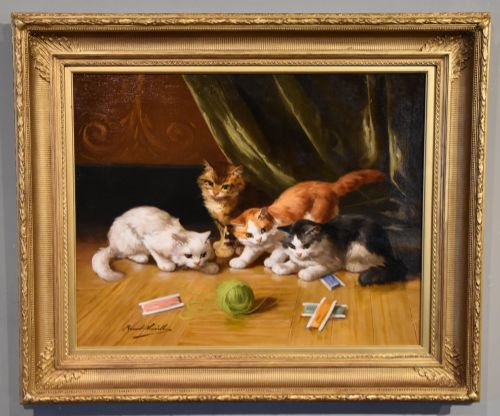


Antique Cat Painting
An antique cat painting captures domestic feline grace and playfulness through the layered brushwork and observation of nineteenth- and early-twentieth-century artists.
Antique Cat Painting
An antique cat painting encompasses oil on canvas works, panel pieces, and glass paintings depicting domestic felines, often styled within the Victorian Animalier tradition or naive school.
Buyers encounter depictions ranging from single portraits of prized kittens to lively genre scenes featuring young cats at play, executed by continental and British provincial schools.
The selection on this page stretches from nineteenth-century realism to mid-century depictions, capturing the enduring appeal of cats across various historical periods.
How They Were Made
Artists relied primarily on oil paint applied to stretched canvas, wooden panels, or board, building depth through successive glazes and fine brushstrokes.
Many finer works are housed within their original gesso and giltwood frames, which utilise ornate moulded decoration to complement the canvas.
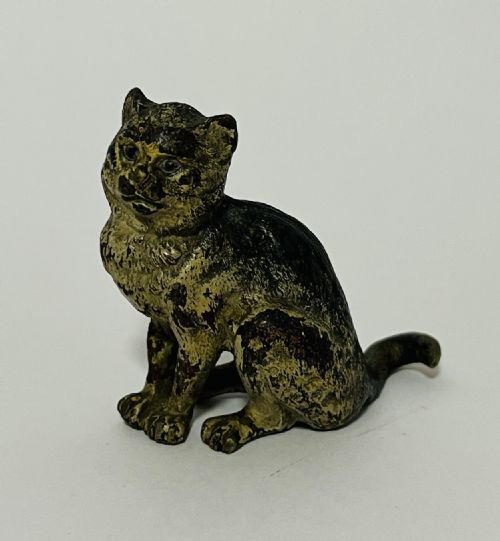
Alternative techniques in the category include cold-painted bronze sculptures and reverse painting on glass, demonstrating diverse material approaches to feline subjects.
The listings span from the Victorian era through the mid-twentieth century, utilising oil paint, canvas, panel, and cold-painted bronze.
What Varies In Quality
Quality rests upon the artist's anatomical precision and the psychological capture of the animal, distinguishing masterly naturalism from stiff provincial illustration.
The preservation of the paint surface and the originality of the associated giltwood frame significantly influence the standing of a canvas.
Vittorio Reggianini·Alfred Arthur Brunel de Neuville·Franz Bergman·Agnes Augusta Talboys·Henry Weigall·Horatio Henry Couldery·Francisco Jose Domingo y Marques·Cuthbert Edmund Swan·Bessie Bamber
The Antique Cat Painting Glossary
- Animalier
- A nineteenth-century artistic genre dedicated to the realistic depiction of animals. Practitioners focused heavily on anatomical accuracy and natural behaviour.
- Naive school
- Art created by self-taught painters working outside academic traditions. These pieces often feature flattened perspectives and charming directness.
- Oil on canvas
- Pigment suspended in a drying oil applied to a woven fabric support. This combination allows for rich blending and long-term durability.
- Giltwood
- Wood carved and coated with a thin layer of gold leaf or metallic powder. It provides a reflective, ornate border for traditional paintings.
- Reverse painting on glass
- A technique where an image is applied directly to the back of a glass pane and viewed from the front. This method imparts a brilliant, glossy finish.
Antique Cat Painting: Frequently Asked Questions
How do I identify the period of a cat painting?
Examine the stretcher bars, canvas texture, and framing style, as nineteenth-century works typically employ hand-planed wood and traditional lead-white grounds.
Comparing the artistic school and costume details in accompanying human figures also helps narrow down the decade of creation.
Were these paintings always framed in giltwood?
Many nineteenth-century works were housed in ornate gesso and giltwood frames designed to enhance the illumination of the oil medium.
Frames are frequently contemporaneous with the canvas, though replacement mouldings do occur in pieces with long histories.
What is the difference between naive and realism styles?
Realism strives for strict anatomical accuracy and realistic lighting, reflecting the academic standards of the nineteenth-century French and British schools.
Naive works prioritize charming character over strict proportion, often resulting in flatter perspectives and simplified domestic settings.
How should I care for an antique oil painting?
Keep the canvas away from direct sunlight and dramatic fluctuations in humidity to prevent the oil paint from cracking or warping.
Dust the surface gently with a soft, dry brush and avoid using liquid cleaners or attempting restoration without professional guidance.