




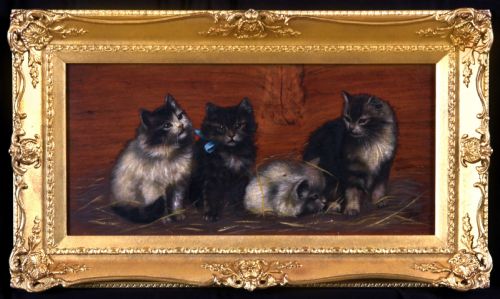
19th Century Cat Artwork
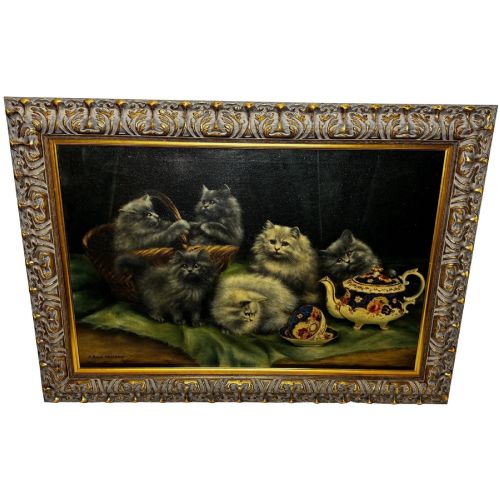
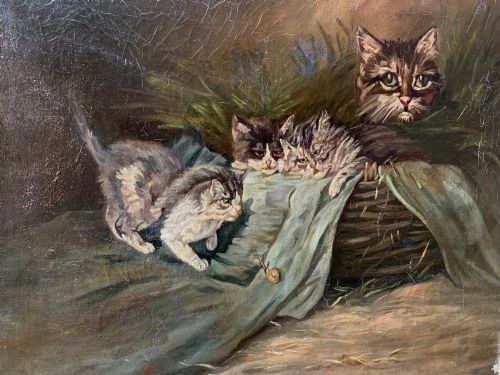
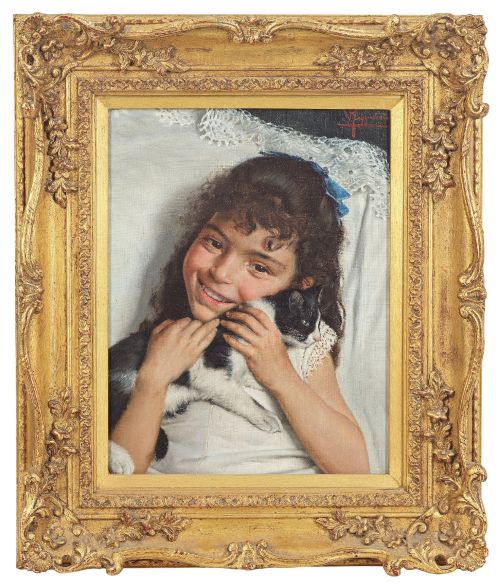
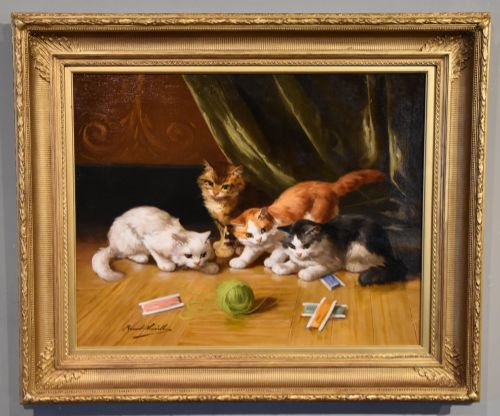
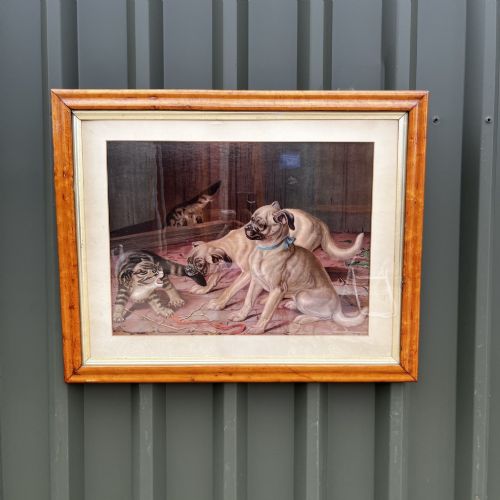
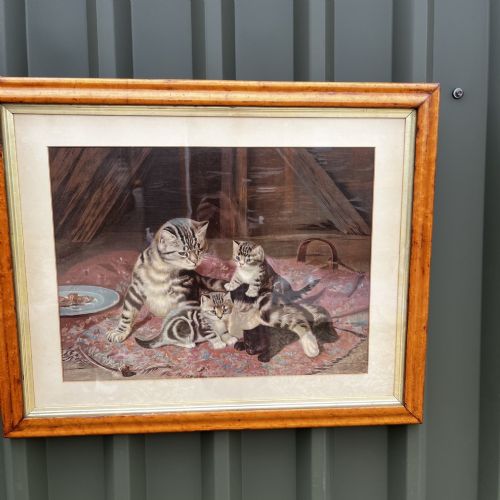
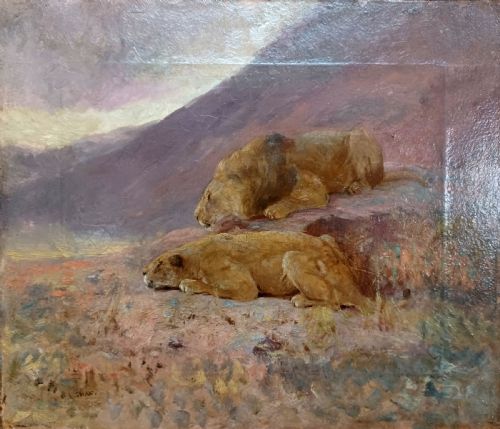
These 19th century cat artwork pieces capture domestic felines and big cats in oil, print and drawing.
19th Century Cat Artwork
When you search for 19th century cat artwork, you encounter oil paintings, oil on board, chromolithographs, and studies on paper depicting domestic cats, kittens, and large felines. The pieces span the Victorian period and extend into the early twentieth century through works dated between 1880 and 1920.
You are most likely to meet genre scenes of kittens at play, portraits of prized cats, and compositions by recognised animalier painters. These works document feline subjects through Victorian academic styles and the 19th century French school.
The offerings range from detailed cabinet oils on canvas to framed prints and paper drawings. Each piece reflects the era's fascination with domestic animal portraiture and wildlife realism.
Markers of quality
Quality rests in the anatomical precision of the feline subjects, the expressiveness in the rendering of fur and eyes, and the handling of light in the composition. Superior examples demonstrate confident brushwork and lifelike posture rather than stiff or generic animal forms.
The integrity of the original support, whether canvas, board, or paper, alongside the preservation of the surface pigment or lithographic ink, dictates the standing of an individual piece.
Listings feature works spanning the nineteenth century up to 1920, utilising oil on canvas, paper, and giltwood frames.
Agnes Augusta Talboys·Vittorio Reggianini·Alfred Arthur Brunel de Neuville·Horatio Henry Couldrey·Charles Burton Barber·Henry Weigall·Cuthbert Edmund Swan·John Macallan Swan·Geza Vastagh·Bessie Bamber
The 19th Century Cat Artwork Glossary
- Animalier
- An artist or sculptor who specialises in the realistic portrayal of animals. This style gained prominence in the nineteenth century across European academic circles.
- Chromolithography
- A planographic printing method that uses multiple limestone blocks to build up a full-colour image on paper. It was widely used to reproduce popular paintings.
- Gesso
- A plaster-like material applied to wooden frames before gilding. It provides a smooth surface for carved details and gold leaf application.
- Genre painting
- A category of art depicting scenes from everyday life, often featuring domestic animals and human figures interacting in interior settings.
- Oil on board
- A painting technique where pigment is applied directly to a rigid wooden or cardboard panel rather than stretched canvas.
19th Century Cat Artwork: Frequently Asked Questions
How do I care for a 19th century oil painting?
Keep the canvas away from direct sunlight and damp conditions to prevent paint cracking and mould growth. Dust the surface gently with a soft, dry brush without applying pressure.
Avoid using water or liquid cleaners on the paint or giltwood frame. Consult a professional conservator if the canvas requires cleaning or structural repair.
What is the difference between an oil painting and a chromolithograph?
An oil painting is a unique handmade work created with pigmented oils on canvas or board. Brush texture and individual artist marks remain visible upon close inspection.
A chromolithograph is a printed reproduction created through layered lithographic stones. It offers a flat surface texture while mimicking the appearance of the original painting.
Where were these cat artworks displayed originally?
Victorian households displayed these framed paintings and prints in parlours, drawing rooms, and studies. They reflected the period's fondness for domestic pets and sentimental animal subjects.
Larger academic works and animalier studies also entered private collections and gallery exhibitions. They served as conversation pieces that demonstrated the owner's taste in contemporary fine art.
How can I tell a Victorian painting from a later work?
Examine the materials of the stretcher, canvas, and framing methods used on the reverse of the piece. Nineteenth-century works often utilise handmade wooden stretchers and older framing techniques.
Stylistic cues such as Victorian academic conventions and artist signatures provide further chronological context. Comparing the subject matter to documented works by period artists confirms the timeline.