





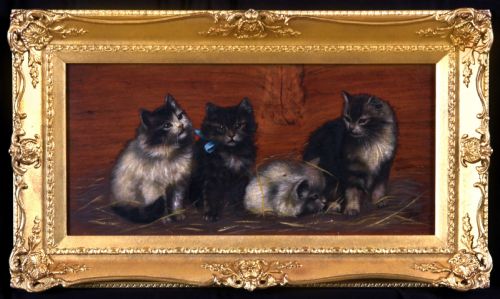

Vintage Feline Artwork
These vintage feline artwork pieces capture cats and kittens in oil, pastel, and print, offering charm for any room.
Vintage Feline Artwork
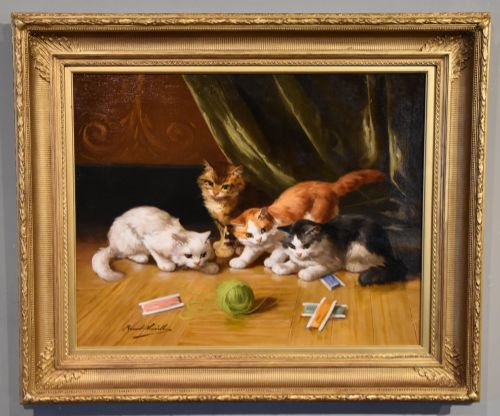
When you search for vintage feline artwork, you encounter everything from Victorian oil paintings of kittens to mid-century naive drawings and printed illustrations. The pieces range across the nineteenth century, nineteen-hundred, nineteen-thirty, nineteen-fifty, and nineteen-sixty periods, capturing cats through diverse artistic lenses.
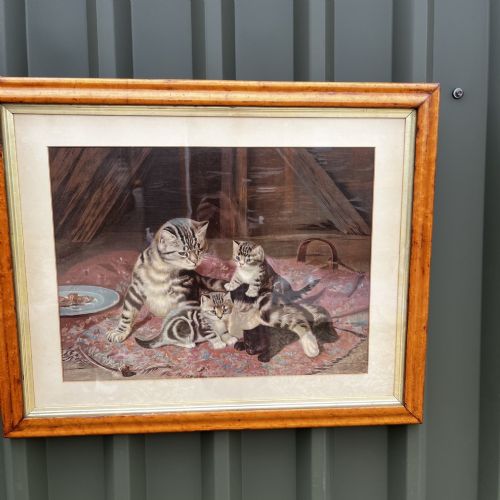
You are most likely to meet framed prints and oil paintings on this page, alongside pastels, drawings, and etchings. Subjects span domestic scenes of kittens at play, stylised portraits, and powerful depictions of leopards.
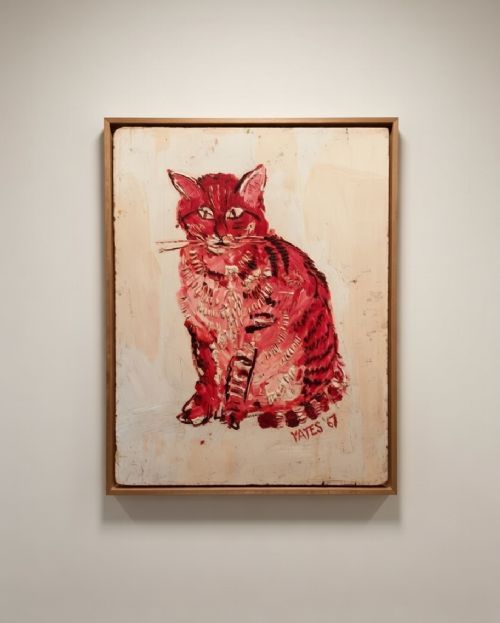
The styles shift from traditional realism and Victorian genre to Edwardian illustration and mid-century realism. This variety reflects changing attitudes towards animal subjects across different decades and artistic movements.
How they were made
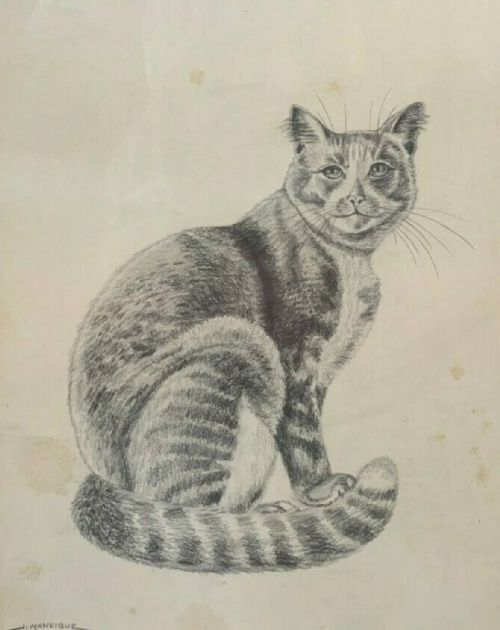
Artists deployed oil on canvas, oil on panel, and oil on board to build rich textures and deep tones for domestic cat scenes and wild leopards. Others favoured pastel and ink on paper to capture softer fur and immediate expressions.
Printmakers utilised chromolithography and etching techniques to produce multi-plate images and affordable plates for framing. Framing often involved wood, gilt wood, and gold leaf surrounds that defined the visual boundary of the artwork.
Listings feature paper, wood, glass, gilt wood, and gold leaf across multiple periods.
What varies in quality
Quality rests on the precision of the drawing and the handling of the medium, distinguishing casual decorative prints from masterly oil paintings by named artists. The vitality in the rendering of animal form and expression separates a routine depiction from a compelling study.
The integrity of the materials, from the stability of the wood panel or canvas to the preservation of pastel pigment and paper, dictates the enduring visual impact. Original framing elements also contribute to the integrity of the piece.
Alfred Arthur Brunel de Neuville·Horatio Henry Couldrey·Louis Wain·Herbert Dicksee·Fred Yates·Agnes Augusta Tallboys·Bessie Bamber·Cuthbert Edmund Swan·Deidre Borlase
The Vintage Feline Artwork Glossary
- Chromolithography
- A planographic colour printing technique used to produce multi-coloured prints. It relies on multiple lithographic stones, one for each colour applied.
- Etching
- A printmaking process where lines are incised into a metal plate with acid before ink is applied. The plate transfers the design onto paper under pressure.
- Victorian genre
- A style of painting focusing on scenes of everyday life, often featuring domestic animals and sentimental narratives. It was particularly popular during the nineteenth century.
- Oil pastels
- A painting and drawing medium formed from pigment mixed with a binder of oil and wax. It provides rich, buttery strokes on paper surfaces.
Vintage Feline Artwork: Frequently Asked Questions
How do I date vintage feline art?
Dating relies on stylistic clues, framing materials, and the medium used, such as nineteenth-century oils versus mid-century pastels. Evidence from signatures and inscriptions also helps place pieces within specific decades.
Comparing the artistic conventions of Victorian genre work with later mid-century naive art clarifies the chronological placement of each artwork.
Where were these cat artworks displayed?
These pieces traditionally hung in domestic parlours, sitting rooms, and studies as comforting or decorative household adornments. Framed prints and oils brought the warmth of animal companionship into the Victorian and Edwardian home.
Larger wildlife studies, such as leopard depictions, often suited libraries or more formal interior spaces.
Are these pieces original works?
The selection includes unique hand-rendered items such as oil paintings, pastel drawings, and ink works, alongside period prints. Each listing specifies the exact medium, distinguishing a one-off painting from a multiple-edition print.
Checking the medium helps identify whether you are acquiring a direct brush study or a chromolithographic reproduction.
How should I care for paper art?
Works on paper, including pastels, drawings, and prints, require protection from direct sunlight to prevent fading of pigments and discoloration of the backing. Keeping them behind glass in stable indoor humidity preserves the fragile materials.
Avoid hanging paper pieces in damp environments to protect both the artwork and its wooden frame.