


Vintage Pedestal Writing Table
A vintage pedestal writing table brings working history into a room, offering sturdy construction and fitted drawers.
Identifying a vintage pedestal writing table
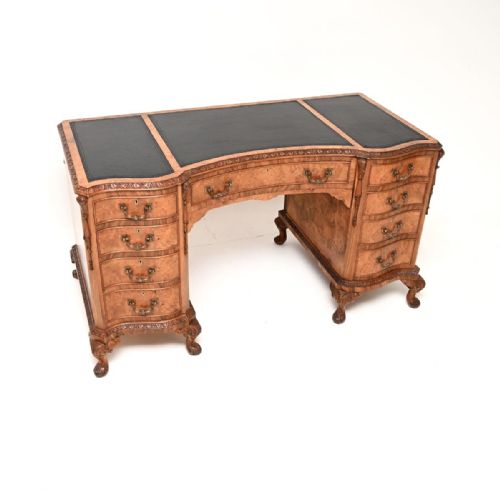
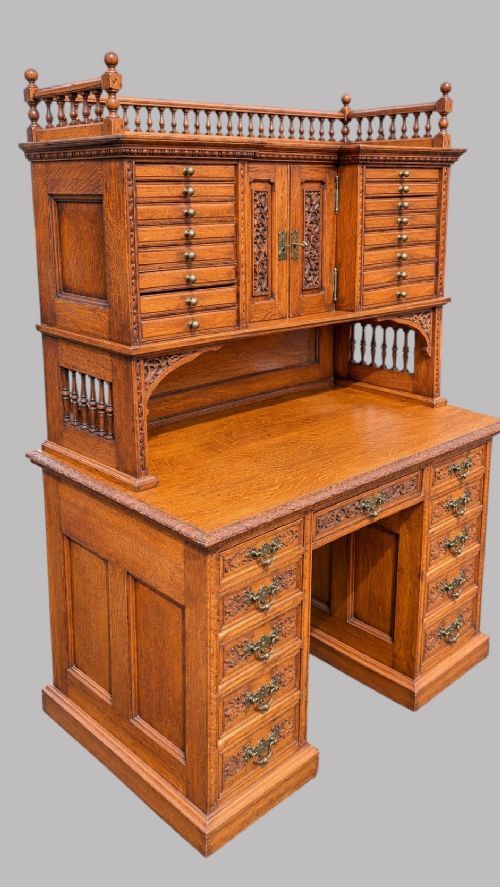
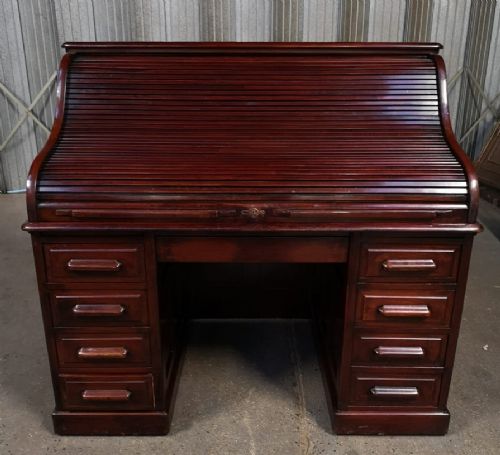
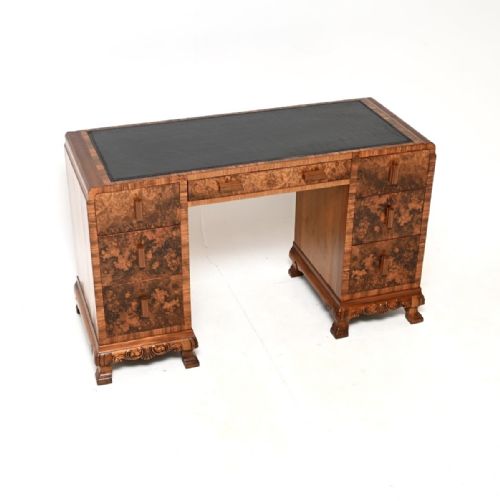
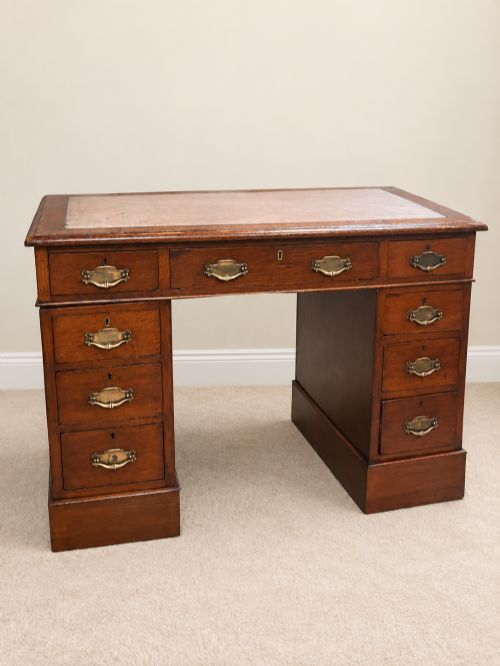
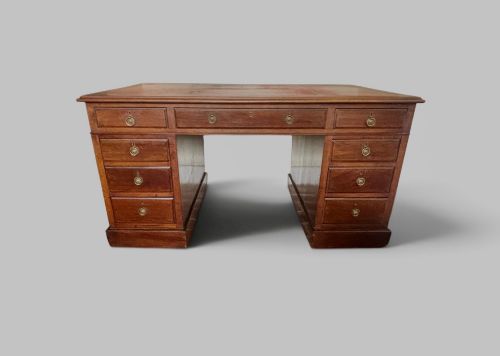
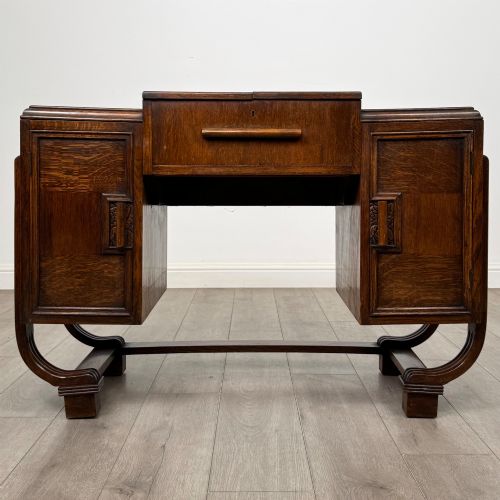
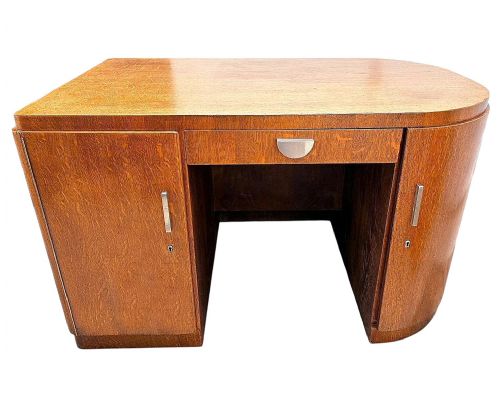
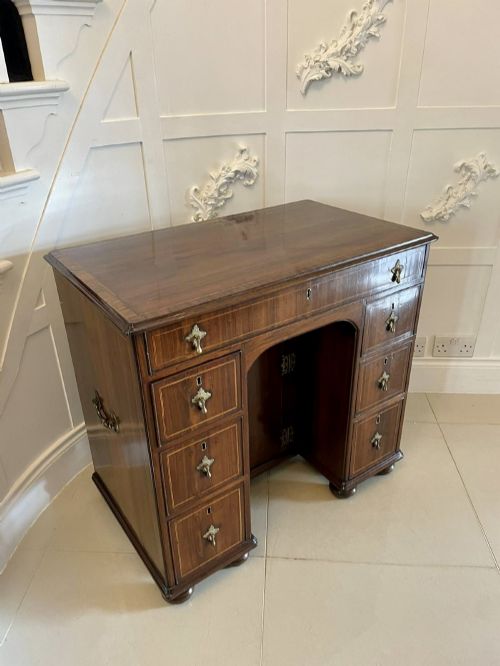
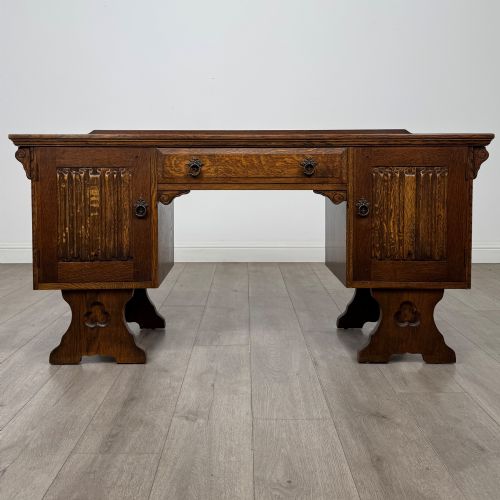
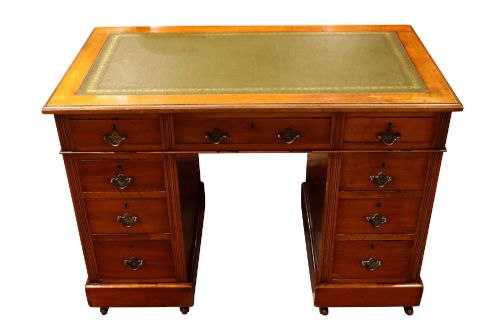
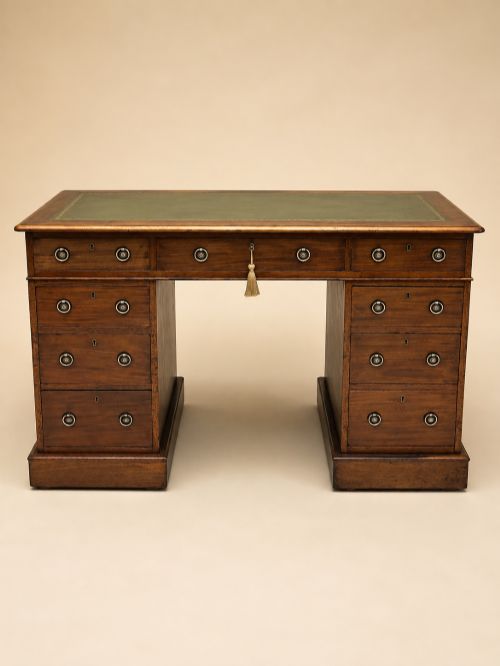
A vintage pedestal writing table comprises two upright banks of drawers supporting a wide top surface, designed for study or clerical work. These desks appear in several distinct historical periods represented here, including Victorian, Edwardian, and Art Deco epochs.
The versions most commonly met feature either twin pedestals flanking a central kneehole or single configurations built from sturdy hardwoods. Makers from the nineteenth and early twentieth centuries constructed these pieces to anchor a study or library.
Stylistic variations range from nineteenth-century mahogany inlays to Sheraton Revival details and streamlined Art Deco satin birch surfaces. Buyers encounter both partners desks intended for shared office use and single-sided kneehole writing desks.
Materials and construction methods
Cabinet makers utilised dense timbers such as mahogany, oak, and satinwood, alongside satin birch and general wood panels. These materials provided the structural integrity required for heavy daily use in offices and domestic studies.
Surface details incorporate inset leather writing surfaces and brass hardware fittings, complementing the polished timber frames. Panel construction and inlaid decoration appear frequently across nineteenth-century and twentieth-century examples.
Retail Price Guide 2026
Typical UK retail prices for vintage pedestal writing table, calculated from the Sellingantiques database of over a million retail prices indexed since 2003. This retail price guide relies exclusively on Sellingantiques data; no external sources or auction records are used, so the figures do not describe the wider market.
Some desks hide secret drawers within their pedestals, originally intended for stashing private ledgers.
Distinguishing factors in quality
Quality reveals itself in the selection of timber figures, such as figured mahogany or finely grained satin birch, paired with clean inlay work. The choice of materials dictates the visual presence of the desk within a room.
Superior construction involves precise joinery in the panelled pedestals and drawers, alongside well-fitted brass hardware and durable leather skivers. Lesser examples rely on simpler secondary woods and plainer finishes.
The Vintage Pedestal Writing Table Glossary
- Pedestal desk
- A heavy writing desk supported by two vertical columns or blocks of drawers, creating a central kneehole space for the user.
- Partners desk
- A large double-sided writing table designed for two people to work opposite one another, featuring drawers on both faces.
- Kneehole
- The open recess beneath the centre of a writing table, allowing the seated person to sit comfortably close to the work surface.
- Skiver
- The panel of leather inset into the top surface of a writing table to provide a smooth writing plane.
- Sheraton Revival
- A late nineteenth and early twentieth-century design style drawing inspiration from the lighter neoclassical furniture of George Sheraton.
Frequently Asked Questions
What is a pedestal writing table?
A pedestal writing table is a freestanding desk featuring two banks of drawers that support the main writing surface. This design creates a central kneehole for seating while offering substantial storage capacity.
The layout typically includes numerous smaller drawers flanking the central opening, making these desks practical for organising correspondence and documents.
How do I date a vintage desk?
Dating relies on observing the materials, construction methods, and stylistic indicators present in the piece. Pieces from the Victorian and Edwardian eras often display specific timber choices and decorative inlays characteristic of their periods.
Examining the secondary woods inside the drawers and the style of brass hardware provides further clues to the decade of manufacture.
What is a partners desk?
A partners desk is a large pedestal writing table finished on both sides, allowing two individuals to work face-to-face. These versions often incorporate drawers and cupboards duplicated on the reverse side.
They originated in large nineteenth-century offices and libraries where colleagues needed shared access to workspace and storage.
How do I care for the leather top?
The leather inset requires gentle cleaning with a slightly damp cloth followed by specialised leather dressings to prevent drying. Avoid placing hot cups or moisture directly onto the leather surface.
Regular light conditioning maintains the suppleness and colour of the writing surface over years of use.
Where should I place a pedestal desk?
These desks suit studies, home offices, or large living spaces where they can sit freestanding rather than pushed against a wall. Because the back and sides are finished, partners desks look particularly striking positioned in the middle of a room.
Ensure there is adequate clearance around the kneehole and drawers for comfortable daily use.