

Vintage Pedestal Bureau
A vintage pedestal bureau offers a substantial working surface anchored by banks of drawers, bringing period presence to a study.
Vintage Pedestal Bureau
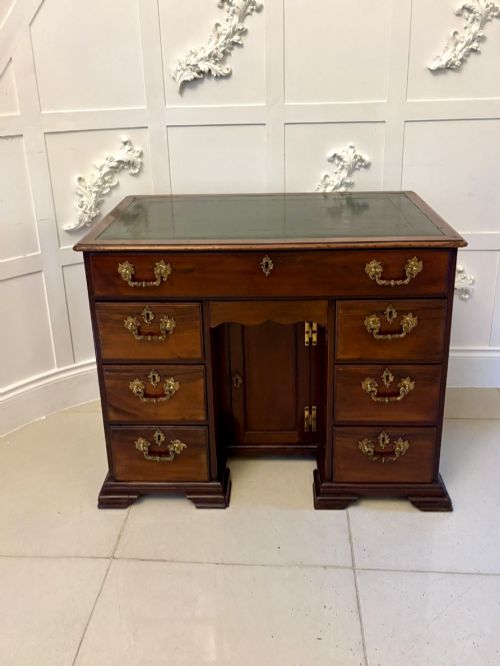
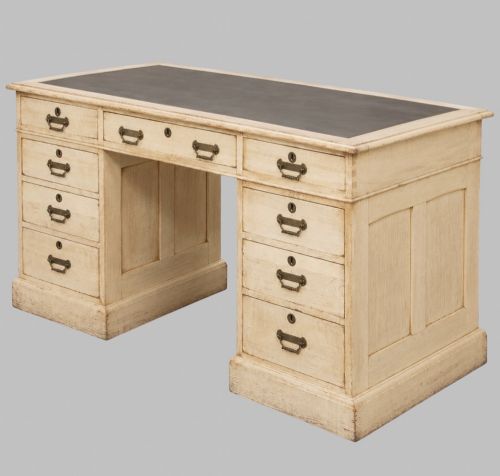
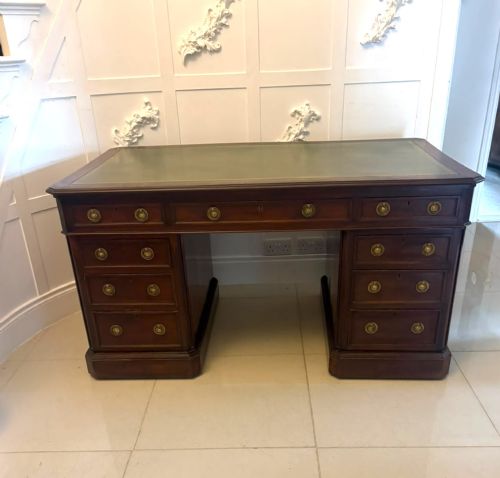
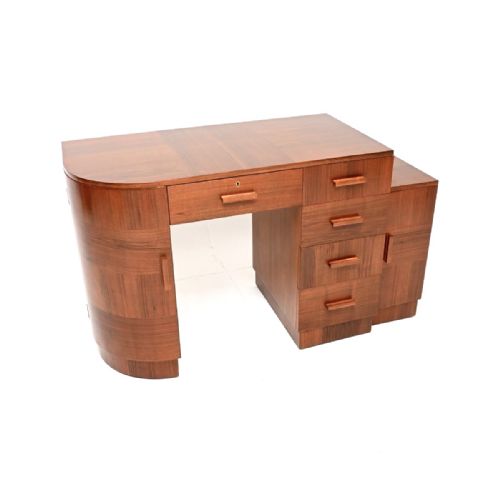
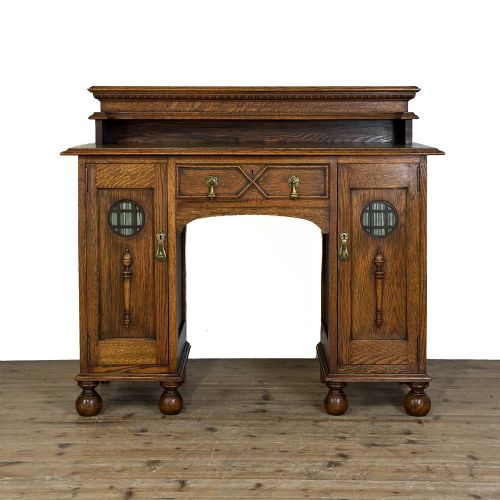
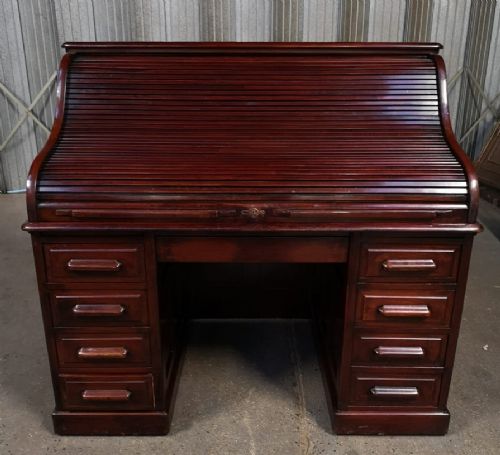
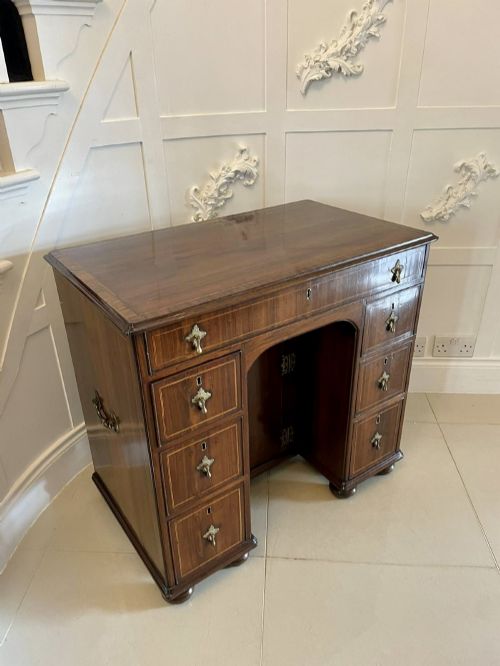
A vintage pedestal bureau encompasses freestanding desks built with twin banks of drawers supporting a central writing surface. The selection spans robust Victorian oak kneehole desks to streamlined Art Deco walnut writing tables from the 1930s.
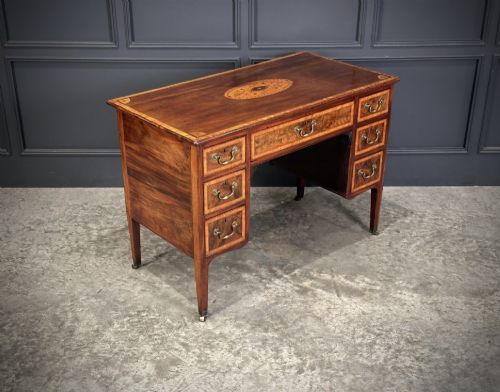
Edwardian satinwood and walnut examples appear frequently alongside nineteenth-century mahogany cylinder desks and roll top variants. Buyers encounter formal Georgian and Queen Anne revival forms next to practical early twentieth-century oak banker desks.
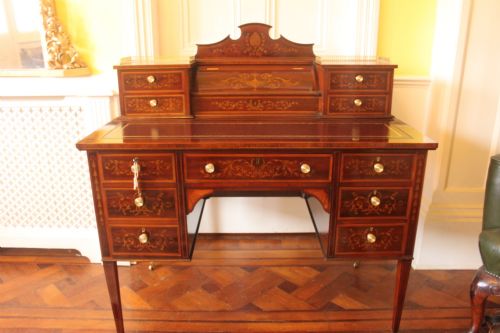
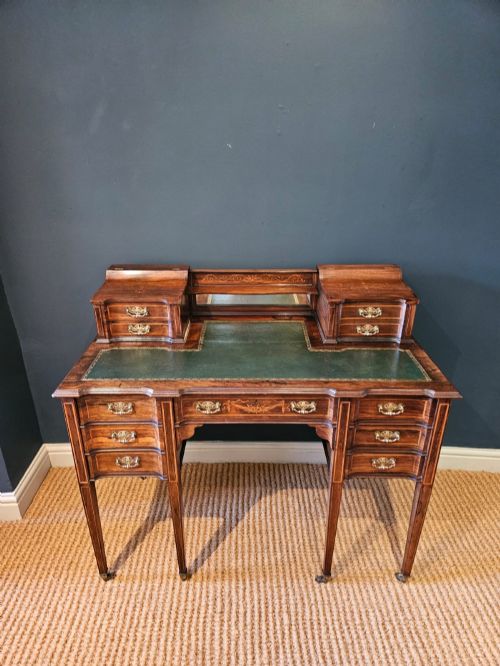
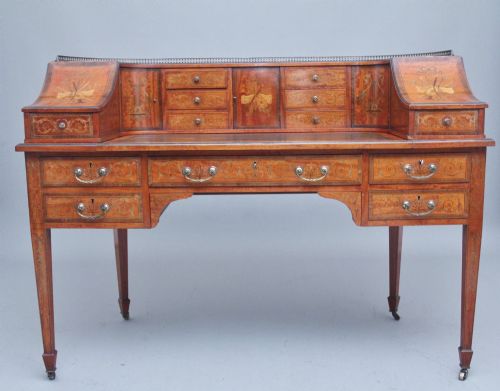
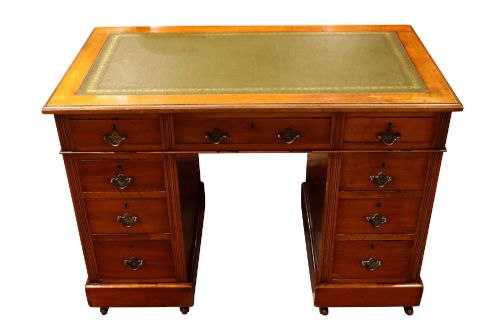
The layout typically involves nine drawers arranged around a central kneehole, though variations include kidney-shaped writing tables and Carlton house desks fitted with pigeonholes and small drawers.
Materials and construction methods
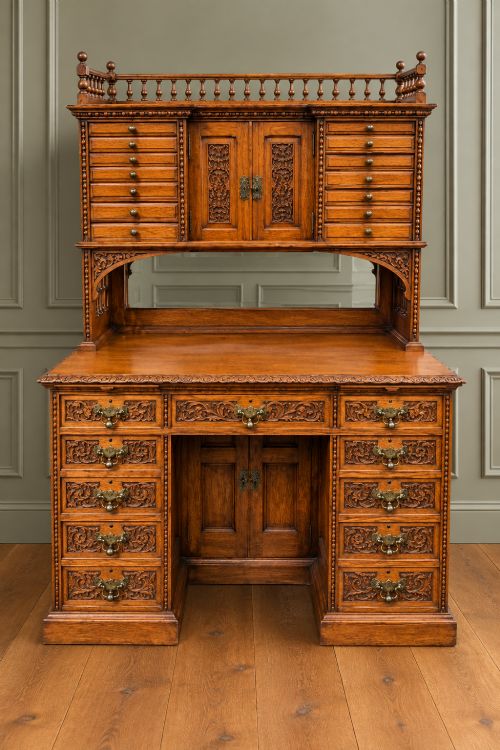
Cabinetmakers utilised rich timber veneers including burr walnut, burr elm, and figured mahogany applied over sturdy pine or oak carcass frames. Solid oak and mahogany feature heavily in nineteenth-century pedestal desks designed for heavy commercial and domestic use.
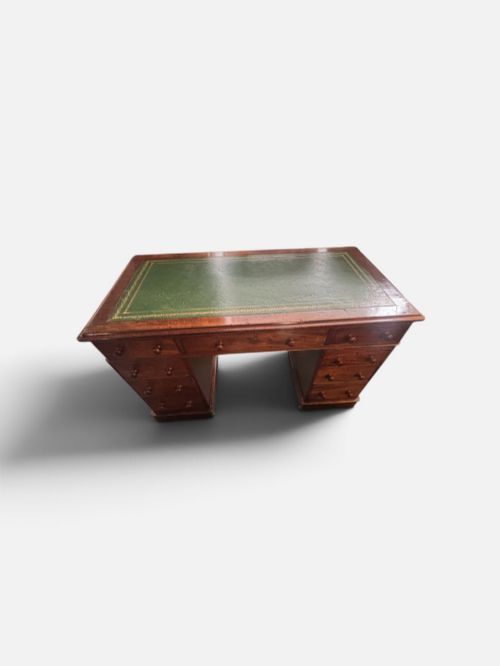
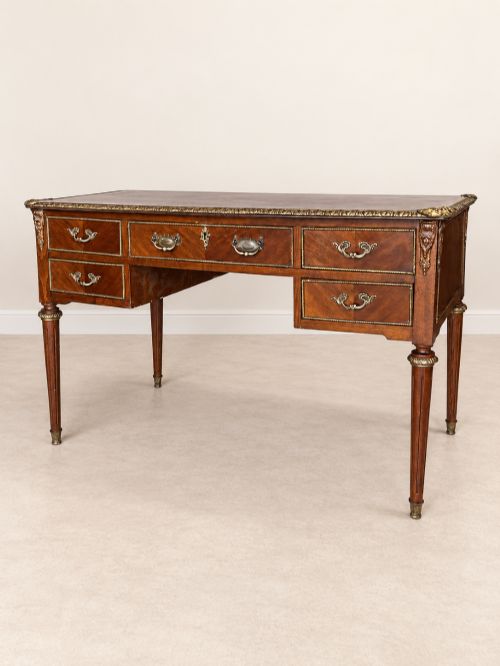
Writing surfaces are frequently inset with tooled leather panels framed by decorative stringing or crossbanding. Brass drop handles, escutcheons, and sliding cylinder shutters or tambour roll tops demonstrate the mechanical complexity of these pieces.
Several desks manage to retain their original locking mechanisms, meaning a rogue paperclip from the nineteenth century might still rattle inside a secret drawer.
Assessing craftsmanship and proportion
Quality rests upon timber selection, evident in deeply figured burr walnut veneers matched symmetrically across drawer fronts. Superior examples exhibit fine dovetail joinery, original brass hardware, and secondary woods like solid mahogany rather than cheaper conifers.
Proportion and scale distinguish standard commercial desks from exceptional cabinet work. Well-executed carving, panelled backs allowing freestanding placement, and smooth sliding mechanisms for cylinder fronts separate high-end workshop production from utilitarian office furniture.
Maple and Co·Heal and Son
The Vintage Pedestal Bureau Glossary
- Kneehole desk
- A writing desk featuring a central recess for the sitter's legs, flanked by two pedestals of small drawers. This configuration became standard for domestic libraries during the eighteenth and nineteenth centuries.
- Cylinder desk
- A desk fitted with a quarter-circle rotating wooden cylinder that conceals the writing surface and interior compartments when closed. When rolled back, a pull-out leather-lined writing slide usually emerges.
- Roll top desk
- A desk fitted with a flexible tambour shutter made of narrow vertical slats of wood that slide along a track. This mechanism secures the desk interior without requiring a solid folding lid.
- Carlton house desk
- A freestanding writing table characterised by a curved superstructure of small drawers and pigeonholes running around the back and sides. It was named after the London residence of the Prince Regent.
- Crossbanding
- A decorative border technique where thin strips of veneer are laid so the grain runs perpendicular to the main surface. It frames drawer fronts and table tops on finer period pieces.
Vintage Pedestal Bureau: Frequently Asked Questions
How do I care for the leather top?
Clean the leather gently with a slightly damp cloth and nourish it periodically with a specialist leather paste or wax. Avoid using harsh household cleaners or excessive water that might stain the hide or damage the surrounding wood.
Keep the desk away from direct sunlight and heat sources to prevent the leather from drying, cracking, or shrinking within its wooden frame over time.
How do I distinguish Victorian from Edwardian desks?
Victorian pedestal desks generally employ heavier timbers like solid oak and dark mahogany, often featuring deep mouldings and robust carved decoration. They tend to have a weighty, commanding presence suited to formal libraries.
Edwardian pieces frequently display lighter satinwood, delicate stringing, and tapered legs, reflecting a shift towards more refined, airy aesthetics around the turn of the twentieth century.
What is the difference between a kneehole and a pedestal desk?
While the terms are often used interchangeably, a kneehole desk specifically emphasises the central recessed space beneath the desktop for the user's legs. A pedestal desk broadly refers to any writing table supported by two separate drawer columns.
Most pedestal desks incorporate a kneehole configuration, but some variations like kidney shapes or cylinder fronts alter the traditional boxy silhouette.