
Vintage Paraffin Table Lamp
A vintage paraffin table lamp brings warm, weighted presence to a room, combining brass columns and colourful glass shades from the Victorian and Edwardian periods.
Vintage Paraffin Table Lamp
A vintage paraffin table lamp is primarily a nineteenth-century or early twentieth-century lighting fixture designed for domestic use. The pieces seen here span from the 1860s through the Edwardian era and up to 1930, capturing a period of domestic transition from oil to electric lighting.
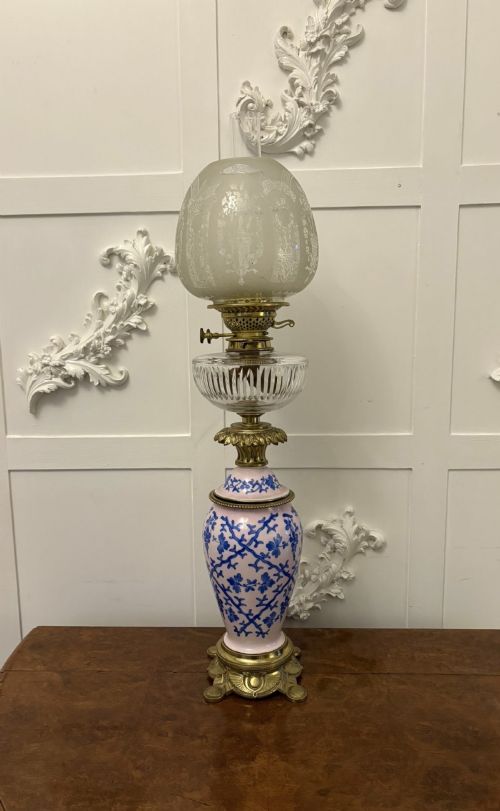
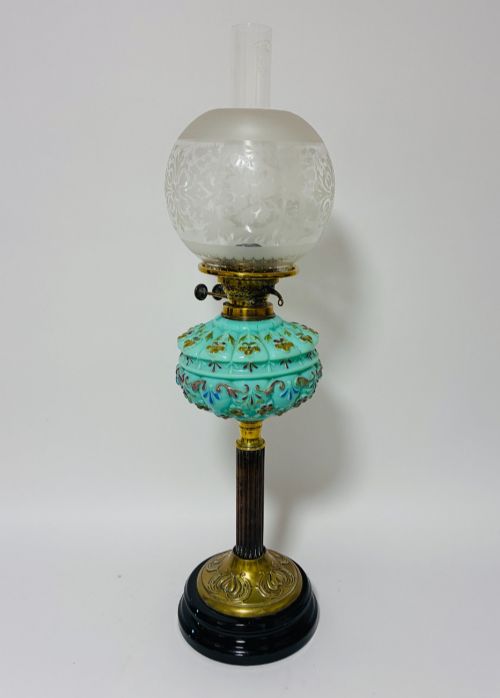
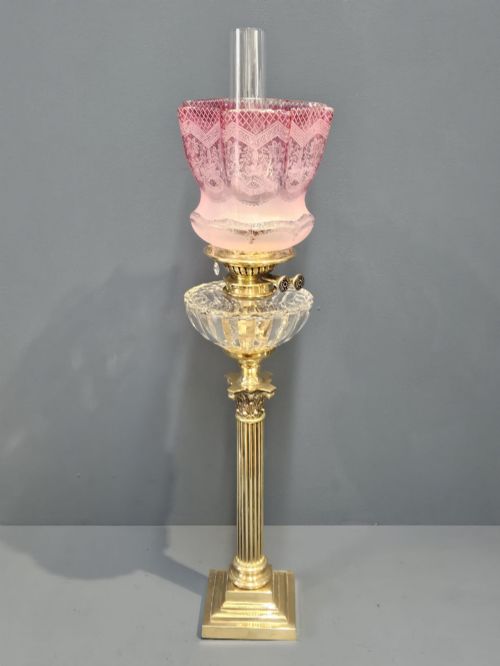
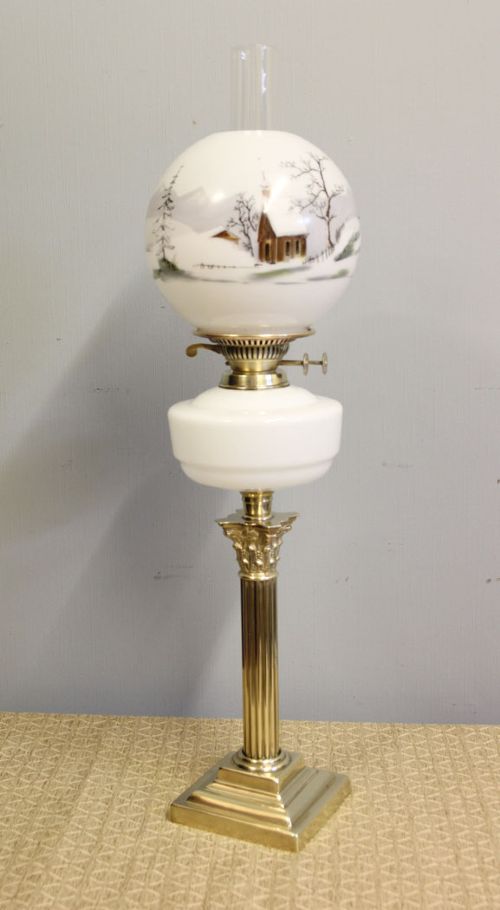
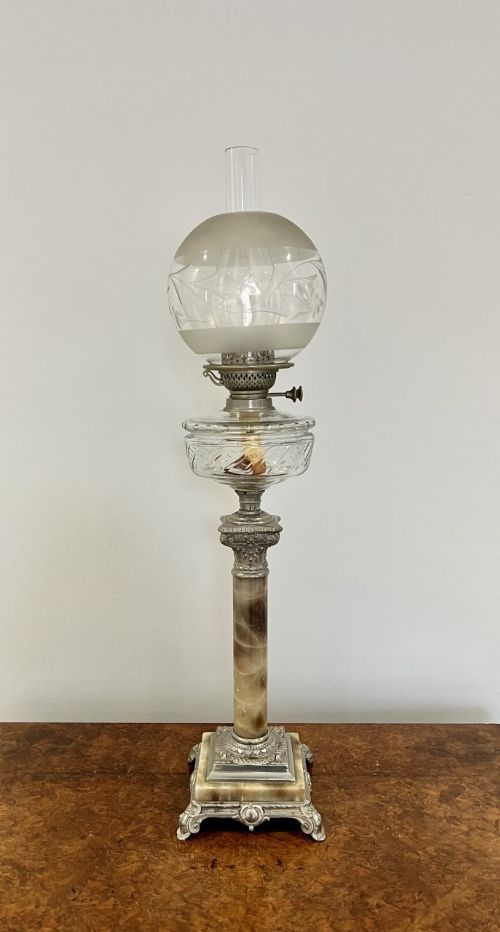
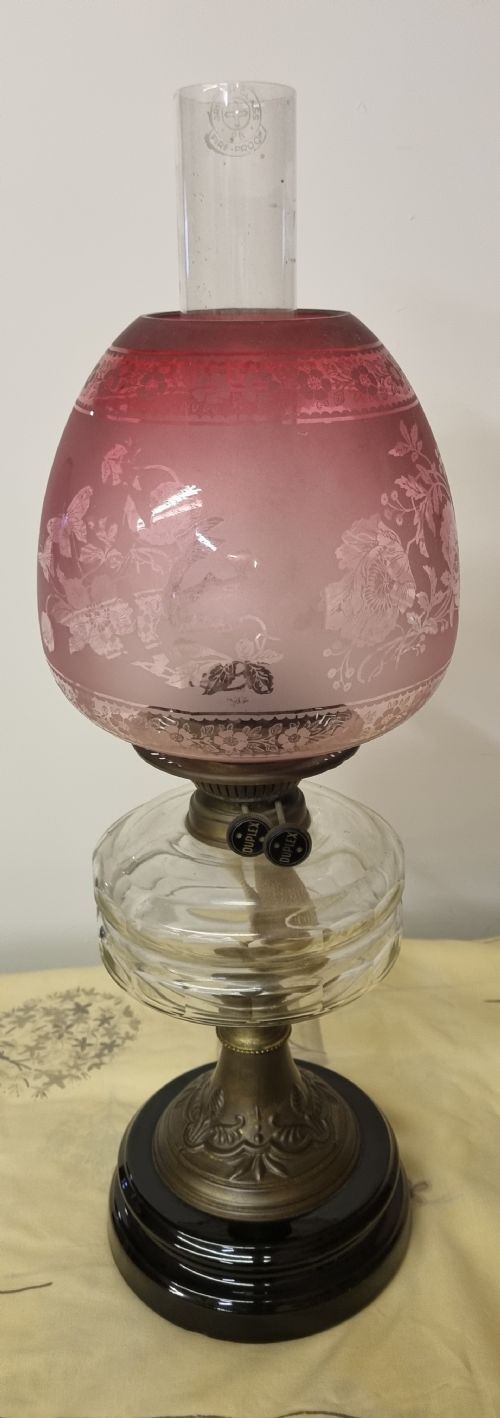
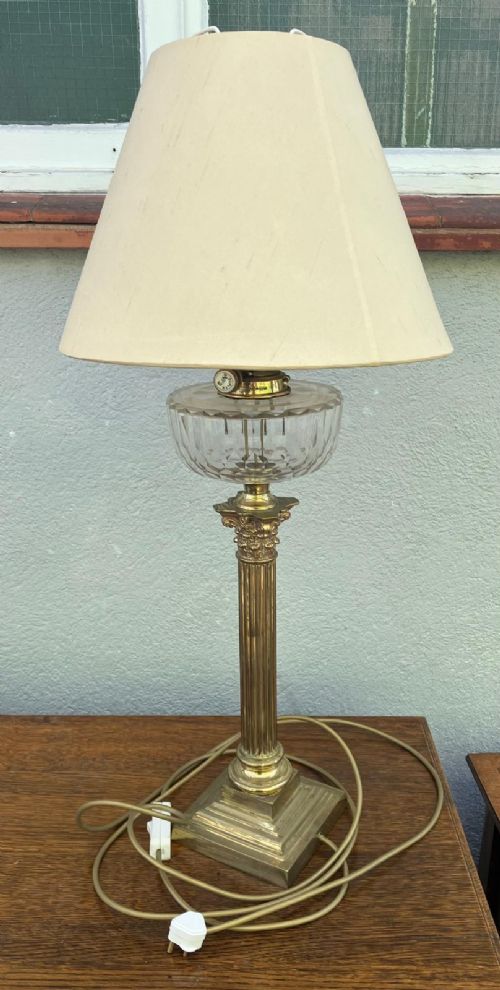
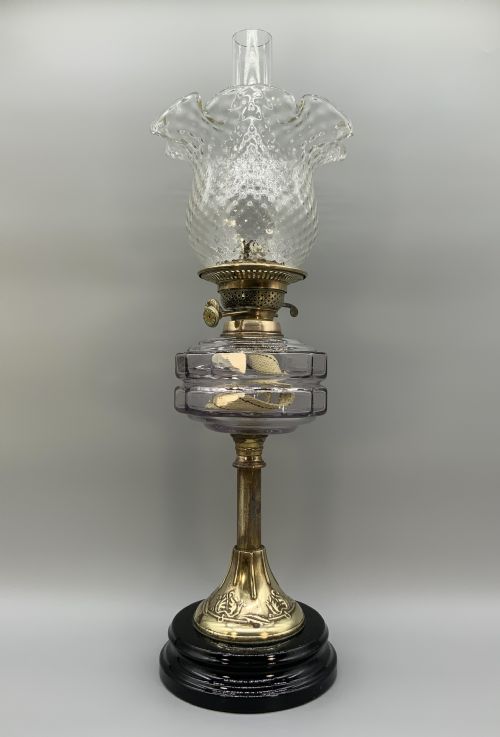
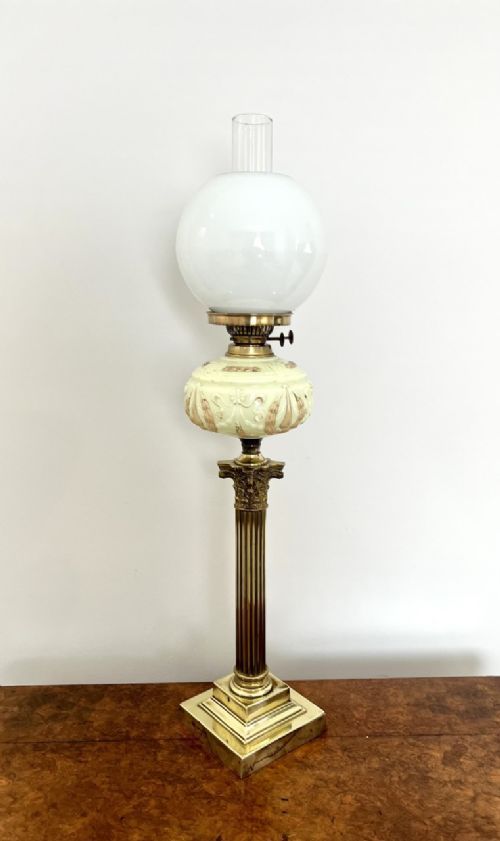
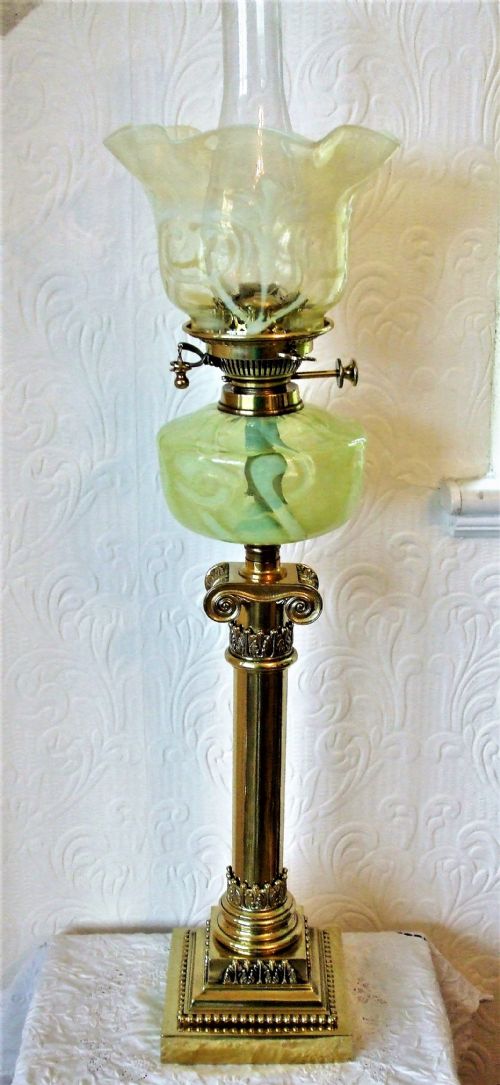
You will most frequently encounter brass column designs, often featuring Corinthian or Ionic capitals paired with glass fonts. These range from simple working lamps to large duplex double-burner models with hand-painted or etched shades.
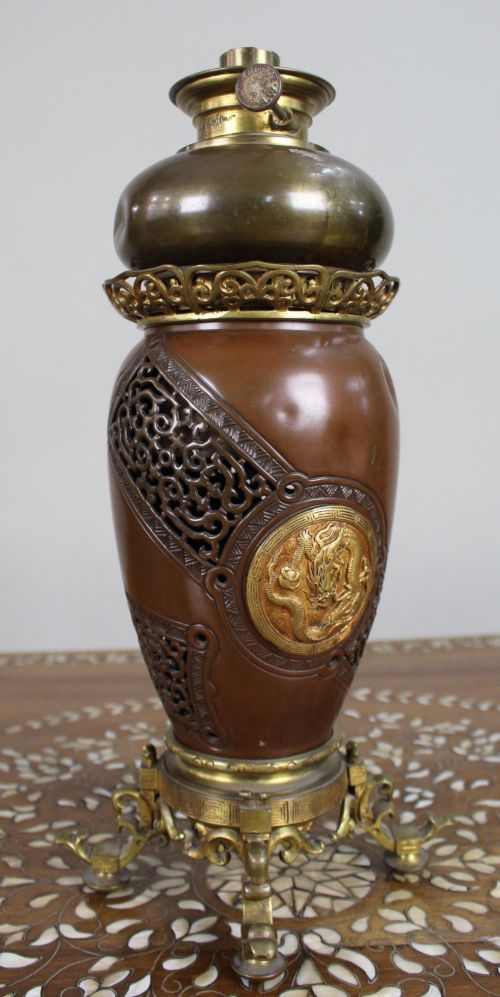
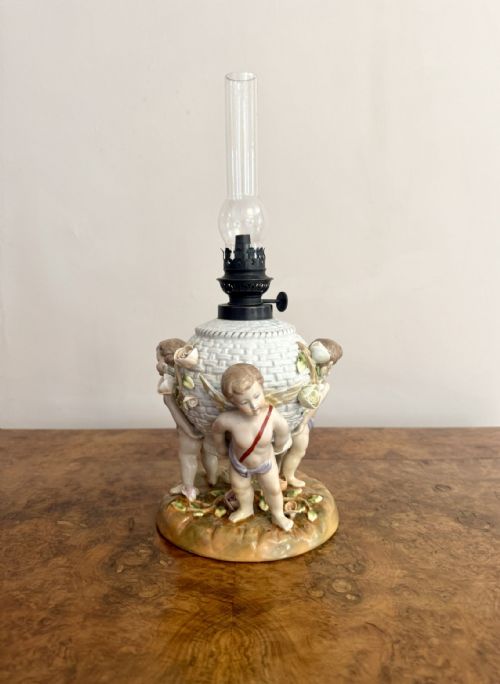
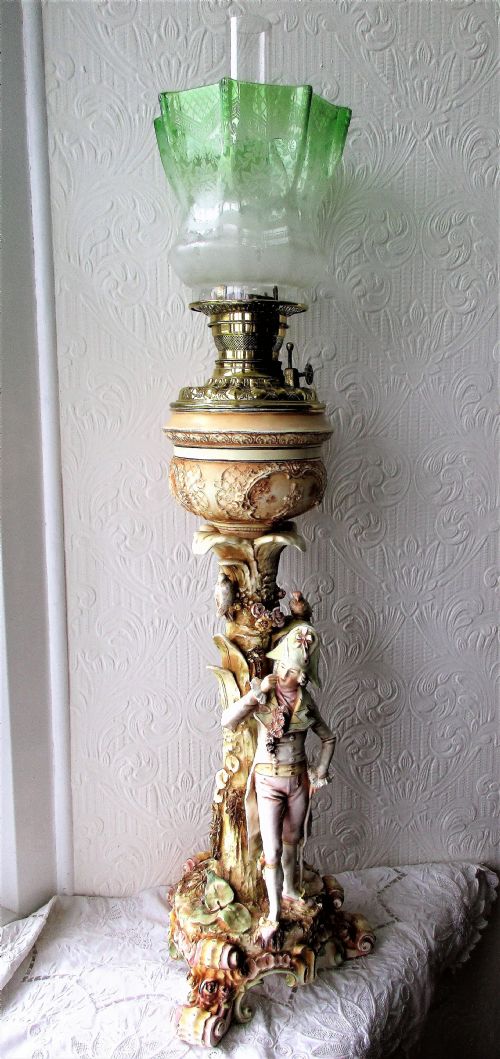
The materials and styles cross international boundaries, including English brasswork alongside Japanese bronze and German porcelain bodies. Forms vary from figural porcelain bases to restrained classical columns on stepped black glass plinths.
How they were made
Brass formed the structural backbone for many of these lamps, cast into columns and detailed with classical motifs or paired with heavy copper elements. This metalwork was frequently combined with ceramic or porcelain bodies painted with botanical or figural scenes.
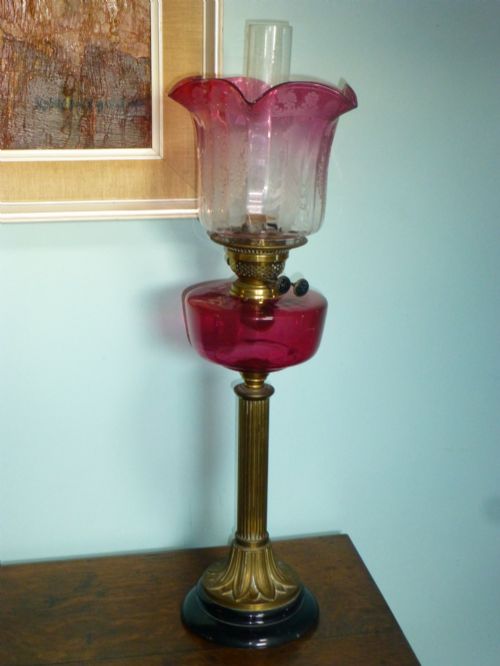
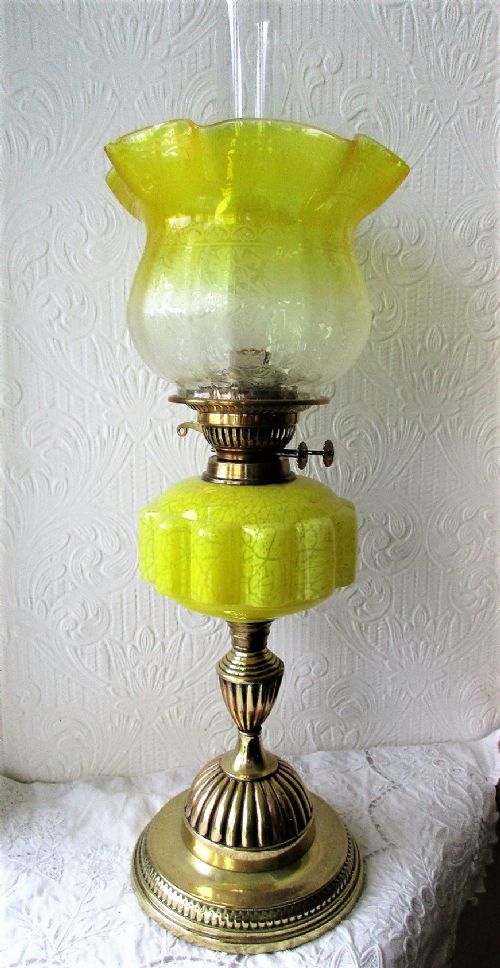
Glassmaking played a central role, utilising techniques such as hand-blowing, etching, and flash-craying to produce cranberry, opaline, and clear glass fonts and shades. Burner mechanisms in brass were engineered for twin-burning or duplex systems to maximise illumination.
What varies in quality
The distinction between standard domestic lighting and superior examples lies in the weight of the casting and the crispness of the architectural detailing on the brass columns. Exceptional pieces demonstrate finer hand-painting on the porcelain fonts and greater depth in the etched or cranberry glass shades.
Makers' marks on the brass burners, such as Hinks or Wild and Wessel, elevate the standing of a lamp by confirming specialised engineering. The integration of materials, such as combining onyx, bronze, and hand-blown glass, also marks out pieces of higher ambition.
Hinks of Birmingham·Wild and Wessel·Sitzendorf·Gustave Serrurier Bovy
The Vintage Paraffin Table Lamp Glossary
- Duplex burner
- A double-wick burner mechanism designed to produce a brighter flame than standard single-wick models. These require two separate wicks adjusted simultaneously.
- Corinthian column
- An architectural column style featuring ornate, acanthus-leaf capitals adapted for the stems of brass table lamps. This neoclassical form was exceptionally popular during the Victorian period.
- Cranberry glass
- A rich red-pink transparent glass created by adding gold chloride to the molten glass batch. It appears frequently in the shades and fonts of nineteenth-century lighting.
- Opaline glass
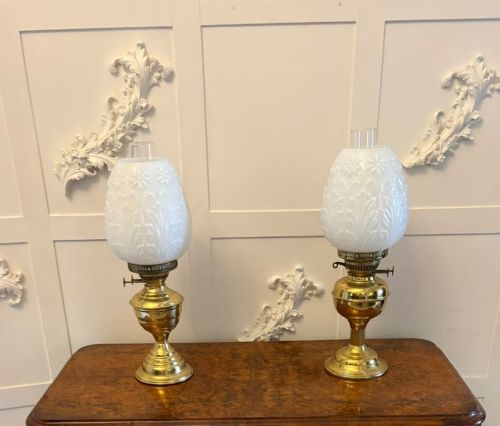
- An opaque, milky-white glass that diffuses light softly. It is commonly found in the globe shades of Edwardian lamps.
Vintage Paraffin Table Lamp: Frequently Asked Questions
How do I date a paraffin lamp?
Dating relies on stylistic clues, burner patents, and material combinations recorded across the 1860 to 1930 span. Victorian examples often favour classical brass columns, while Edwardian pieces introduce onyx and softer opaline shades.
Burner mechanisms often carry maker stamps or patent dates that narrow down the manufacturing window. Examining the base construction helps distinguish mid-nineteenth-century forms from later twentieth-century productions.
Were these lamps converted to electricity?
Many surviving pieces have been wired for modern domestic use over the decades. This conversion allows them to function safely as decorative table lighting in contemporary spaces.
Original burners and collars are sometimes retained intact even when wiring is introduced. Buyers should check whether the internal fittings preserve the original oil components or accommodate modern lamp holders.
What is a duplex burner?
A duplex burner uses two flat wicks placed side by side to generate a wider, brighter flame than a single wick. This mechanical advancement was standard on larger nineteenth-century table lamps.
Operating a duplex system requires twin thumbwheels to raise and lower both wicks evenly. These burners are frequently marked with the manufacturer name, aiding attribution.
How do I clean a brass and glass lamp?
Brass components respond well to gentle dusting and occasional cleaning with non-abrasive metal polish to maintain their surface character. Care must be taken around painted ceramic bodies or gilt decoration to avoid accidental rubbing.
Glass shades and fonts can be washed separately in warm soapy water. Removable glass elements should be handled carefully to prevent chipping the fitter rims.