
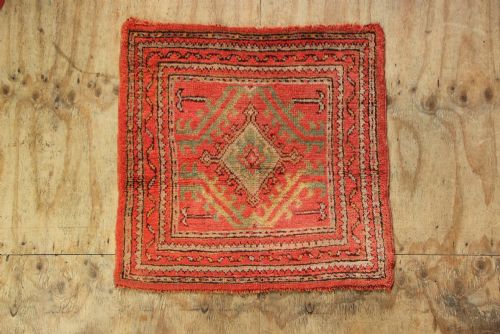


Vintage Oushak Area Rug
A vintage oushak area rug brings warmth and muted, organic colour to a floor through traditional Turkish weaving.
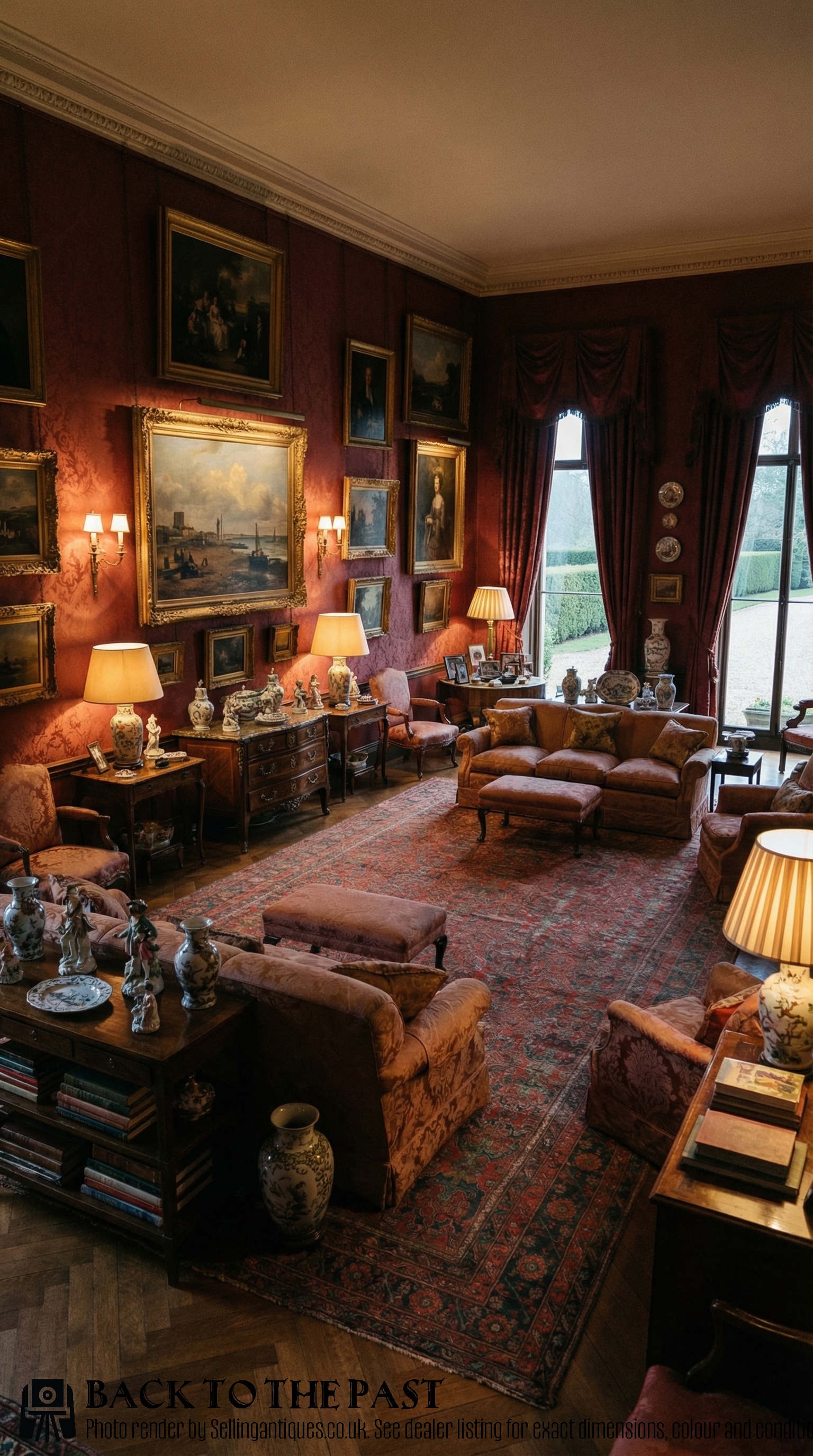
Vintage Oushak Area Rug
A vintage oushak area rug is a floor covering originating from Western Turkey, incorporating regional traditions such as Ottoman and Anatolian designs. When searching for a vintage oushak area rug, buyers encounter formats ranging from large carpets and squares to runners and accent pieces.
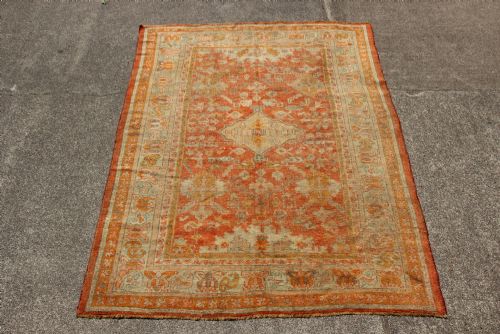
The pieces available span periods from the Victorian era through the late nineteenth and early twentieth centuries, specifically noting years like 1870, 1880, 1890, 1900, 1910, and 1920. Most examples take the form of larger carpets or area rugs, though smaller squares, runners, and kilims also appear.
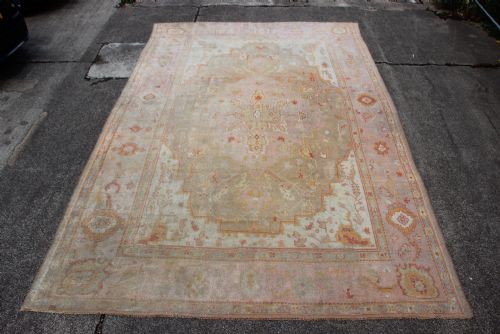
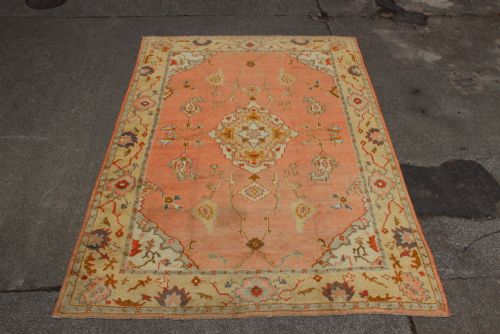
These floor coverings display distinct regional characteristics associated with Turkish Oushak workshops, utilising classic motifs like central medallions and pale or ivory fields. Buyers select them to anchor residential spaces with historical textile artistry.
How they were made
Makers constructed these textiles primarily using wool, cotton, and occasionally angora wool for the pile and foundation. Hand knotting techniques formed the dense surface, binding the fibres securely to the structural warps and wefts.
The combination of natural materials allowed weavers to achieve both durability in the foundation and a soft texture in the pile. Artisans employed traditional dyeing methods to produce the characteristic pale blue, beige, and ivory grounds seen across the periods.
Listings feature pieces from the Victorian era, 1870, 1880, 1890, 1900, 1910, and 1920, utilising wool, cotton, and angora wool.
What varies in quality
The distinction between standard and superior pieces rests upon the fineness of the knotting and the complexity of the design execution. Better examples exhibit greater precision in the rendering of medallions and borders.
The choice of materials also influences the character of the piece, with selections involving angora wool providing a different tactile quality compared to standard wool. Preservation of the pile and the integrity of the natural dye palette further differentiate individual items.
The Vintage Oushak Area Rug Glossary
- Oushak
- A traditional style of rug originating from the town of Ushak in Western Turkey, known for softer palettes and larger-scale floral motifs. These carpets often feature pale blue, beige, or ivory grounds.
- Kilim
- A flatwoven carpet or rug produced without a pile, utilising slit tapestry weaving techniques. They offer a lighter weight and distinct geometric patterns compared to knotted pile rugs.
- Medallion
- A central ornamental motif placed in the middle of the field, typical of many traditional carpet designs. It serves as the visual focal point of the composition.
- Angora wool
- A soft fibre derived from angora goats or rabbits, sometimes utilised in the pile of regional rugs. It imparts a distinct silky lustre and texture to the surface.
- Runner
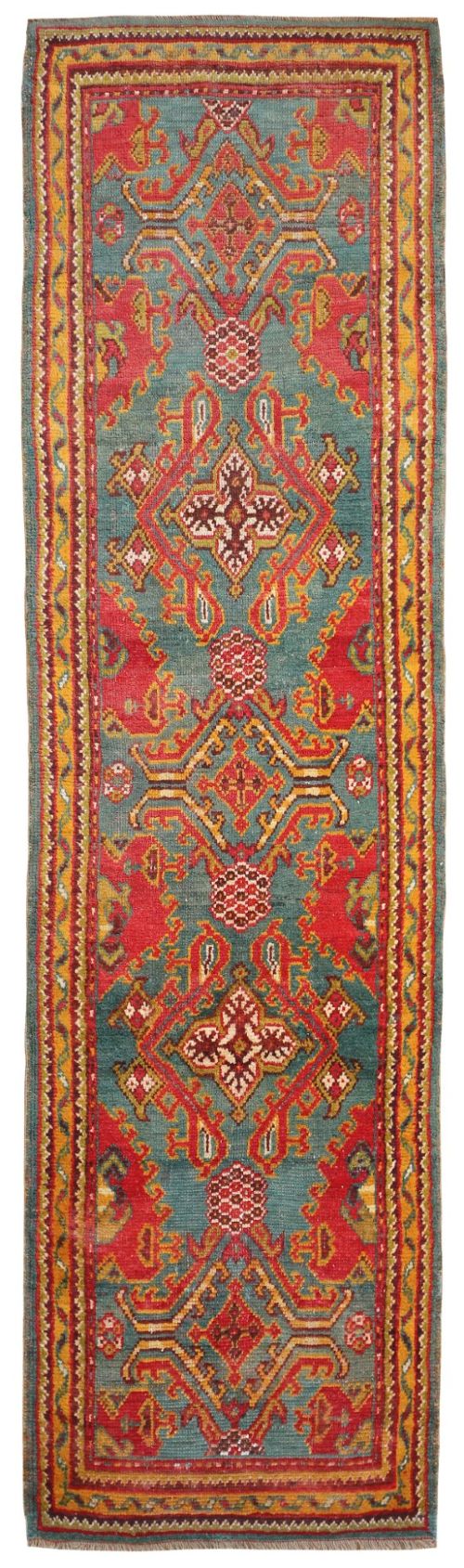
- A long, narrow format of rug specifically suited for hallways, corridors, or stairs. These pieces maintain traditional motifs scaled down to fit restricted widths.
Vintage Oushak Area Rug: Frequently Asked Questions
Where were these rugs made?
These rugs were produced in Western Turkey, specifically in and around the town of Ushak, which served as a major historical centre for carpet production.
Weavers in this region drew upon Ottoman and Anatolian design traditions, creating distinctive carpets that gained international renown for their unique aesthetic.
How do I clean a wool rug?
Cleaning requires gentle methods suitable for natural wool fibres and traditional dyes, avoiding harsh chemical treatments or excessive water immersion.
Professional specialist cleaning remains the safest approach for antique and vintage pile carpets to preserve the integrity of the wool and cotton foundation.
How do I date an old carpet?
Dating involves examining stylistic cues, structural characteristics, material composition, and the specific type of knotting used by the maker.
Comparing the palette, such as pale blue or ivory grounds, alongside Victorian or early twentieth-century design shifts helps narrow down the period of origin.
Where should I place a runner?
Runners suit narrow spaces such as hallways, entryways, corridors, or alongside beds where rectangular carpets are impractical.
Their elongated format allows them to introduce traditional patterns and floor protection to transitional areas of a home.