




Vintage Oriental Porcelain Bowl
A vintage oriental porcelain bowl brings together centuries of ceramic tradition and intricate hand-painted detail for any interior table or display.
Vintage Oriental Porcelain Bowl
When you search for a vintage oriental porcelain bowl, you encounter a diverse selection spanning Japanese and Chinese ceramic traditions. The items range from deep punch bowls and shallow dishes to large jardinieres and smaller tea cups.
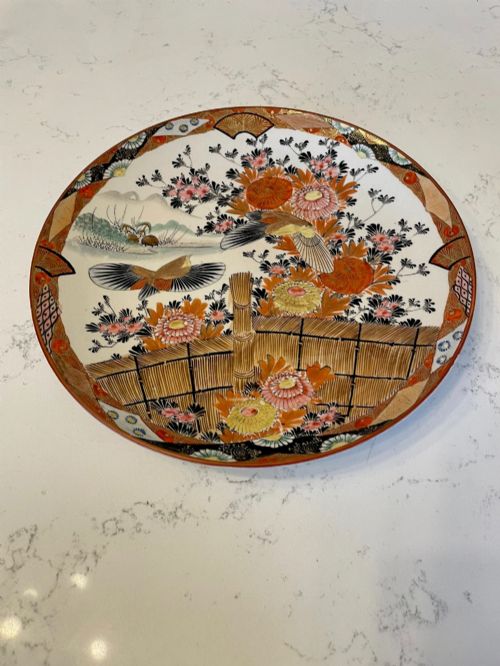
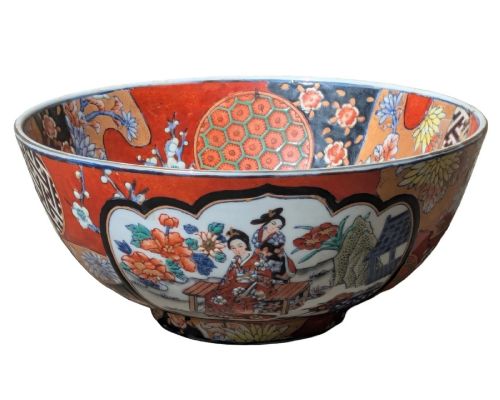
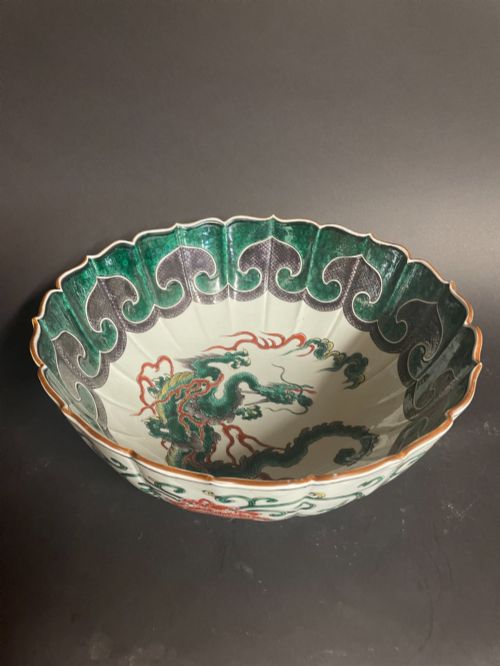
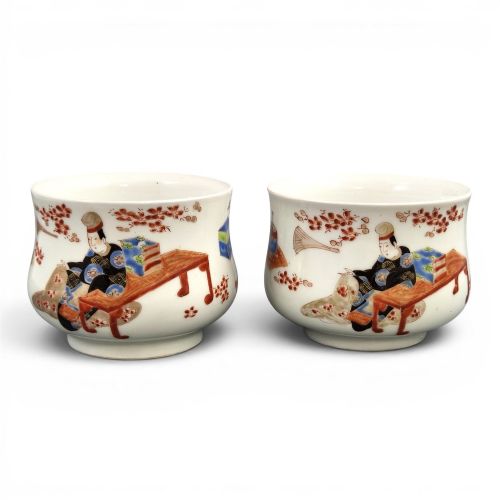
The pieces on this page heavily feature Japanese Imari wares from the Meiji and Showa periods, alongside Chinese export porcelain and earlier Edo pieces. Formats vary from standard circular bowls to hexagonal shapes, boat-shaped dishes, and scalloped edges.
Originating across the eighteenth, nineteenth, and early twentieth centuries, these vessels demonstrate the enduring demand for hand-decorated oriental porcelain. Buyers select them for their decorative presence and historical depth in a room.
Materials and construction
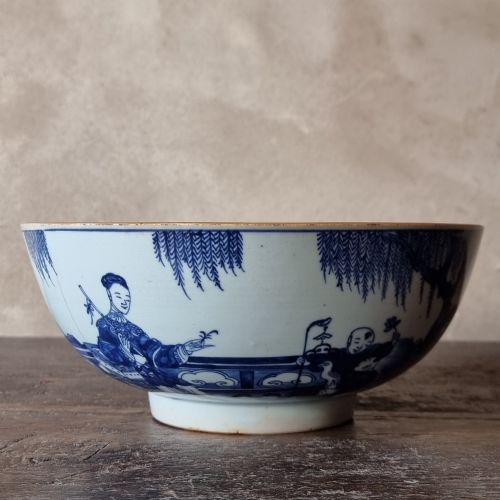
Makers formed these vessels from dense ceramic porcelain bodies, finished with protective glazes that provided a smooth surface for subsequent decoration. Cobalt underglaze was applied prior to firing to create durable blue motifs.
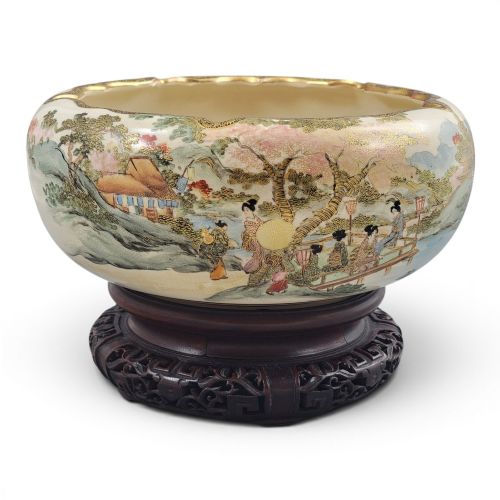
Overglaze enamels added vibrant multi-coloured palettes, often complemented by gold leaf and gilding to highlight specific patterns. Artisans painted these intricate designs by hand across bowls, dishes, and planters.
Several bowls come complete with their own period stands, proving that even porcelain likes to have a little platform under its feet.
Distinguishing quality
The refinement of the painted brushwork separates standard production items from superior examples, particularly in the density and precision of Imari patterns and Famille Rose motifs. Master signatures or attribution to known periods add distinction to individual pieces.
Condition and structural integrity heavily influence the standing of a bowl, especially where gilding and enamel decoration remain crisp and intact after centuries of handling.
Ginshōtei Gyokushi·Shizan·Daisy Makeig-Jones Wedgwood
The Vintage Oriental Porcelain Bowl Glossary
- Imari
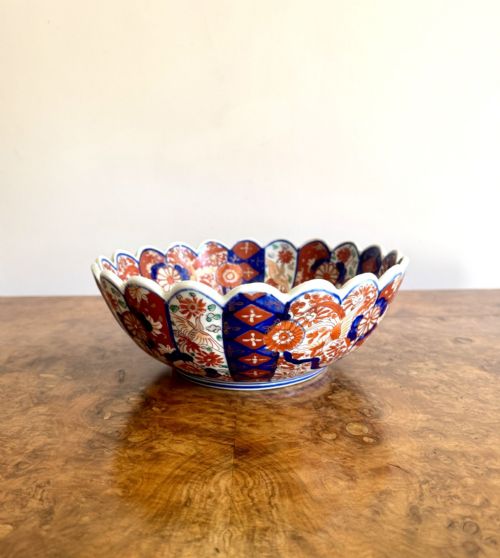
- A style of Japanese porcelain decorated in underglaze blue, iron red, and gold, originating in the town of Arita. These pieces gained immense popularity in Europe during the export period.
- Famille Rose
- A prominent palette of Chinese porcelain decoration defined by opaque pink or rose enamel colours introduced during the Qing dynasty. The style depicts floral and figurative scenes.
- Jardiniere
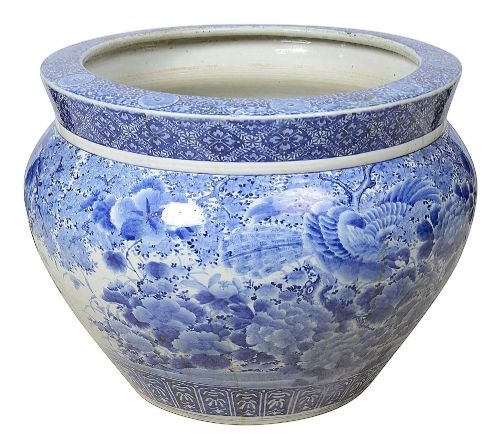
- A large ornamental pot or bowl designed to hold live plants or flowers. In oriental ceramics, these heavy porcelain vessels often feature extensive blue and white or Imari motifs.
- Arita
- The Japanese town central to the production of early porcelain exports. Kilns here produced the distinctive blue and white and Imari wares found in collections today.
- Meiji Period
- The era in Japanese history spanning from 1868 to 1912, noted for a surge in decorative arts produced for international export. Pieces from this time often display rich gilding and complex patterning.
Vintage Oriental Porcelain Bowl: Frequently Asked Questions
How do I identify an Imari bowl?
An Imari bowl typically displays a distinct colour palette combining underglaze cobalt blue with iron red and gold leaf accents over a porcelain body. The patterns are dense, frequently featuring floral and geometric panel designs.
These pieces were produced extensively in Arita, Japan, for both domestic use and export markets throughout the Edo period and later centuries.
How were antique punch bowls used?
Large oriental porcelain punch bowls served communal drinks during social gatherings in the eighteenth and nineteenth centuries. They sat centrally on dining tables to hold mixed beverages.
Today, collectors utilise these substantial vessels as decorative centrepieces on sideboards or tables rather than for their original dining purpose.
Can I use these bowls for food?
While these items are primarily decorative antiques, eighteenth and nineteenth-century porcelain bowls are physically capable of holding dry contents. However, antique glazes and overglaze enamels can be sensitive to modern detergents and abrasive cleaning.
Hand washing in tepid water with mild soap protects the delicate gold leaf and enamel decoration from wear.
How do I date a porcelain bowl?
Dating relies on examining the characteristics of the ceramic body, the style of the cobalt underglaze, and the specific overglaze enamel palette. Reference to historical periods such as the Meiji era or Qing dynasty provides a broad chronological framework.
Maker marks, where present, help narrow the origin to specific potteries or decades.