



Vintage Opalescent Glass Dish
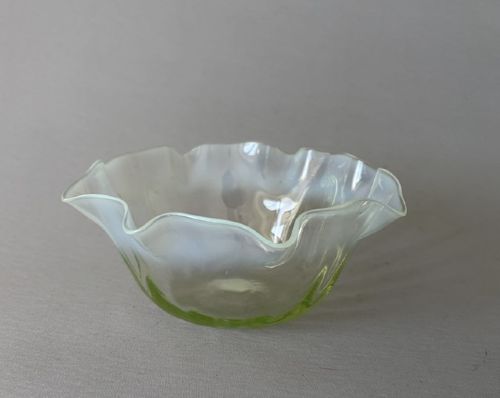
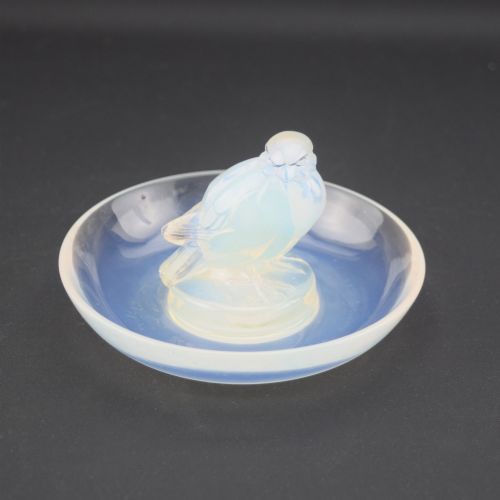
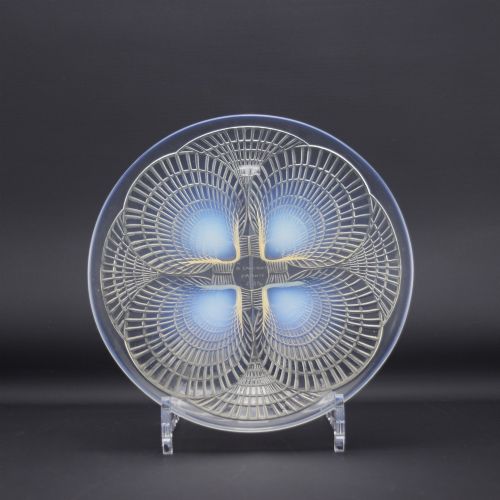
A vintage opalescent glass dish captures shifting blue and amber tones in the light, bringing tactile Art Deco texture to a room.
Vintage Opalescent Glass Dish
A vintage opalescent glass dish is a decorative vessel that diffuses light through milky, translucent body material to create a characteristic blue or fire glow at the edges. These pieces span decorative bowls, plates, chargers, and shallow dishes produced primarily during the 1920s and 1930s. Buyers seek out these items for their striking optical effects and distinct period form.
The selections on this page concentrate heavily on Art Deco and Arts and Crafts designs originating from French workshops and British makers. Most items encountered here take the form of open bowls, deep coupes, and moulded plates decorated with flora, fauna, or geometric motifs. The periods represented stretch from the late nineteenth century through the Edwardian era into the nineteen-thirties.
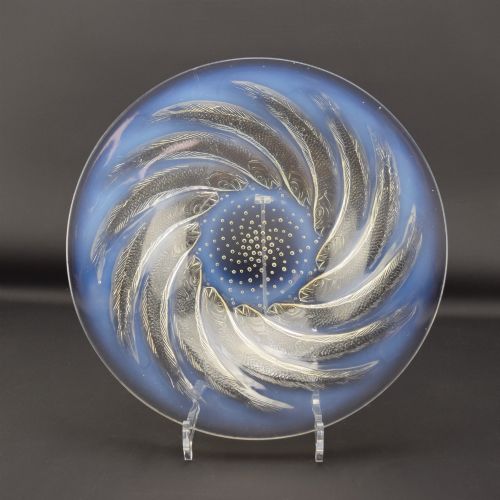
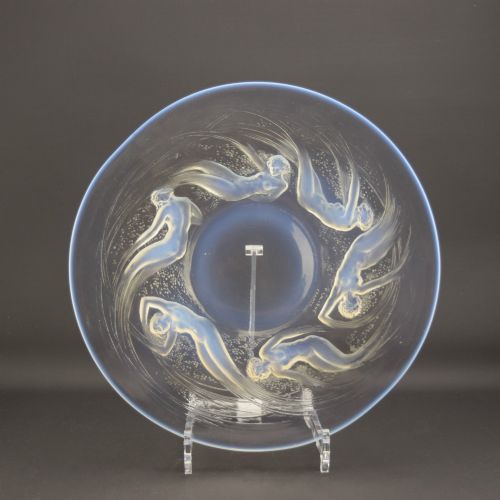
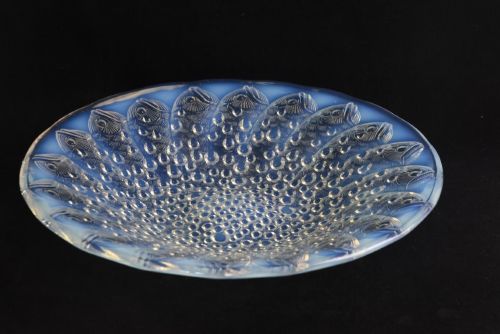
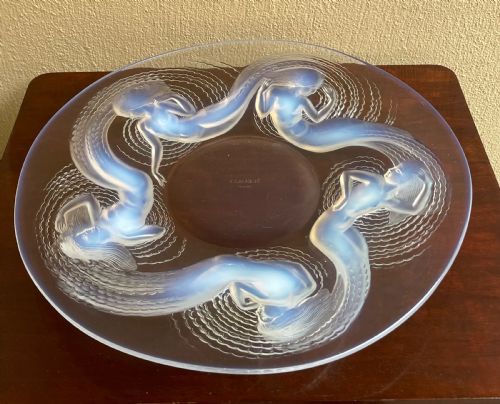
Moulded and pressed techniques dominate the inventory, yielding relief designs of fish, birds, flowers, and undulating waves. Pieces range from simple utilitarian sweetmeat dishes to large chargers and ceiling pendant bowls. Each object relies on the interplay between clear glass and milky opalescence to reveal the modeled details.
How they were made
Makers produced these pieces using press-molded and glass-molding techniques that forced molten material into heavy metal dies. This process allowed workshops to achieve deep relief ornamentation, capturing intricate details of feathers, scales, and petals across the surface of each bowl or plate. The addition of specific mineral agents to the glass batch caused the characteristic milky opacity and surface fire.
The physical substance combines opalescent glass, frosted glass, and pressed glass, occasionally paired with patinated brass and wood mounts. Workers frequently applied surface patination, such as staining or enamel highlights, to deepen the contrast within the moulded recesses. This combination of chemical opacity and mechanical pressing defined the production methods of the era.
Materials appearing across these catalogue records include patinated brass and wood alongside diverse formulations of opalescent glass.
What varies in quality
Quality rests upon the crispness of the moulded relief and the strength of the opalescent optical effect within the glass body. Superior examples display sharp definition in complex motifs like fish or floral heads, where the milky fire concentrates evenly along the raised edges. Weaker pieces exhibit blurred transitions and uneven distribution of the opacifying agents.
The depth and brilliance of the colour play also separate standard production from masterworks. The most accomplished items shift distinctly between cool blue tones in transmitted light and warm amber tones in reflected light. The weight of the metal and the precision of the finishing work further distinguish the tiers of craftsmanship.
Rene Lalique·G Vallon·Jobling·Etling·Sabino
The Vintage Opalescent Glass Dish Glossary
- Opalescent glass
- Glass containing chemical additives that produce a milky, translucent appearance with a characteristic blue or orange glow when lit from different angles. This optical phenomenon defines the visual appeal of these dishes.
- Coupe ouverte
- An open bowl or shallow dish form utilised extensively for display and table service during the Art Deco period. These wide vessels showcase central moulded motifs across their interior bases.
- Press-molded glass
- Glass formed by mechanical pressure inside a metal mould rather than by free-blowing. This technique enabled the consistent mass production of complex decorative patterns and high-relief designs.
- Charger
- A large decorative plate or shallow dish placed beneath other courses or displayed upright on a stand. In this inventory, chargers provide a wide canvas for elaborate figural and botanical compositions.
- Sweetmeat glass dish
- A small vessel traditionally intended for holding confectioneries, nuts, or small sweet items. These compact pieces often feature intricate miniature moulding.
Vintage Opalescent Glass Dish: Frequently Asked Questions
How do I display a vintage opalescent glass dish?
Place the dish near a natural light source or an interior display light to activate the milky blue fire within the glass body. Positioning the piece against a dark background enhances the contrast of the translucent edges.
Avoid stacking these heavy glass vessels to protect the moulded relief and delicate rims from impact damage. Use secure plate stands for upright display of chargers and decorative plates.
What is the difference between opalescent and frosted glass?
Opalescent glass contains chemical agents that create an internal milky quality and a shifting colour change between blue and amber when lit. Frosted glass relies on surface etching or acid treatment to achieve a matte, non-reflective texture across the material.
Many vintage pieces combine both qualities, using frosted backgrounds to make the raised opalescent details stand out more sharply.
How do I identify an Art Deco glass dish?
Look for symmetrical geometric patterns, stylized natural motifs such as streamlined fish and floral heads, and heavy, thick-walled construction. The forms emphasise bold outlines and industrial efficiency combined with decorative luxury.
Check the base or rim for signature stamps, moulded factory marks, or registration numbers associated with major French and British workshops.
Were these dishes used for food?
Most of these vessels served primarily as decorative centerpieces, sweetmeat holders, or display chargers rather than everyday tableware. The heavy lead or soda-lime glass compositions were designed to catch light rather than endure heavy dining use.
Smaller dishes functioned as ashtrays or vanity trays, while larger coupes and bowls remained empty on tables and sideboards.