



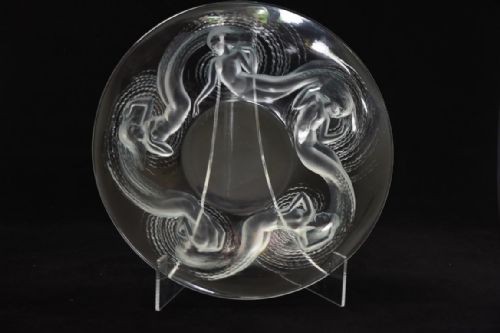


Lalique Molded Glass Charger
A lalique moulded glass charger brings the tactile weight of the early twentieth century into a room through confident relief and light.
Lalique Molded Glass Charger
A lalique moulded glass charger is a substantial decorative plate or shallow bowl produced during the Art Deco and Art Nouveau periods. These objects serve as visual centerpieces, functioning primarily as display dishes rather than tableware.
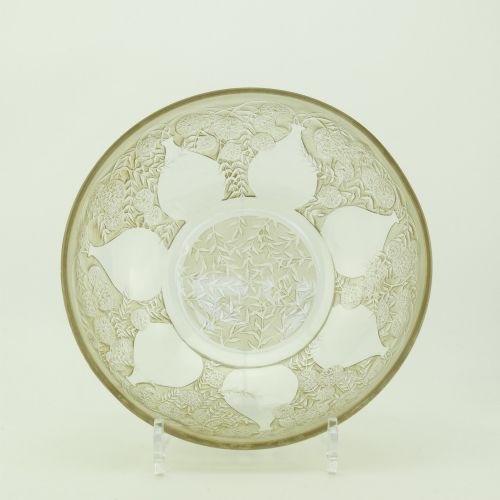
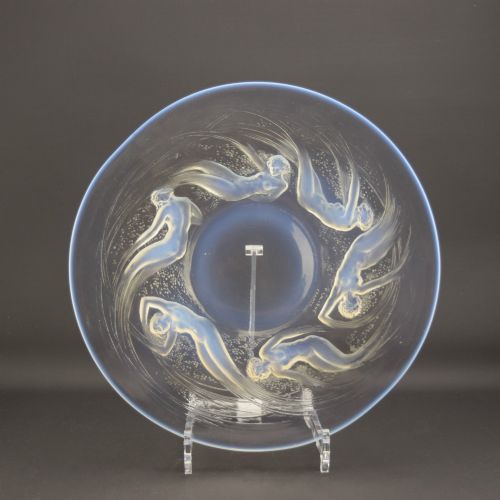
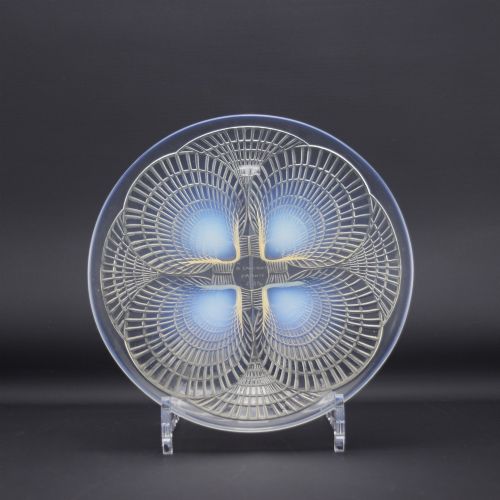
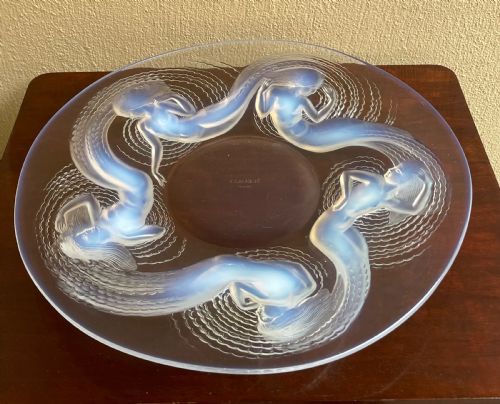
The versions most commonly met on this page date from the 1920 and 1930 decades, manifesting in distinct forms such as shallow bowls, salvers, and wide plates. Each piece represents a specific named model designed to catch light across its patterned surface.
Makers and designers from this era utilised moulded techniques to create low-relief figurative and floral motifs across the glass body. Buyers find that these chargers combine utilitarian circular formats with sculptural ornamentation.
How they were made
Makers utilised hot glass pressed into heavy metal moulds to achieve the crisp definition required for intricate relief patterns. This technique allowed the glass body to take on deep contours and thick rims suited to large decorative plates.
Cooling and finishing involved manual polishing alongside the application of surface treatments like opalescence, frosted textures, and sepia staining. These contrasting finishes highlight the raised motifs against the translucent or clear background.
Several plates depict charging hounds and swimming sirens, proving that early twentieth-century dining tables secretly yearned for mythology and chase scenes.
What varies in quality
Quality rests upon the crispness of the moulded relief and the depth of the opalescent or stained finish across the glass. Superior examples display sharp definition in complex motifs like figures, flowers, and animals without blurring.
The handling of light through the material distinguishes finer pieces, where the play between frosted areas and clear or stained sections creates visual depth. Weight and the uniform distribution of the glass mass also mark the execution of the work.
René Lalique
The Lalique Molded Glass Charger Glossary
- Charger
- A large decorative plate or salver used for display rather than for serving food. These pieces form the primary canvas for the moulded designs.
- Opalescent Glass
- Glass that exhibits a milky, bluish lustre when viewed by reflected light while appearing amber or warm when seen by transmitted light. This effect enhances the tactile depth of the relief.
- Frosted Glass
- Glass treated to achieve a matte, non-reflective surface texture by acid-etching or sandblasting. It contrasts sharply with clear or stained sections.
- Sepia Stain
- A dark brownish pigment applied by hand into the recesses of the moulded glass pattern to define the design. This contrasts against the lighter body of the charger.
- Art Deco
- A design style of the 1920 and 1930 eras characterised by stylised motifs, geometric symmetry, and streamlined forms. It informs the overall geometry of these plates.
Lalique Molded Glass Charger: Frequently Asked Questions
How do I display a glass charger safely?
These heavy plates require secure wall brackets or dedicated stable stands designed for thick glass objects. Keep them away from direct edges where accidental knocks might occur.
Position the charger where natural light can pass through the opalescent or frosted surfaces to reveal the moulded details fully.
Can I use these chargers for food?
These historic decorative plates are intended strictly for display and visual appreciation rather than daily dining use. Their antique status and delicate surface treatments require careful handling away from cutlery.
Cleaning should be limited to gentle dusting with a soft dry cloth to protect the original finish.
How do I tell the 1920 pieces from the 1930 pieces?
Objects from the 1920 period often lean towards flowing botanical motifs or early geometric arrangements reflecting the transition of styles. Designers experimented with dense opalescence during these years.
Pieces from the 1930 era frequently exhibit bolder, more stylised relief work and varied surface stains that define the mature Art Deco aesthetic.
What causes the milky blue effect in the glass?
The milky blue appearance results from specific chemical compounds added to the molten batch during manufacturing, which scatter light as it passes through. This opalescence reacts dynamically to changing light conditions in the room.
Master glassmakers controlled cooling rates to bring out this shimmering quality across the raised portions of the design.