



Blue Opalescent Glass Platter
A blue opalescent glass platter delivers a milky, luminous play of light across pressed and frosted surfaces that collectors prize.
Blue Opalescent Glass Platter
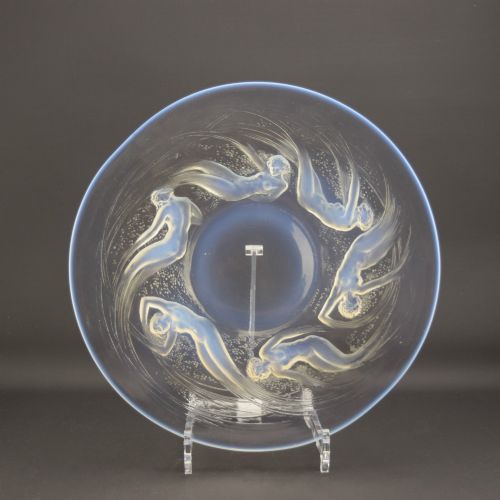
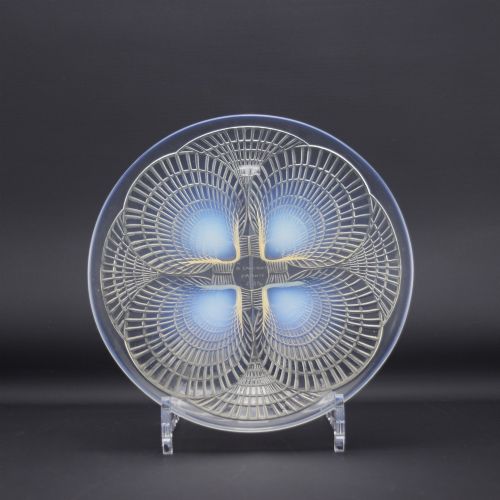
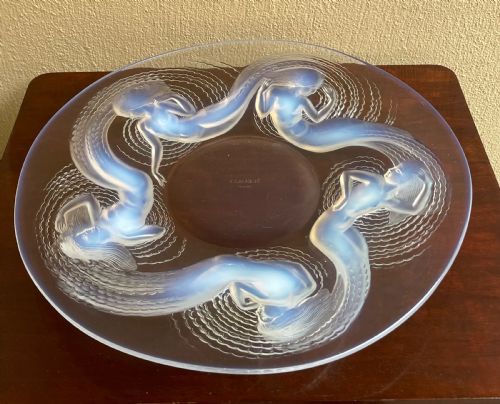
A blue opalescent glass platter is a decorative plate, bowl, charger, or salver produced during the Art Deco period of the nineteen twenties and nineteen thirties. These glass pieces display a distinctive milky blue luminescence that shifts in tone depending on the light.
The objects appearing on this page take the form of shallow bowls, chargers, and decorative plates rather than utilitarian tableware. They are ornamental items designed to catch and refract light through pressed or frosted glass contours.
How they were made
Makers utilised pressed and frosted glass techniques to shape these decorative pieces. The moulding process allowed intricate low-relief designs of marine life, flora, and figurative subjects to emerge directly onto the surface.
The characteristic opalescent effect was achieved through chemical agents added to the molten glass batch, creating a translucent milky appearance that catches a blue hue when lit from the front.
Mermaids and fish dominate these plates, proving that glassmakers of the interwar years were utterly obsessed with things that swim.
What varies in quality
Quality rests in the crispness of the moulded relief and the depth of the opalescent fire within the glass. Pieces with sharp, well-defined motifs demonstrate superior control over the cooling and pressing process.
The strength and evenness of the milky blue glow distinguish finer examples from duller specimens. Balance in the glass thickness and subtlety in the frosted finish set apart the best objects.
Rene Lalique·Verlys
The Blue Opalescent Glass Platter Glossary
- Opalescent glass
- Glass that exhibits a milky, bluish translucence when lit from certain angles. This optical effect results from the partial crystallization of the glass during cooling.
- Pressed glass
- Glass shaped by being pressed into a metal mould using a plunger. This technique allowed intricate decorative patterns to be produced efficiently.
- Frosted glass
- Glass with a textured, matte surface created by acid-etching or sandblasting. It diffuses light softly across the piece.
- Charger
- A large decorative plate or salver used for display rather than for serving food. These items form the substantial centrepieces of glass collections.
Blue Opalescent Glass Platter: Frequently Asked Questions
What is a blue opalescent glass platter?
A blue opalescent glass platter is a decorative Art Deco glass plate or charger featuring a milky blue translucent finish.
These pieces were produced primarily during the nineteen twenties and nineteen thirties as ornamental items rather than diningware.
How do you date these glass platters?
Dating relies on stylistic markers from the Art Deco period, alongside specific mould designs and maker signatures where present.
Evidence from the nineteen twenties and thirties points to distinct aesthetic choices in floral and marine motifs.
How were these decorative plates used?
These items served as decorative chargers, salvers, and shallow bowls for display within the home.
Their primary function was aesthetic, designed to showcase the interplay of light on opalescent and frosted surfaces.
What causes the blue opalescent effect?
The milky blue appearance is an optical phenomenon created during the glass-making process through specific chemical additions.
It causes the glass to scatter shorter wavelengths of light, producing a distinctive glow.