

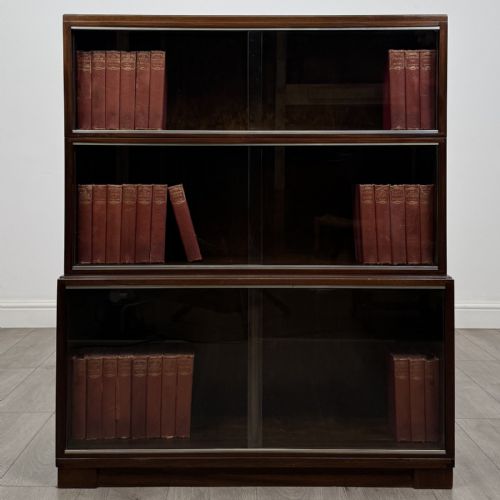
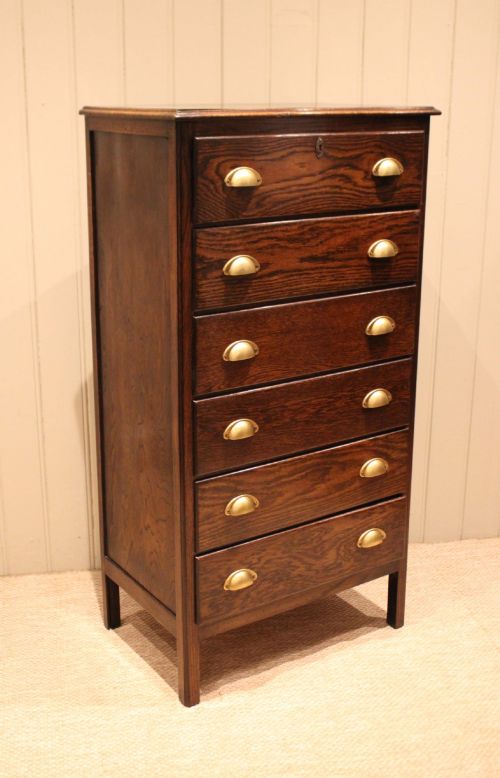
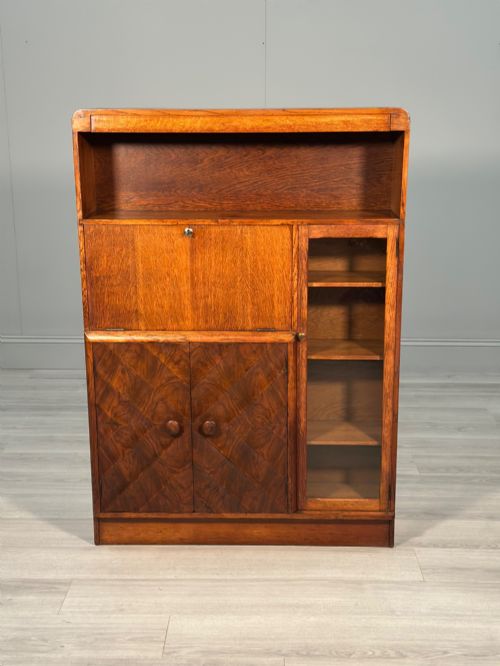
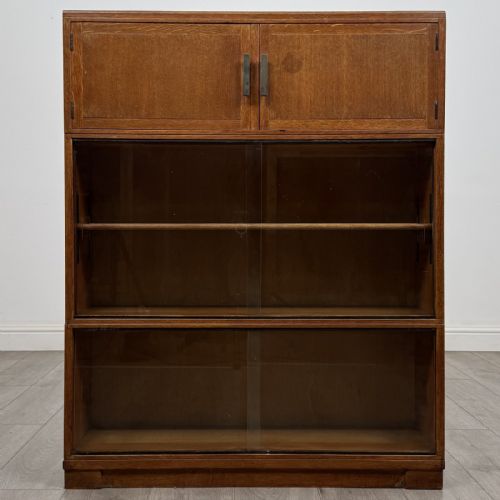
Vintage Office Storage
Vintage office storage pieces are practical workspace furniture items in oak, mahogany and metal that keep documents and paperwork organised.
Vintage Office Storage
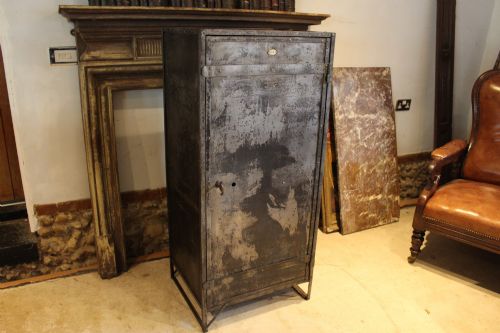
When buyers search for vintage office storage, they look for functional period items designed to organise paperwork in a workspace. These pieces span from the 19th century through the Edwardian era and into the mid-20th century, encompassing styles from industrial metal to traditional timber. The selection centres on items built for daily clerical work, combining utility with period craftsmanship.
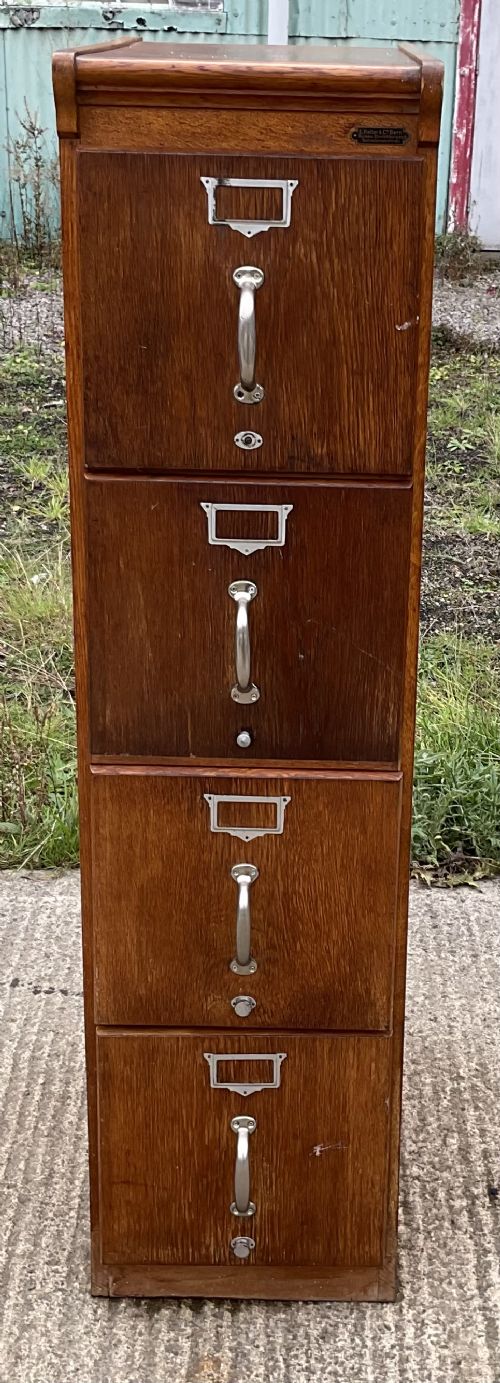
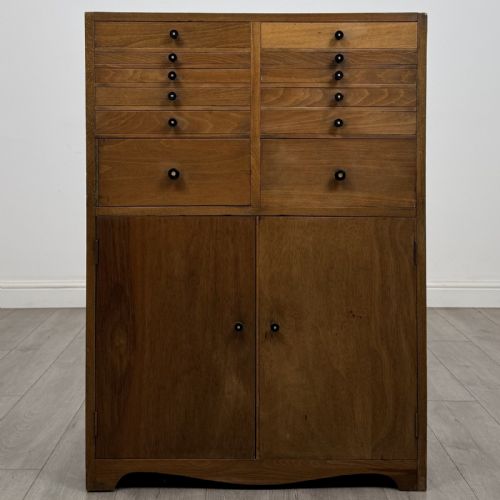
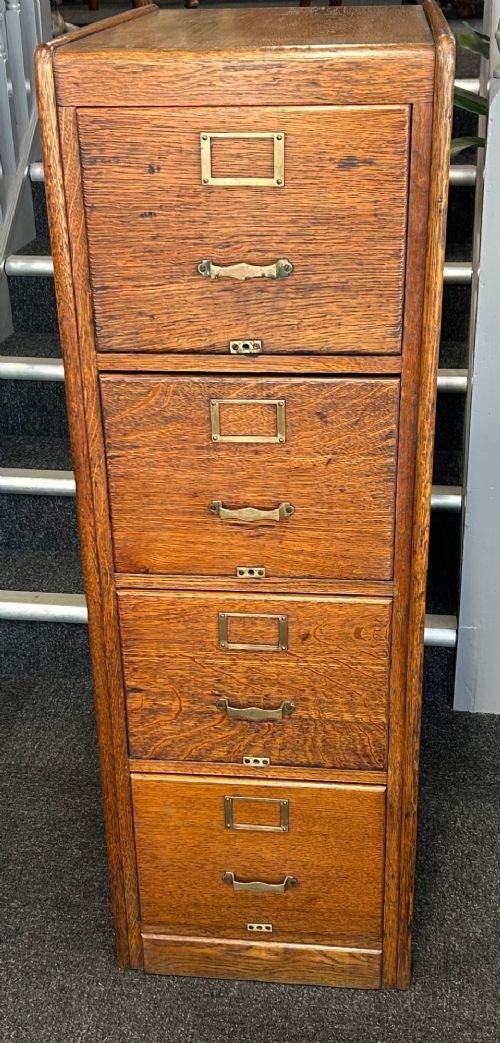
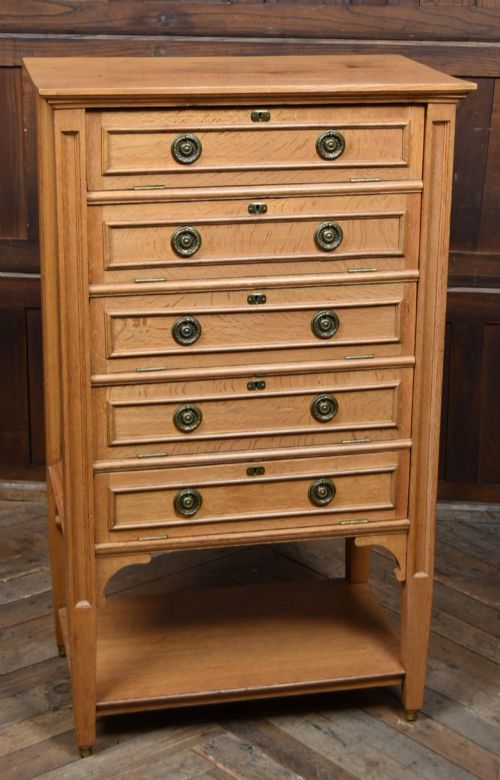
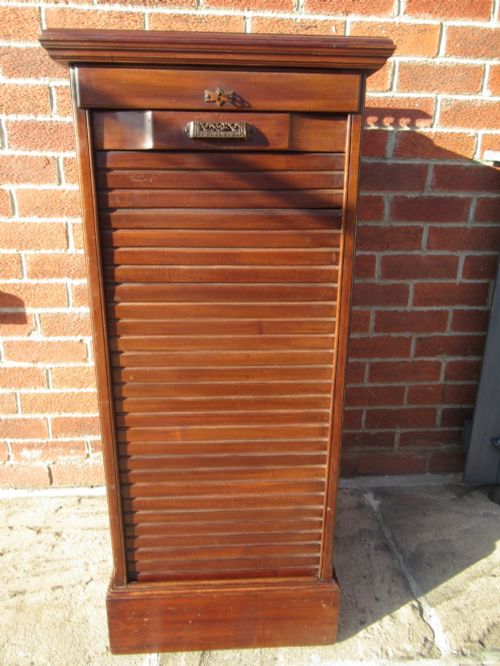
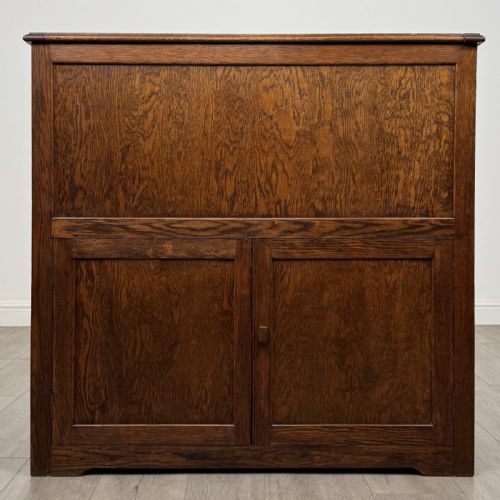
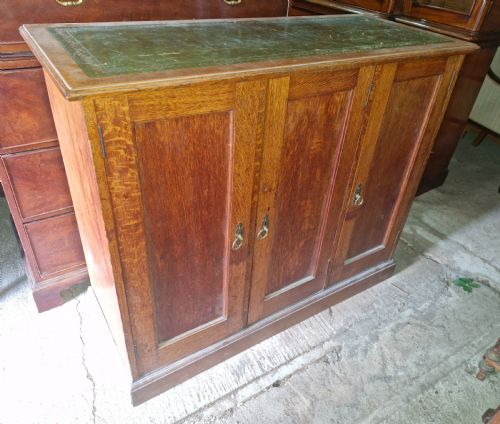
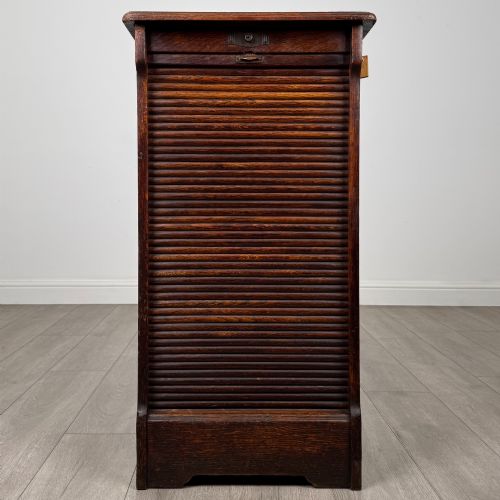
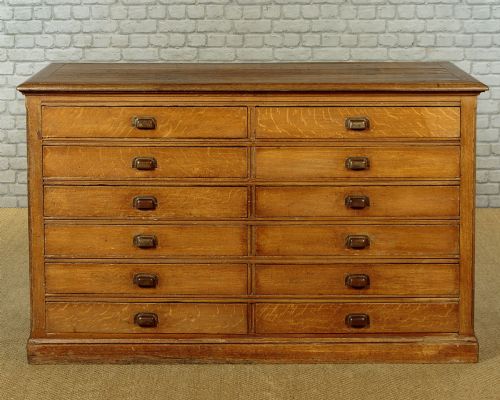
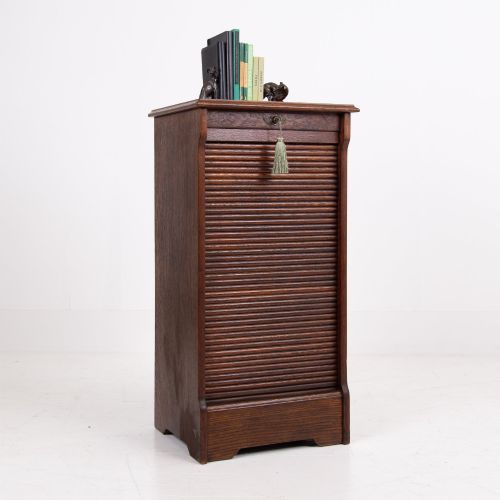
The most common form encountered on this page is the oak or mahogany filing cabinet, often featuring tambour doors that slide smoothly to conceal internal filing slots. Alongside these sit banks of drawers, pigeon holes, and plan chests originally used in workshops, schools, and offices. Such pieces suit modern interiors by offering robust storage with distinct historical character.
How they were made
Timbers such as oak and mahogany form the structural core of most pieces, selected for their durability and grain. Cabinetmakers constructed frames using traditional joinery, while workshops also utilised pine and walnut depending on the intended use of the furniture.
Metal and brass components appear extensively in handles, label holders, and structural framing. Tambour fronts rely on numerous small slats of wood glued to a fabric backing to bend around curves.
Vintage Office Storage Retail Price Guide 2026
Typical asking prices for vintage office storage among the pieces listed under this phrase on Sellingantiques today, from the lower quarter to the upper quarter. They describe what is for sale here now, not the wider market.
What varies in quality
The distinction between standard office utility items and superior examples lies in the choice of timber selection and the complexity of internal mechanisms. Fine pieces utilise solid mahogany or figured oak with integrated panel construction rather than plain veneers.
Hardware details such as original brass shell pulls, working label holders, and smooth-running tambour doors elevate a piece. Maker attribution, such as work by Maple & Co, marks out exceptional manufacturing standards.
Maple & Co
The Vintage Office Storage Glossary
- Tambour door
- A flexible sliding door made from narrow strips of wood attached to a canvas backing, allowing it to glide around a track into the body of a cabinet. This clever mechanism saved floor space in cramped Victorian and Edwardian offices.
- Shell pull
- A pressed metal or brass drawer handle shaped like a scallop shell, often incorporating a small frame to hold a paper identification label. These functional fittings are characteristic of early twentieth century filing furniture.
- Plan chest
- A wide, shallow cabinet containing many low drawers designed specifically for storing large architectural drawings, maps, or flat artwork. They were built sturdily from pine or oak to support heavy paper contents.
- Pigeon holes
- An open grid of small rectangular wooden compartments mounted on a wall or sat upon a desk to sort incoming post and correspondence. They represent the most immediate method of paper sorting before enclosed filing cabinets became standard.
Vintage Office Storage: Frequently Asked Questions
How do I maintain oak filing cabinets?
Keep wooden surfaces nourished by applying natural beeswax occasionally to protect the grain from drying out in heated rooms.
Avoid placing vintage furniture near direct heat sources or in damp environments to prevent timber warping and to protect internal sliding tracks.
Can I use these cabinets for modern paper sizes?
Many Edwardian and 1920s filing cabinets accommodate standard modern paper folders within their internal drawers and pigeon holes.
It remains wise to check internal drawer dimensions against modern folder sizes if the cabinet is intended for daily administrative work.
What defines an Edwardian filing cabinet?
Edwardian examples usually feature quarter-sawn oak construction with visible medullary rays and rich patination developed over decades of office use.
They frequently incorporate brass label holders and panelled sides that reflect the formal aesthetic of early twentieth century workspaces.
Where were pigeon holes originally used?
Pigeon holes served in post offices, schools, and merchant offices to sort daily correspondence and documents before the widespread adoption of vertical filing systems.
Today they translate well into domestic settings for organising mail, stationery, or small craft supplies on a desktop.