
Vintage Office Chair
A vintage office chair brings working history into a modern room, combining sturdy timber frames with practical swivel mechanisms.
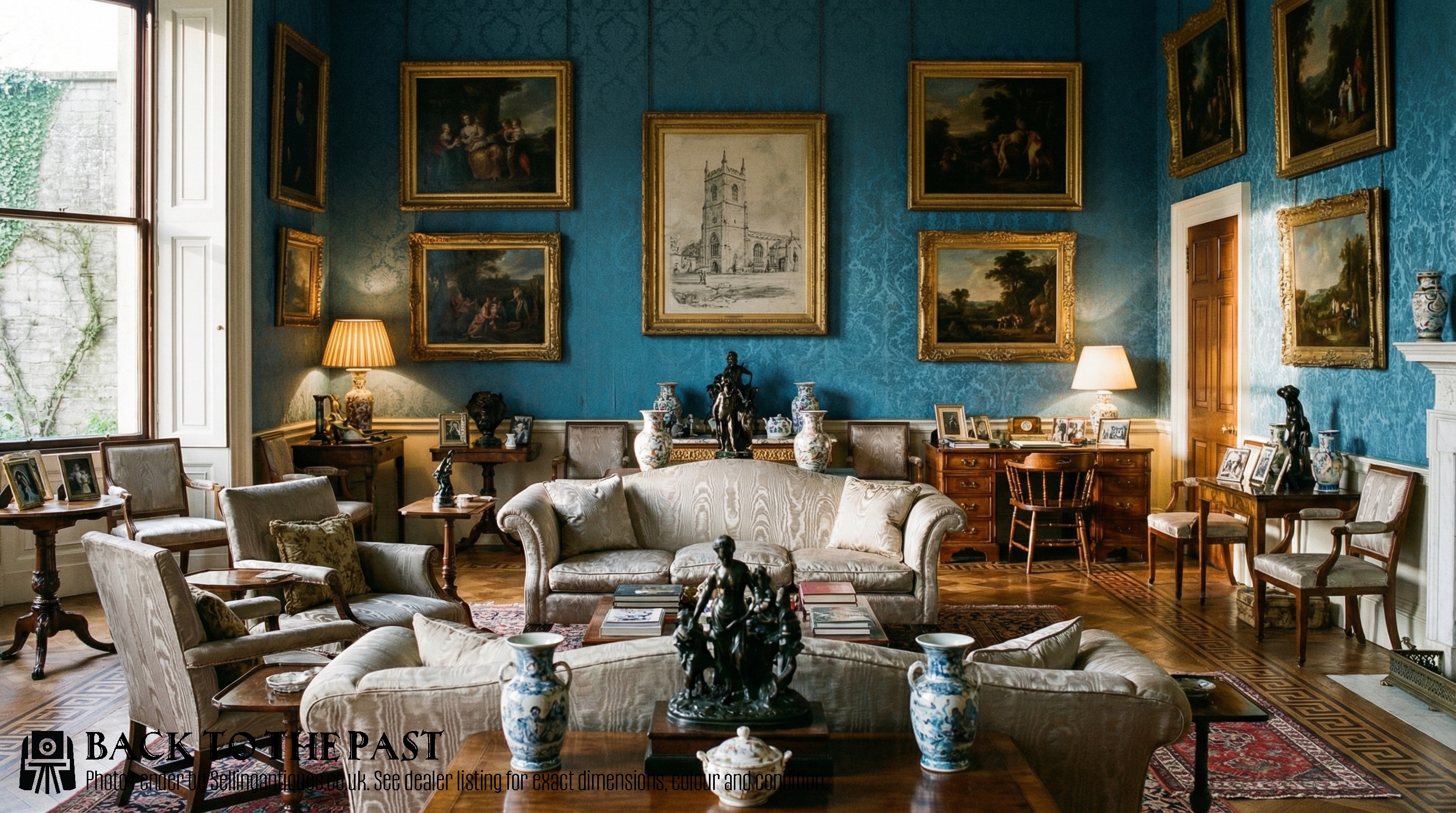
Vintage Office Chair
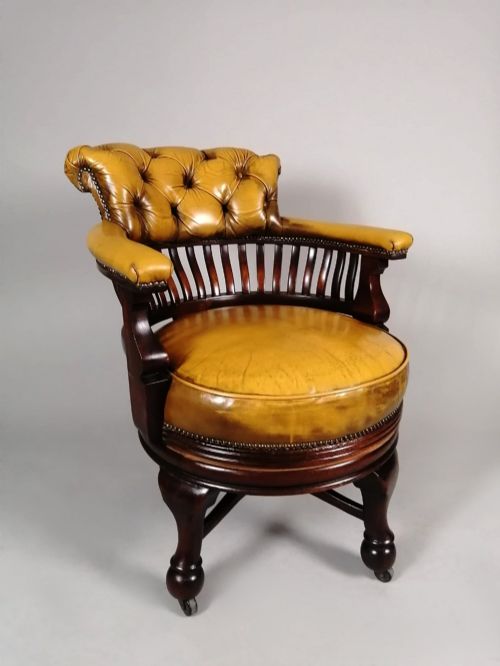
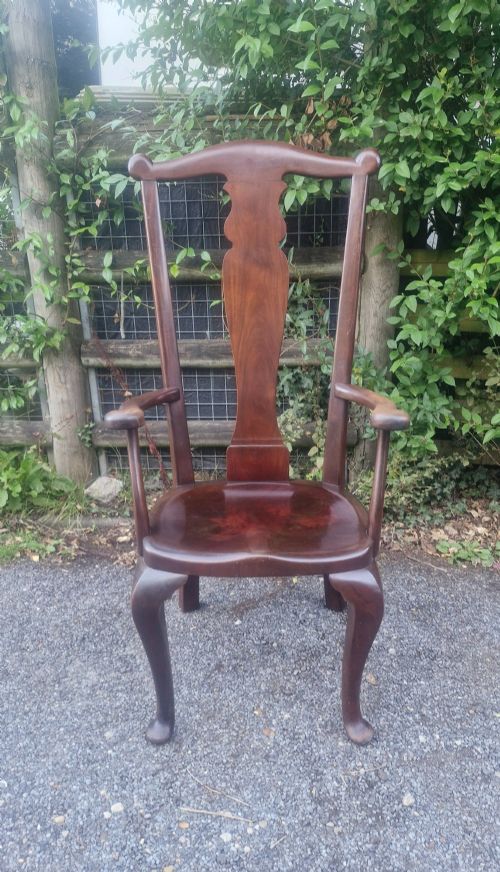
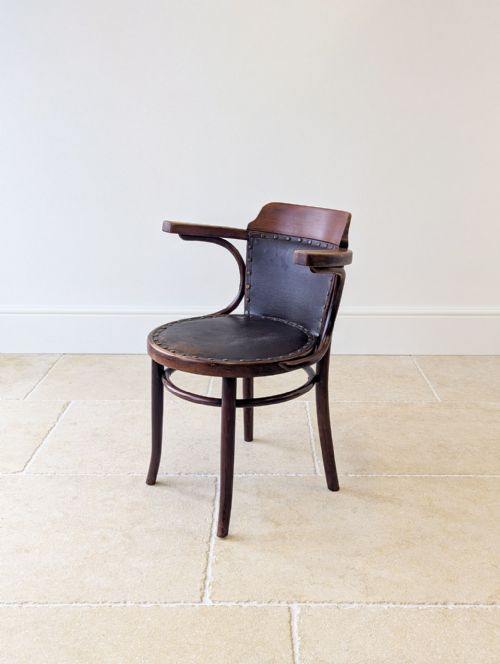
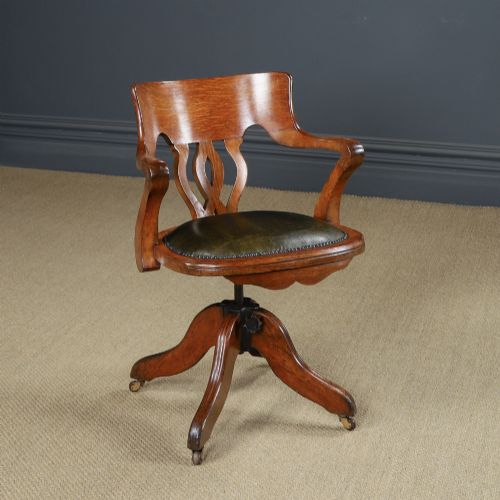
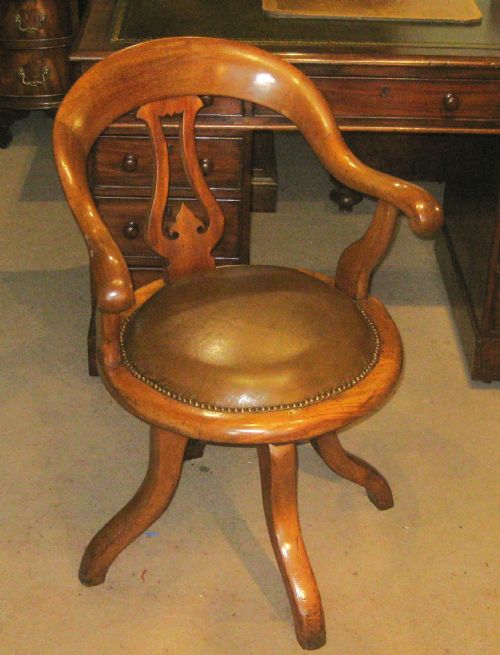
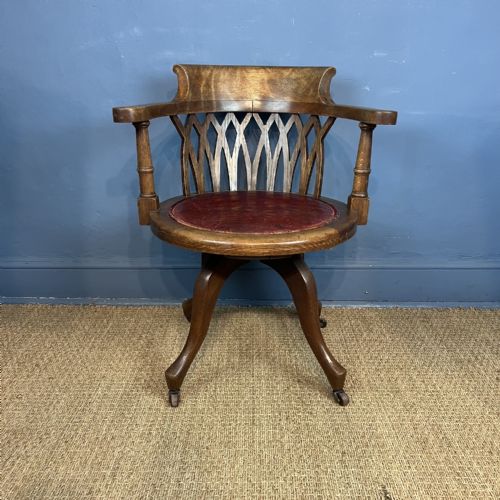
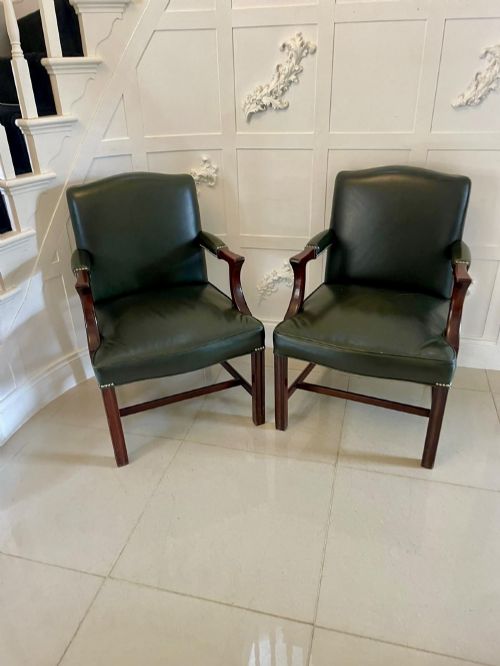
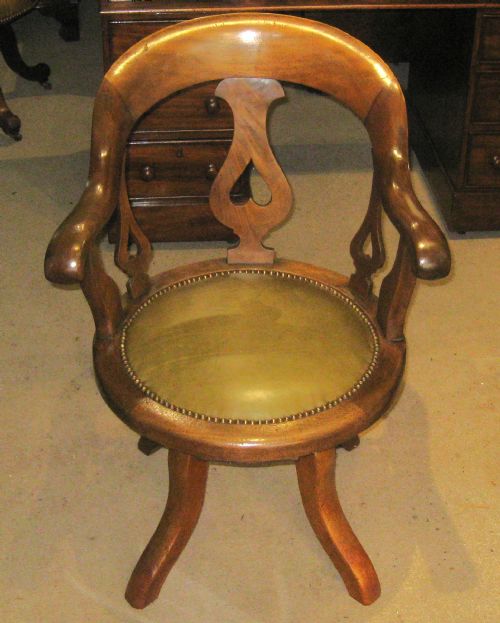
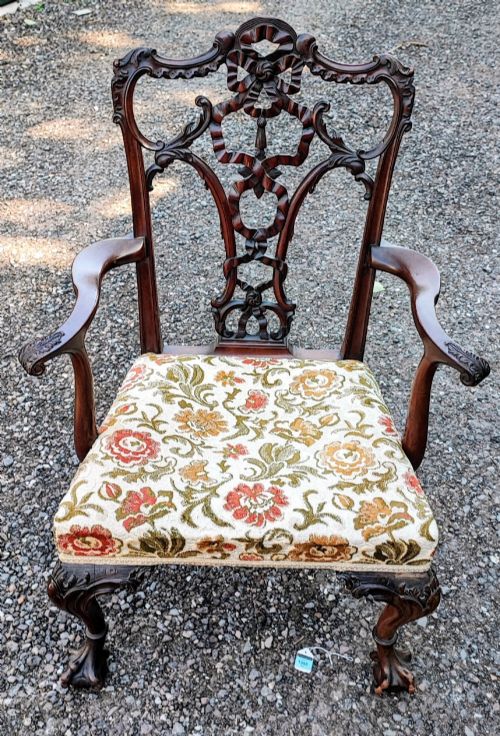
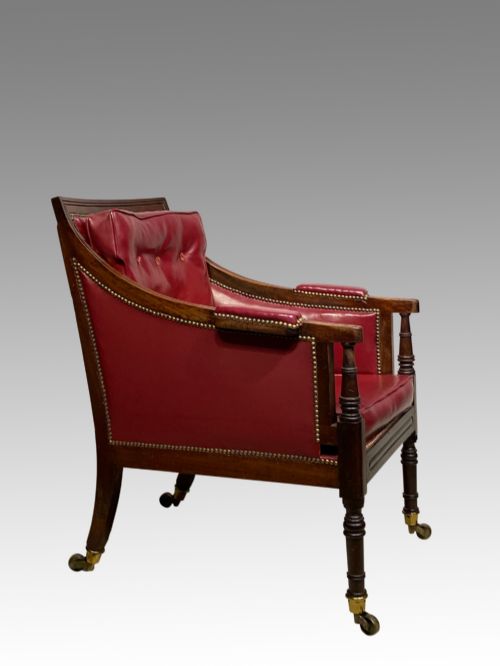
A vintage office chair serves as a practical workspace seat, drawing from nineteenth and early twentieth-century designs. Buyers hunting for a vintage office chair frequently encounter swivel desk chairs, captain chairs, and library armchairs originating from the Victorian and Edwardian eras.
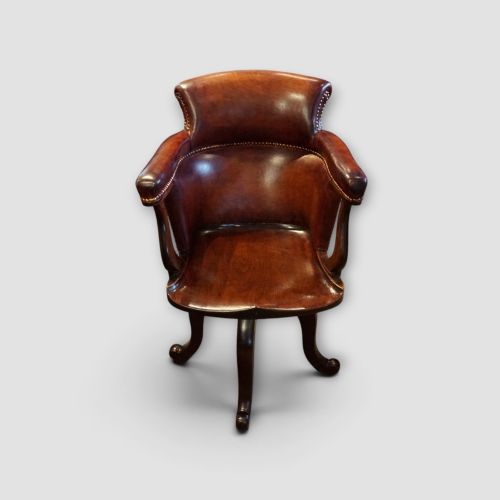
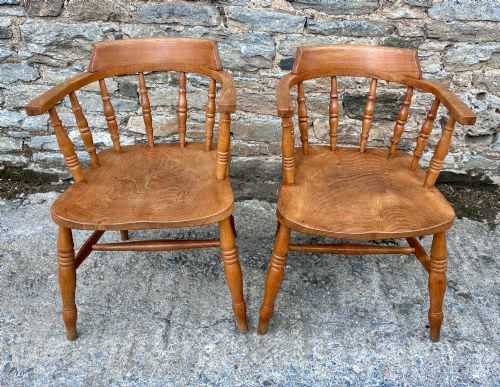
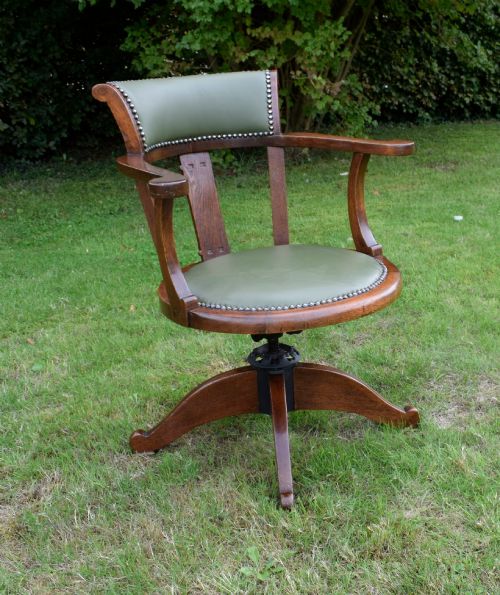
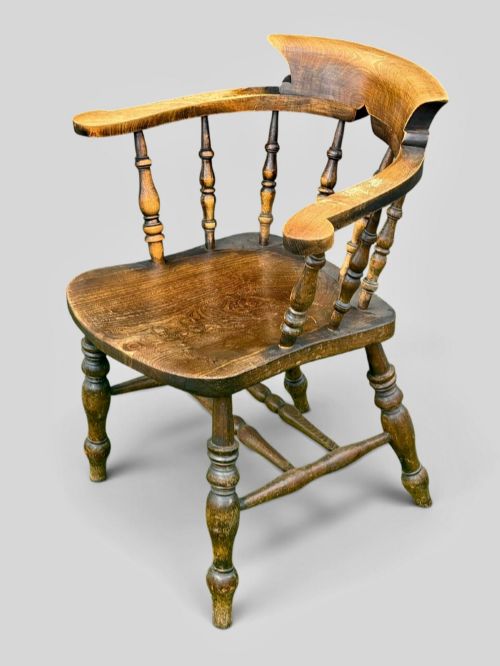
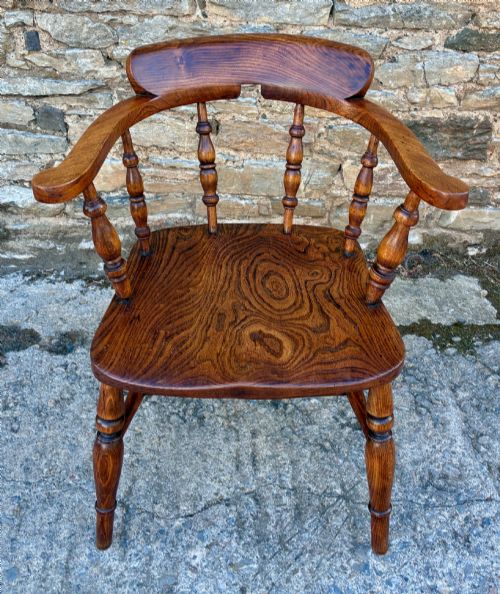
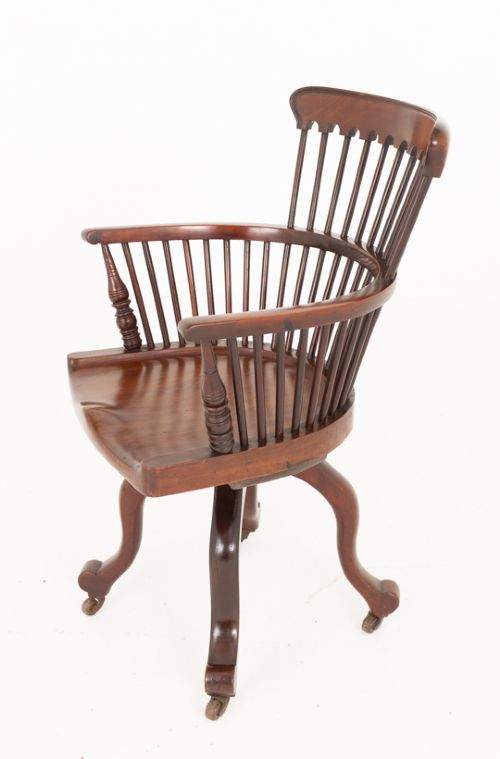
The selection ranges from solid oak and mahogany swivel models fitted with leather seats to traditional elm and beech smoker's bows and Windsor chairs. These pieces reflect the shift toward ergonomic workplace comfort during the nineteenth and early twentieth centuries.
Many examples utilise revolving movements, allowing the seat to turn or adjust for daily utility. These robust desk chairs combine formal library styling with the mechanical innovations demanded by Victorian and Edwardian offices.
Materials and Construction
Makers constructed these chairs primarily using dense hardwoods such as mahogany, oak, walnut, elm, and beech, often pairing them with supple leather upholstery. Timber frames were shaped using traditional joinery, turning, and steam-bending techniques to create durable armchairs and supportive high backs.
Revolving models incorporate iron and brass swivel mechanisms beneath the wooden seat to permit movement and height adjustment. Studded leather pads and caned panels provide additional seating comfort, secured with metal tacks or direct timber framing.
Vintage Office Chair Retail Price Guide 2026
Typical asking prices for vintage office chair among the pieces listed under this phrase on Sellingantiques today, from the lower quarter to the upper quarter. They describe what is for sale here now, not the wider market.
Listings feature oak, mahogany, elm, beech, and walnut frames paired with leather, fabric, and brass hardware across Victorian and Edwardian periods.
Craftsmanship and Proportion
Quality in a vintage office chair rests on the weight of the timber and the integrity of the joinery rather than surface finish alone. Finer examples display carefully carved details, superior grain matching in mahogany or oak, and smoothly integrated revolving iron mechanisms.
Proportion and comfort distinguish the superior pieces, particularly in the curve of the captain's back or the depth of the leather upholstery. Heavy framing and solid wood construction ensure the chair endures decades of daily use.
Thonet
The Vintage Office Chair Glossary
- Captain chair
- A sturdy wooden armchair with a low, curved back rail supported by turned spindles, often fitted with a solid wooden or leather-inset seat.
- Swivel mechanism
- The iron or brass assembly beneath the seat that permits the chair to revolve and sometimes adjust in height.
- Smoker's bow
- A low-backed Windsor-style armchair featuring a continuous bentwood top rail and thick spindle supports.
- Revolving desk chair
- An office seat mounted on a central pivoting column, allowing the user to turn easily while seated at a desk.
- Caned
- Woven rattan or split cane panels used to form lightweight, flexible seat or back inserts within a wooden frame.
Vintage Office Chair: Frequently Asked Questions
How do I identify a swivel desk chair?
Look underneath the timber seat for an iron or brass spindle mechanism that allows the chair to turn freely. These mechanical bases are characteristic of late nineteenth and early twentieth-century workplace seating.
Such systems often include adjustable height screws or four-legged cast iron spider bases fitted with castors for mobility.
What woods were used for office chairs?
Cabinet makers relied heavily on dense hardwoods such as mahogany, oak, walnut, elm, and beech. Mahogany and oak dominate the formal desk chairs from the Victorian and Edwardian periods.
Elm and beech frequently appear in country captain chairs and smoker's bows due to their strength and suitability for steam-bending.
Are these chairs comfortable for daily work?
Many vintage office chairs were engineered specifically for long hours at a desk, offering supportive high backs and contoured wooden seats. Models upholstered in leather or fitted with swivel movements provide ergonomic flexibility for modern use.
Their sturdy timber construction ensures they easily handle the demands of a contemporary study or home office.
How do I date an antique office chair?
Dating relies on observing the timber species, manufacturing techniques, and mechanical hardware. Victorian examples often feature rich mahogany or heavy oak framing, while Edwardian pieces frequently incorporate bentwood elements or simpler oak construction.
Cast iron swivel hardware and brass castors also provide strong chronological clues pointing toward the late nineteenth or early twentieth century.