
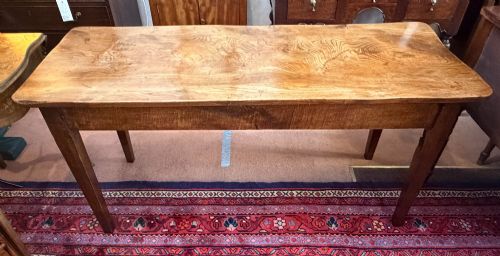
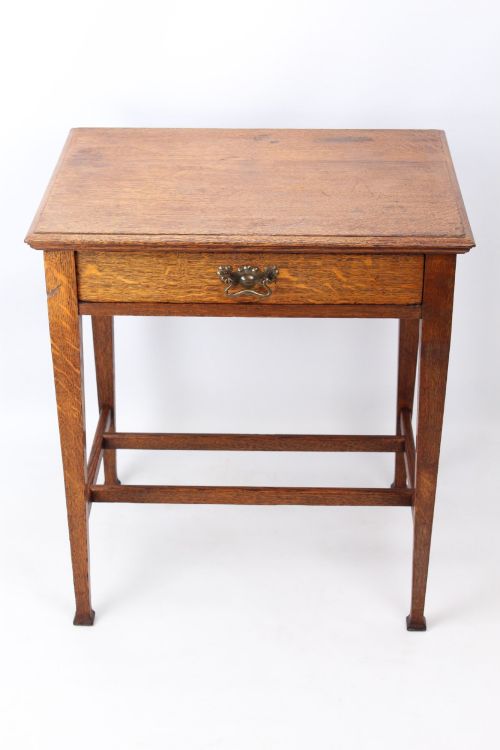
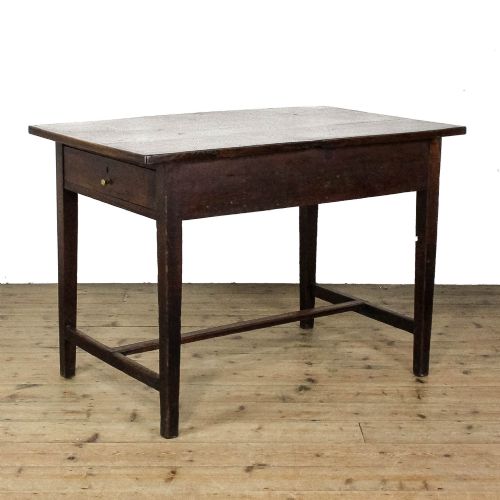
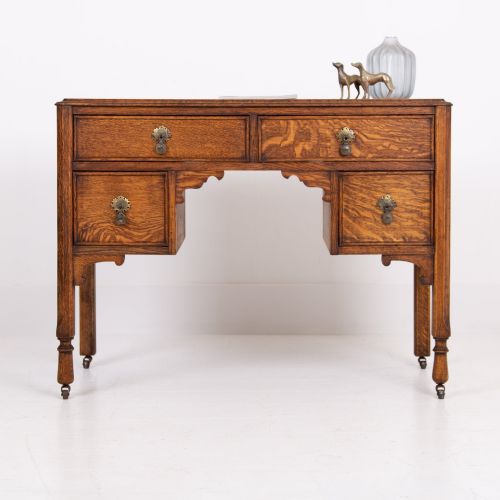



Vintage Oak Work Table
A vintage oak work table brings honest utility and rugged grain into a modern room, built for decades of hard domestic or workshop use.
Vintage Oak Work Table
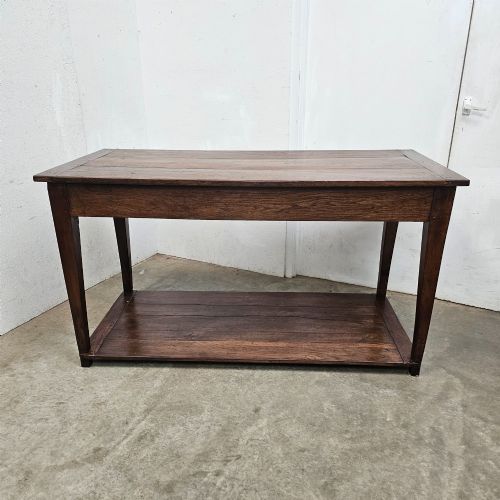
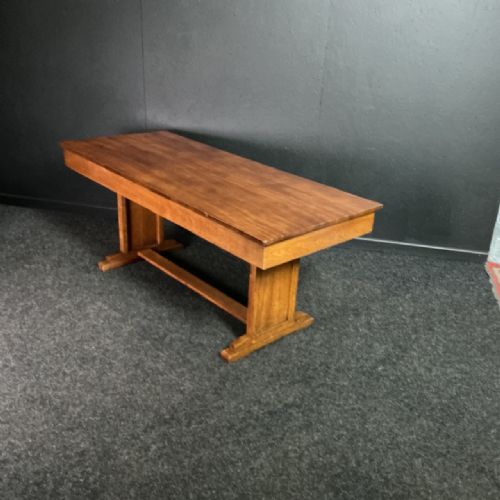
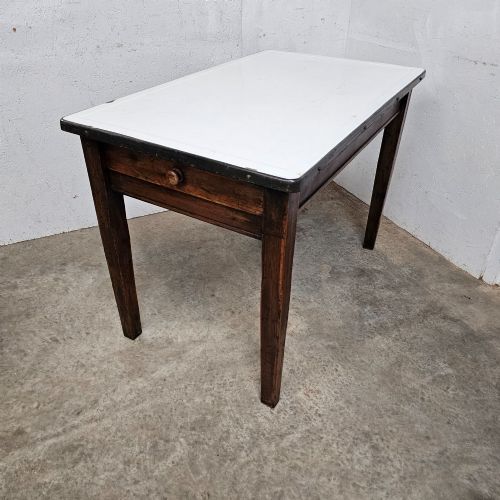
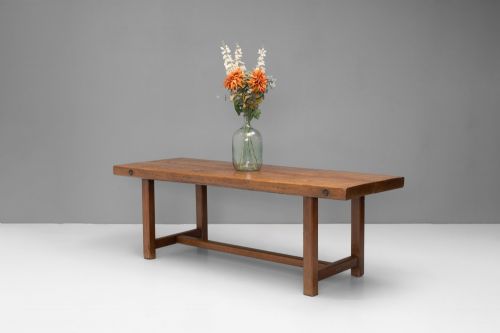
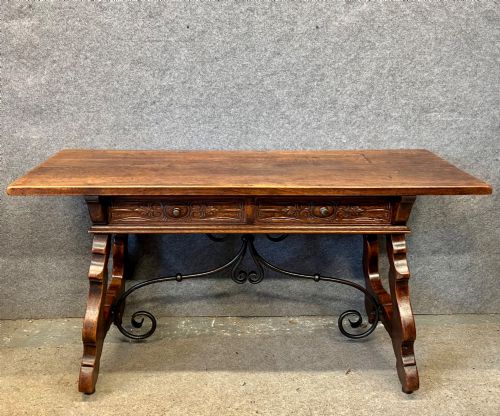
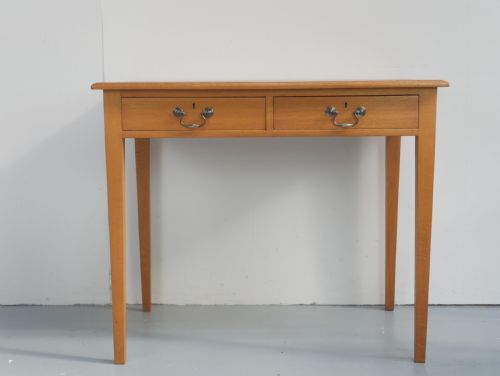
When you search for a vintage oak work table, you encounter robust utility surfaces created for specific trades, domestic labour, or public institutions. These pieces span the nineteenth century through the early decades of the twentieth century, taking forms such as kitchen tables, drapers tables, writing desks, and artisans workbenches.
The version you most frequently meet on this page is the French or English rustic work table, often showing the marks of daily toil with drawers, vises, or worn timber tops. Styles range from French provincial and Arts and Crafts to rustic farmhouse and Welsh country.
Makers and workshops across Britain and continental Europe built these utilitarian tables to withstand heavy loads, relying on solid timber construction rather than decorative veneering. Their survival in domestic settings today reflects a shift toward practical furniture with genuine history and visible character.
Materials and construction methods
Construction relies heavily on solid oak timber complemented by secondary woods like pine, beech, and timber framing. Joinery prioritises durability, utilising sturdy legs and thick topboards designed to endure continuous pressure.
Iron, wrought iron, and brass appear in structural braces, vises, handles, and mechanical adjustments on workbenches and desks. These metal components provide necessary reinforcement to heavy wooden frames subjected to physical work.
Vintage Oak Work Table Retail Price Guide 2026
Typical asking prices for vintage oak work table among the pieces listed under this phrase on Sellingantiques today, from the lower quarter to the upper quarter. They describe what is for sale here now, not the wider market.
Several tables retain the authentic wood shavings and sawdust permanently lodged in their drawers from past workshop duties.
Markers of quality and execution
Quality rests in the integrity of the timber selection and the honesty of the construction, where thicker oak tops and substantial undercarriages distinguish superior examples. Superior pieces display thoughtful joinery that accommodates natural wood movement without compromising stability.
The character of the surface patina dictates the visual standing of each piece, distinguishing tables that retain their original working finish from those altered by modern interventions. Hardware authenticity, such as original brass pulls or functional iron vises, elevates the execution.
Jenners·Trussant & Cie
The Vintage Oak Work Table Glossary
- Workbench
- A heavy-duty table fitted with a woodworking vise or tool well, designed for manual labour and craftspeople. These benches show deep surface scars from historical trade use.
- Drapers table
- A long, narrow retail table traditionally used for displaying textiles and fabrics in shops. They often feature multiple drawers and generous length.
- Refectory table
- A long communal dining table historically found in monasteries and large institutions. Their sturdy stretcher bases allow for unhindered seating along the length.
- Patina
- The deep sheen and surface wear developed on wood through decades of handling, cleaning, and exposure to light. This visual depth cannot be replicated artificially.
- Trestle table
- A table consisting of two or more support frames connected by a horizontal beam or stretcher. This design maximises legroom beneath the surface.
Vintage Oak Work Table: Frequently Asked Questions
How do I clean a work table surface?
Maintain the aged wood by wiping surfaces with a slightly damp cloth and applying a neutral beeswax to nourish the dry timber. Avoid harsh chemical cleaners that strip the historical patina accumulated over generations of use.
Allow any wax to dry before buffing gently with a soft cotton cloth. Regular light maintenance protects the oak without erasing the marks of its working past.
Can I use a work table for dining?
These sturdy tables adapt readily to daily dining, offering generous proportions and robust construction that easily accommodates family life. Their practical origins mean they withstand heavy plates and frequent use without delicate surfaces suffering.
Check the knee clearance beneath the aprons or drawers before seating guests, as some workbenches and desks were built for standing or seated labour rather than dining comfort.
What is the difference between a desk and a workbench?
Workbenches feature heavy timber tops, integrated vises, and structural elements designed for physical trade work and tool manipulation. Desks prioritise writing surfaces, cubbies, and drawers suited for paperwork and correspondence.
Both utilise solid oak and practical forms, but a workbench carries the distinct operational hardware of a historic trade.
How do I date a vintage oak table?
Examine the construction methods, tool marks on the underside, and the type of hardware used in drawers or framing. Machine-sawn timber and simpler joinery often point toward later periods, while hand-planed surfaces suggest earlier nineteenth-century origins.
Compare the style markers, such as Arts and Crafts brackets or French provincial shaping, against known regional furniture traditions.