




Vintage Oak Wall Storage
Vintage oak wall storage comprises practical timber cupboards and cabinets built to save floor space, offering honest utility and robust character for modern rooms.
Vintage Oak Wall Storage
Vintage oak wall storage encompasses functional timber cabinetry designed to hang securely, keeping domestic items accessible while preserving precious floor space in compact rooms. These pieces originate from various historical periods, ranging from straightforward provincial utilitarian boxes to more formally styled Georgian designs.
The material palette centres on sturdy oak, often supported by secondary timbers like pine and mahogany, complete with brass and iron hardware. Stylistic influences span French Provincial, Rustic Farmhouse, Victorian Country, and Jacobean Revival.
How they were made
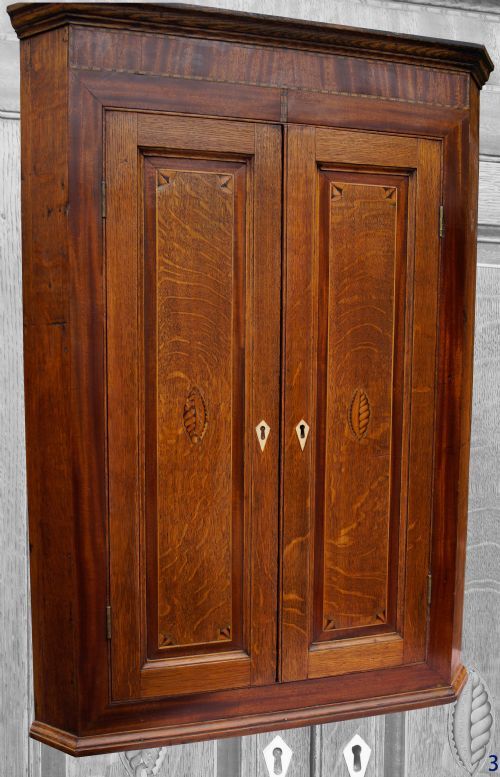
Construction relies heavily on solid oak boards, frequently paired with pine or mahogany for internal elements and backs. Workshops utilised traditional joinery techniques, evident in raised panel fronts, carved surfaces, and fitted wood inlay.
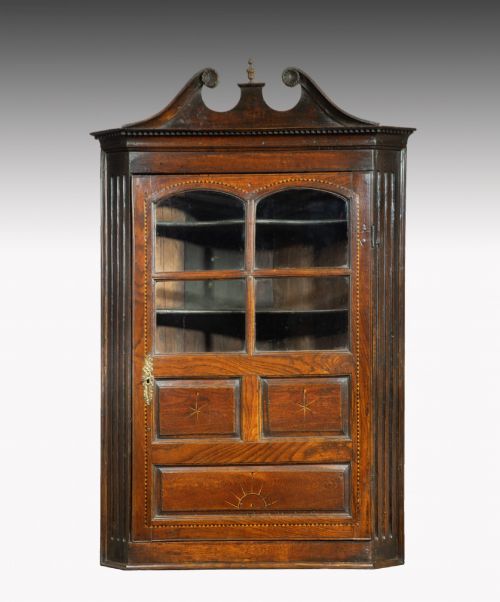
Metal hardware plays an essential structural and decorative role, with brass and iron hinges, latches, and escutcheons securing doors and hanging mechanisms. Glazed panels occasionally appear in doors, allowing contents to be displayed safely behind glass.
Listings span Georgian, Victorian, and eighteenth-century periods, showcasing oak alongside mahogany, pine, brass, iron, and glass.
What varies in quality
Quality differences emerge in the selection and preparation of the timber, where dense, well-figured oak boards command greater appreciation than plain or heavily repaired secondary woods. The crispness of carved details and the proportion of raised panel fronts distinguish superior cabinet work from basic utility pieces.
Originality of hardware and glass greatly influences the integrity of a piece, as well-preserved brass and iron fittings demonstrate a higher standard of original manufacture.
The Vintage Oak Wall Storage Glossary
- Bow-front
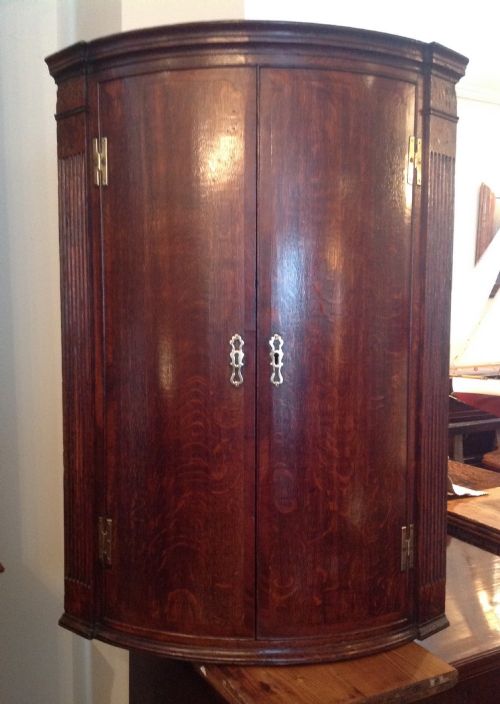
- A convex, curved cabinet front that projects outward from the corners. This shape required advanced joinery skills to curve the timber framing and door.
- Raised panel
- A central wooden panel with edges thinned down to fit snugly into a grooved frame. This technique allows the wood to expand and contract naturally with seasonal humidity changes.
- Spice box
- A small wall-hanging cabinet fitted with internal drawers or compartments for storing valuable culinary ingredients. These compact pieces date predominantly to earlier centuries.
- Jacobean Revival
- A nineteenth-century design style that deliberately imitates seventeenth-century British furniture. It is characterised by dark finishes, geometric moulding, and heavy carved ornamentation.
- French Provincial
- A rustic yet refined style originating from regional French workshops. These pieces typically feature softer carving lines and lighter domestic proportions than formal urban furniture.
Vintage Oak Wall Storage: Frequently Asked Questions
How do I hang a heavy oak wall cabinet safely?
Wall cabinets require secure anchoring directly into structural wall studs or masonry using appropriate fixings rated for heavy loads. Professional installation ensures the substantial weight of solid oak and stored contents is supported safely.
Distributing weight evenly inside the cabinet prevents undue strain on historical hinges and hanging brackets over time.
Where were corner cupboards placed in older homes?
Corner cupboards were traditionally positioned in dining rooms, parlours, or kitchens to maximise awkward junctions and store tableware or spices. Their triangular footprint allowed them to utilise dead space efficiently.
Today, they serve the exact same purpose in modern properties, bringing practical storage and period character to neglected corners.
How do I tell a Georgian cupboard from a Victorian one?
Georgian pieces typically display cleaner, restrained proportions with understated mouldings and raised panels characteristic of eighteenth-century craftsmanship. Timber selection often favours simpler, honest grain patterns.
Victorian pieces, particularly those influenced by revival styles, frequently incorporate heavier decorative carving or darker finishes reflecting nineteenth-century tastes.
What is the difference between a wall cabinet and a spice box?
Wall cabinets are generally larger enclosures designed for general storage with shelves behind solid or glazed doors. They accommodate everyday household items and tablewares.
Spice boxes are notably smaller, shallower hanging boxes traditionally fitted with multiple tiny internal drawers specifically for valuable dry goods.