


Vintage Oak Wall Clock
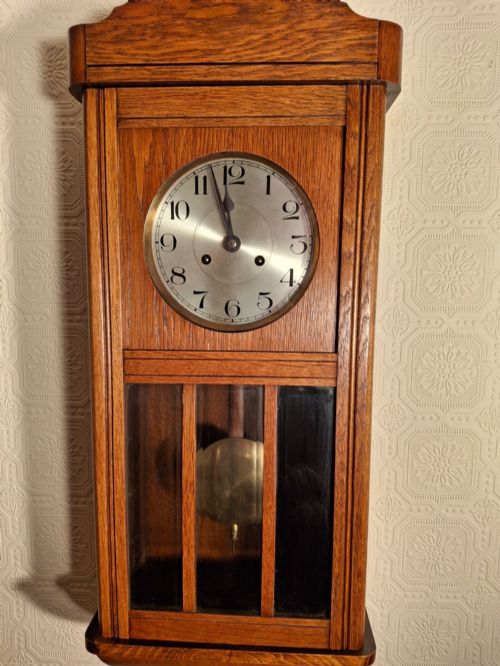
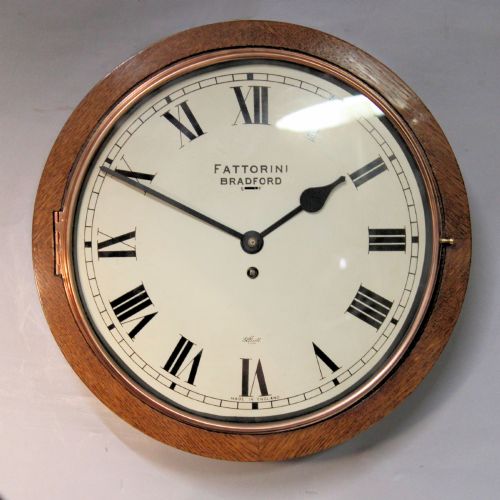
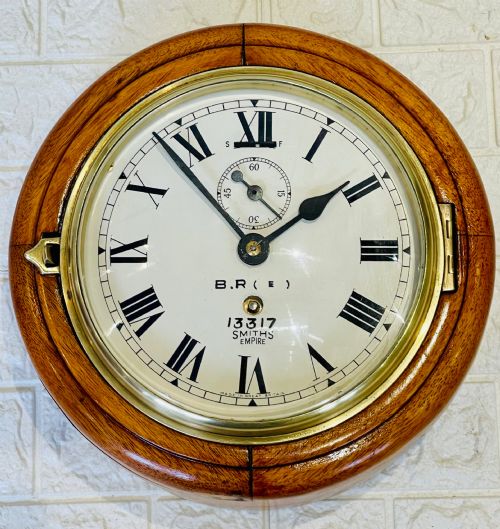
A vintage oak wall clock brings functional timekeeping and striking period joinery to a room, ranging from robust railway regulators to carved domestic dial pieces.
Vintage Oak Wall Clock
When you search for a vintage oak wall clock, you encounter a diverse range of horological pieces spanning the nineteenth and twentieth centuries. The selection encompasses utility timepieces from railways and postal offices alongside decorative domestic items.
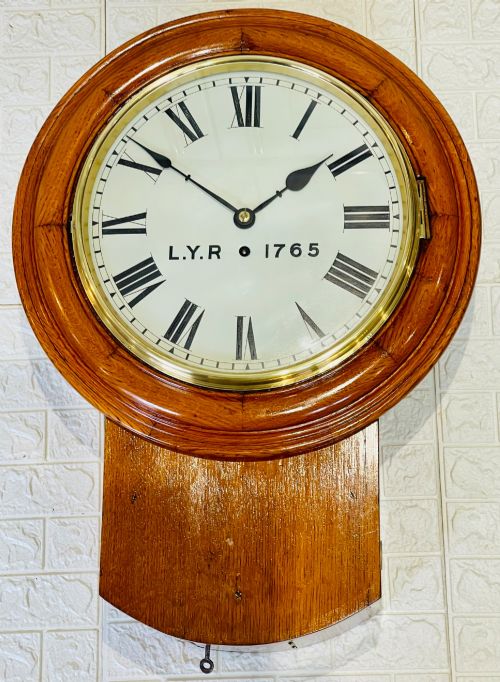
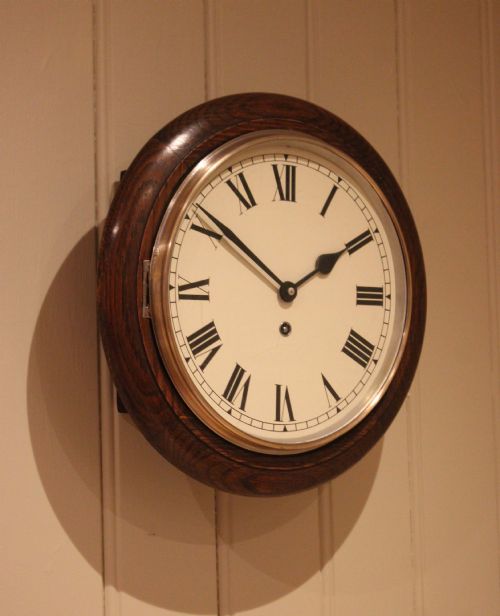
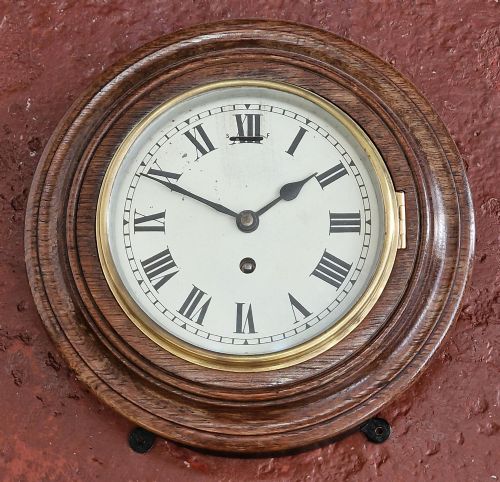
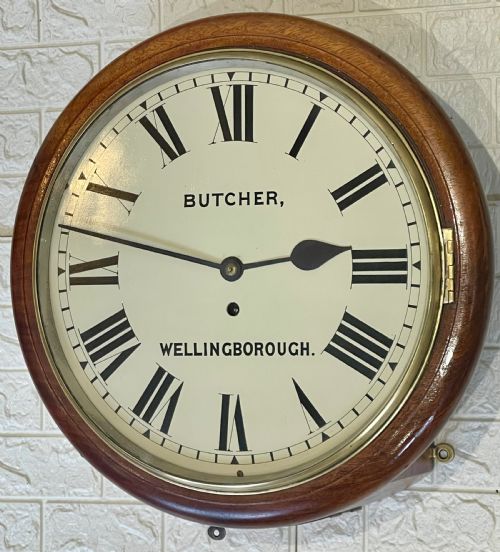
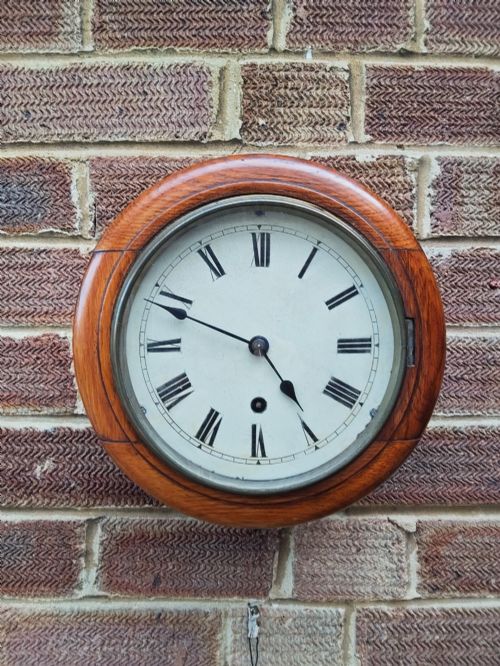
Dial clocks and drop-dial wall clocks dominate the offerings, often constructed from light or golden oak. These span periods from the Victorian era through Edwardian times and into Art Deco designs.
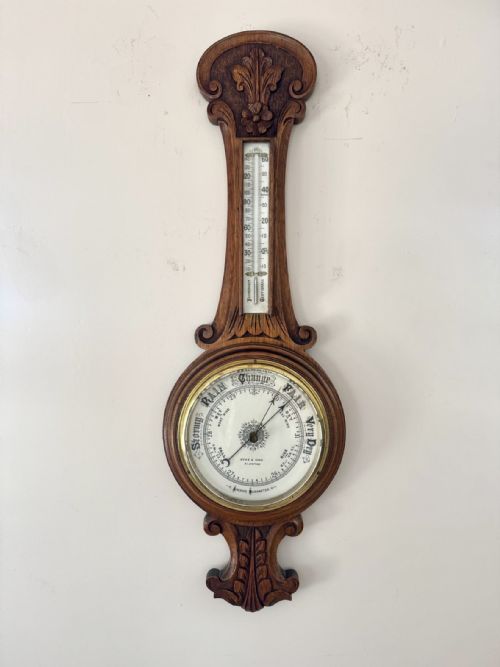
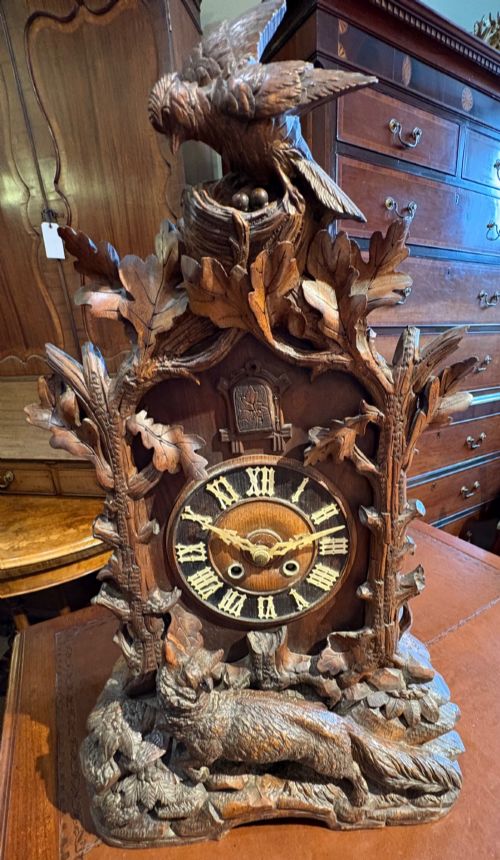
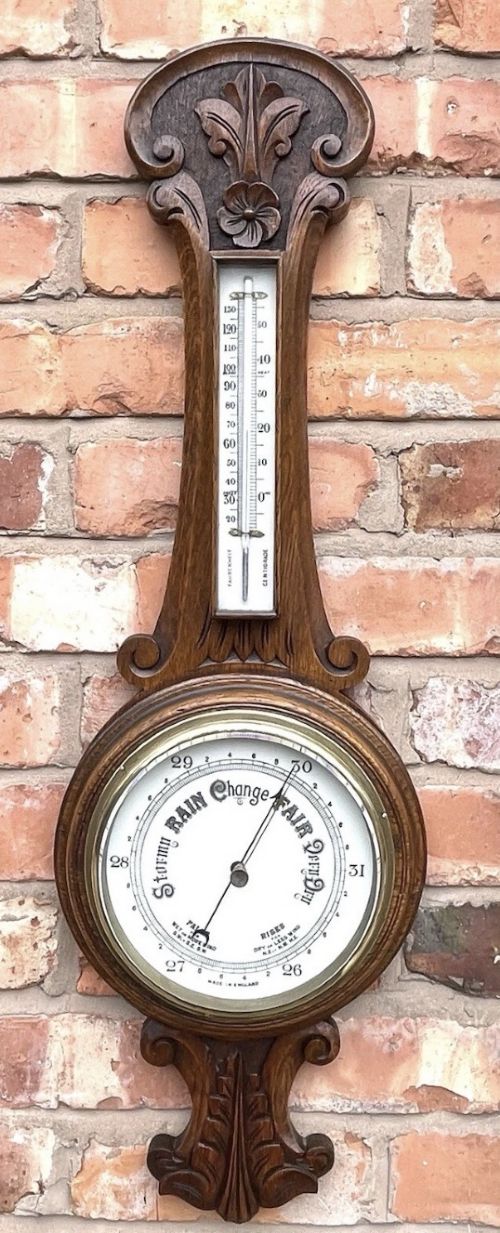
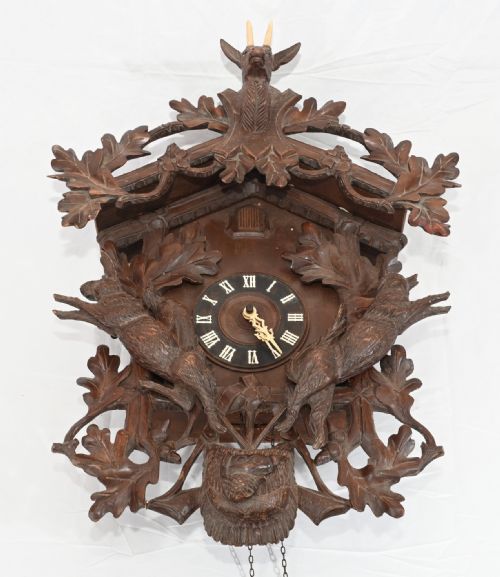
The assortment also includes specialised instruments like aneroid barometers and cuckoo clocks housed in carved wood cases. Buyers frequently select these pieces for their combination of reliable mechanical movements and robust timber housings.
Assessing quality in the range
Quality in a vintage oak wall clock depends on the precision of the internal movement and the integrity of the timber case. Superior examples display crisp joinery, original brass hardware, and specialised mechanisms like chain-driven fusees.
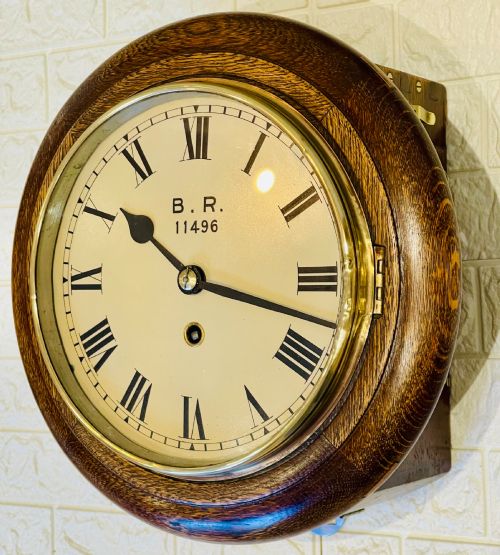
Provenance and specific maker attribution elevate certain pieces above standard domestic timepieces. Railway and G.P.O. clocks demonstrate utilitarian robustness, while retail-retailed pieces or signed movements reflect specialised craftsmanship.
Several examples double as functional work tools, including factory electric clocks, signal box timepieces, and clocking-in time recorders.
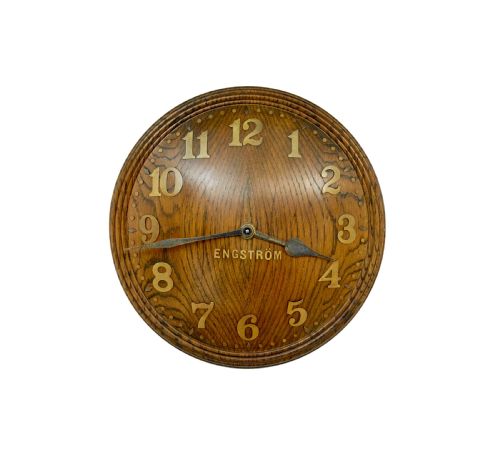
Elliott·Hyde & Sons Sleaford·Engström·Zenith·Charvet·Harrods·Smith·Gledhill Brook·Negretti & Zambra
The Vintage Oak Wall Clock Glossary
- Fusee
- A conical pulley used in mechanical clocks to equalize the driving force of the mainspring as it unwinds. This mechanism helps maintain consistent timekeeping across the duration of the winding cycle.
- Drop dial
- A wall clock featuring a circular dial attached to a lower wooden trunk or box that houses the pendulum. This form became a standard fixture in offices, stations, and schools.
- Aneroid barometer
- An instrument that measures atmospheric pressure without using liquid, operating instead by the expansion and contraction of a flexible metal capsule. These are frequently mounted in matching oak or carved wood wall cases alongside clocks.
- Lever escapement
- A type of escapement mechanism that controls the release of gear train power in clocks and watches. It allows timepieces to operate reliably in non-vertical positions.
- Dial clock
- A wall timepiece characterised by a prominent circular face exposed behind glass and a short case. They were widely utilised across public and commercial buildings for clear legibility.
Vintage Oak Wall Clock: Frequently Asked Questions
How do fusee wall clocks work?
A fusee clock utilises a conical pulley connected to the mainspring by a chain or cord. As the spring unwinds and loses tension, the chain moves to a wider part of the cone to maintain steady power.
This clever mechanical adjustment ensures the clock maintains consistent accuracy throughout its running cycle between windings.
Where were dial clocks typically used?
Dial clocks served as essential timekeepers in public spaces, railway stations, post offices, and school rooms. Their clear faces and robust oak cases made them ideal for high-traffic environments.
Today, these functional pieces transition easily into domestic hallways, kitchens, and studies as striking decorative focal points.
How do I date an oak wall clock?
Dating relies on examining stylistic indicators such as case ornamentation, dial materials, and the presence of maker signatures or railway stamps. Victorian and Edwardian examples often feature simpler lines or classical carvings.
Later twentieth-century versions frequently incorporate Art Deco geometric forms or electric movements indicative of their production era.
Can I hang a heavy oak clock on drywall?
Solid oak wall clocks possess considerable weight due to the dense timber case and internal brass movements. Securing the piece directly into a wall stud or utilising appropriate heavy-duty masonry anchors is essential.
Proper installation ensures the pendulum swings freely and prevents the clock from shifting or pulling away from the wall.