




1930s Oak Clock
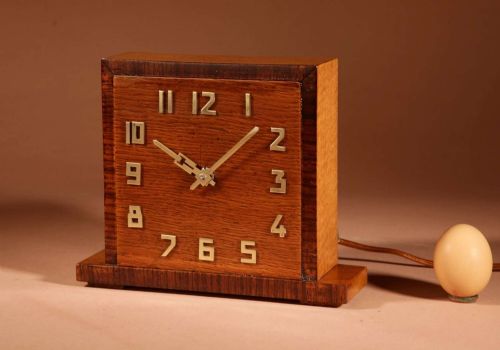
A 1930s oak clock brings tactile period geometry into a room, combining warm timber grain with the crisp lines of Art Deco design.
1930s Oak Clock
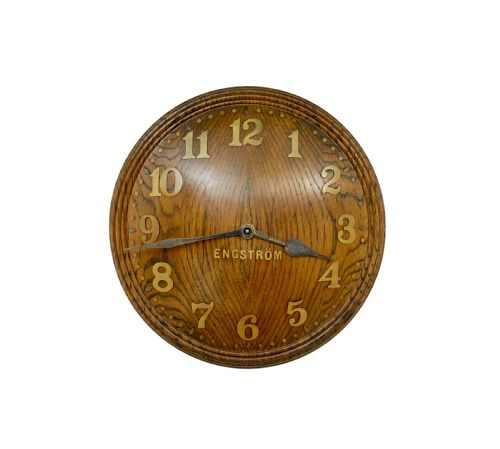
When you search for a 1930s oak clock, you encounter timepieces shaped by the robust geometry of the interwar period, most frequently seen as mantel clocks and wall clocks alongside occasional longcase variations. These pieces span periods from the 1920s to the 1930s, reflecting shifts in domestic design across English workshops and continental makers.
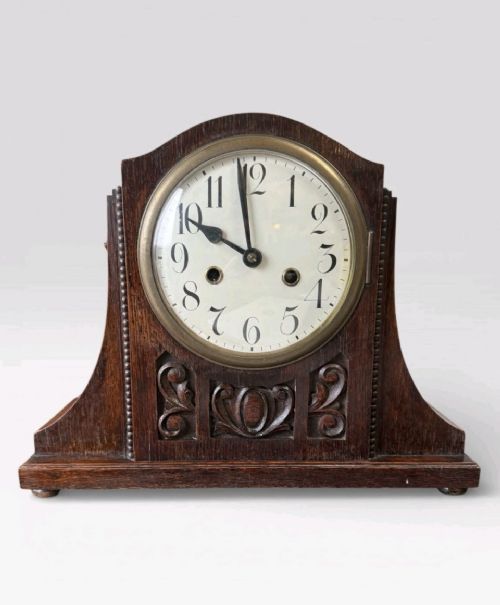
The dominant forms on this page include striking wall clocks in golden oak and substantial mantel clocks configured with mechanical movements or early electrical systems. Alongside these, longcase clocks such as grandmother and grandfather variations appear in solid oak housing chiming mechanisms.
How they were made
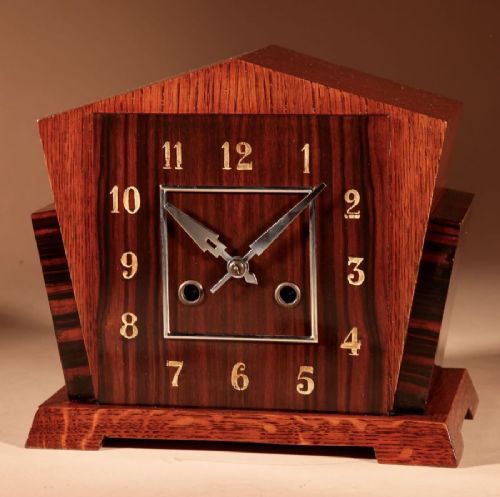
Construction relies on solid oak and veneered surfaces, frequently accented with contrasting timbers such as walnut, rosewood, and macassar ebony to create distinct two-tone visual rhythms. Dial surrounds and bezels incorporate materials like glass, brass, and chrome, anchoring the industrial influences of the era into domestic woodwork.
Movements range from mechanical eight-day striking and chiming systems produced by established continental factories to early electrical mechanisms and weight-driven longcase configurations. Cabinets utilise geometric joinery, octagonal wall frames, and stepped architectural crests characteristic of Art Deco and Amsterdam School aesthetics.
1930s Oak Clock Retail Price Guide 2026
Typical asking prices for 1930s oak clock among the pieces listed under this phrase on Sellingantiques today, from the lower quarter to the upper quarter. They describe what is for sale here now, not the wider market.
One archived longcase clock carries retail history tied directly to Boots Drug Company.
What varies in quality
Quality reveals itself in the crispness of the timber selection, particularly where contrasting veneers like rosewood or macassar ebony meet the primary oak body. Grain alignment and the subtlety of the geometric layering distinguish standard production pieces from more ambitious cabinet work.
The sophistication of the movement inside - ranging from basic time-only mechanical calibres to complex Westminster chiming systems by prominent makers - dictates the standing of an individual clock. Dial execution, including the integration of metal numerals, brass bezels, and clean glass face covers, further separates the range.
Zenith·Perivale·Junghans·Pfeilkreuz Junghans·Boots Drug Company
The 1930s Oak Clock Glossary
- Art Deco
- A design style spanning the 1920s and 1930s characterised by geometric shapes, streamlined forms, and modern industrial materials. It dominates the decorative language of these timepieces.
- Amsterdam School
- An expressionist architectural and design movement originating in the Netherlands, known for rounded brickwork, expressive timber manipulation, and rich surface textures. Pieces in this style utilise dramatic grain contrasts.
- Mantel clock
- A portable clock designed to sit on a fireplace mantel or shelf. These typically feature compact mechanical or electrical movements housed in decorative wooden cases.
- Longcase clock
- A tall freestanding weight-driven pendulum clock enclosed in a wooden case, frequently referred to as a grandfather or grandmother clock. The evidence records chiming oak examples from this era.
- Westminster chime
- A melodic quarter-hour chime pattern associated with clock movements of the period. It appears in mechanical mantel and longcase variations.
1930s Oak Clock: Frequently Asked Questions
How do mantel and wall clocks differ?
Mantel clocks are self-contained tabletop units designed for flat surfaces like shelves or sideboards, while wall clocks are built with hanging mechanisms and mounting structures.
Both formats utilise the same geometric oak cases and striking movements from the period.
What are grandmother and grandfather clocks?
Grandfather and grandmother clocks are tall weight-driven longcase clocks, with grandmother versions scaled down in height for smaller domestic spaces.
In this period, they were housed in solid oak cases and often equipped with Westminster chiming mechanisms.
How do mechanical and electrical clocks compare?
Mechanical clocks rely on manual spring-wound or weight-driven movements that require periodic attention, whereas early electrical versions incorporate primitive electromagnetic components.
Both systems share the same exterior Art Deco oak cabinetry characteristic of the decade.
How do I identify a 1930s oak clock?
Look for stepped geometric wooden cases, contrasting timber accents such as rosewood or chrome, and Arabic or geometric numerals on the dial face.
The combination of solid golden oak and streamlined Art Deco forms defines the era.