
Vintage Oak Server Cabinet
A vintage oak server cabinet is a sturdy timber storage piece designed for dining rooms and hallways, offering deep shelving and period character.
Vintage Oak Server Cabinet
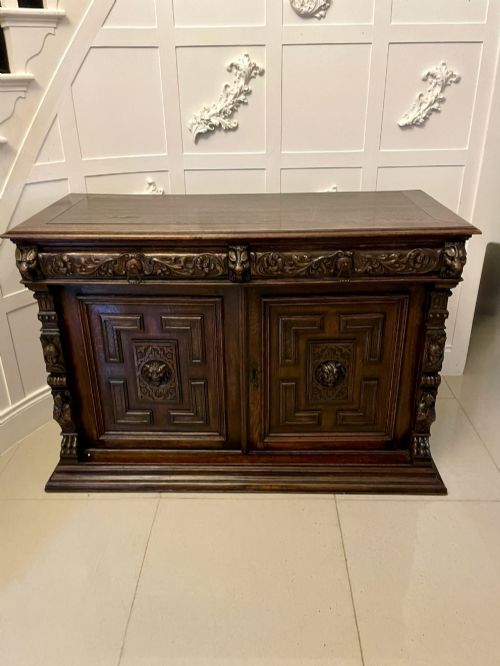
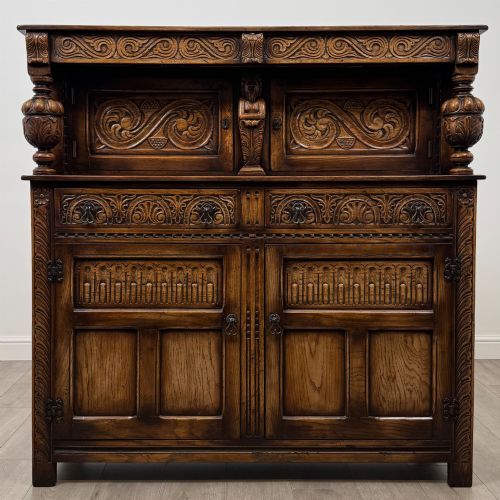
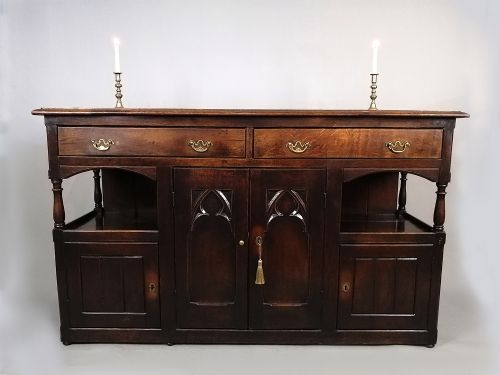
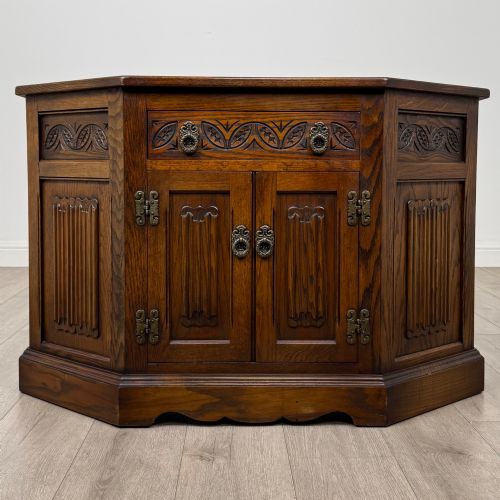
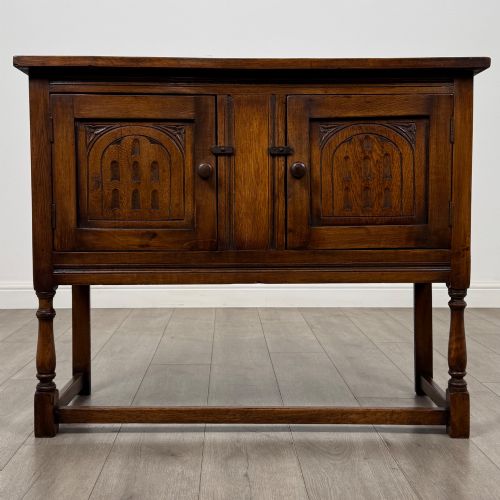
A vintage oak server cabinet encompasses functional storage pieces designed for dining rooms, hallways, and living spaces, drawing on a long tradition of British and European cabinet-making. When searching for a vintage oak server cabinet, buyers encounter various forms including sideboards, court cupboards, dresser bases, and side cabinets dating from the eighteenth century through to the interwar decades of the twentieth century.
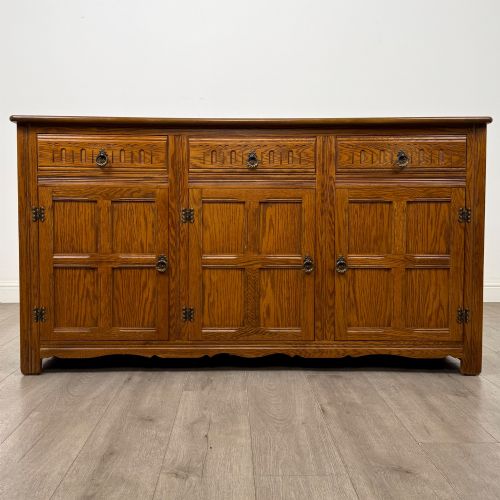
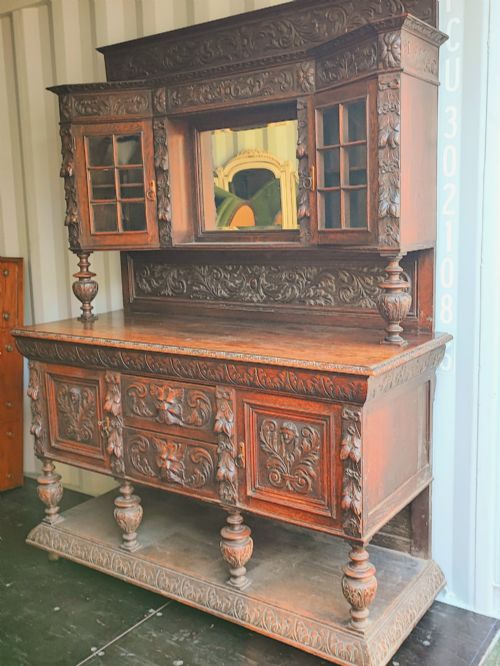
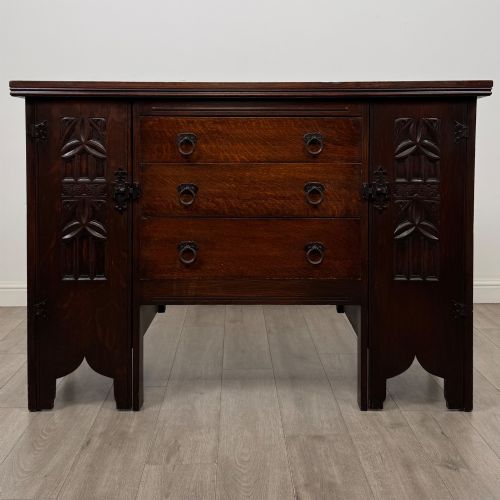
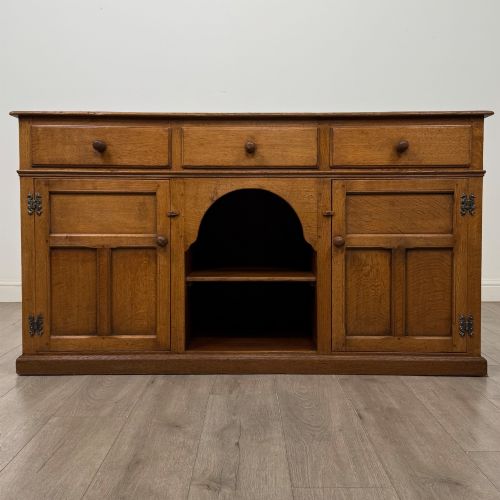
The Edwardian era and the nineteenth century dominate the current selection, alongside pieces influenced by earlier Jacobean, Gothic, and Georgian aesthetics. These items range from vernacular farmhouse dressers in golden oak to highly decorative revival sideboards featuring carved panels, linenfold detailing, and turned supports.
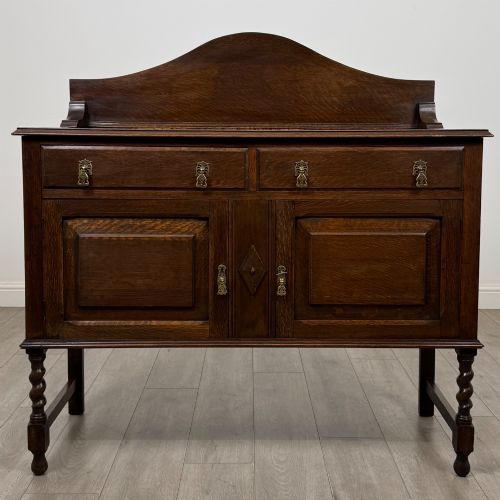
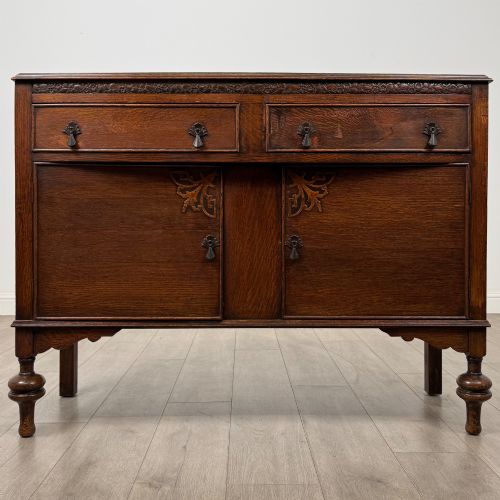
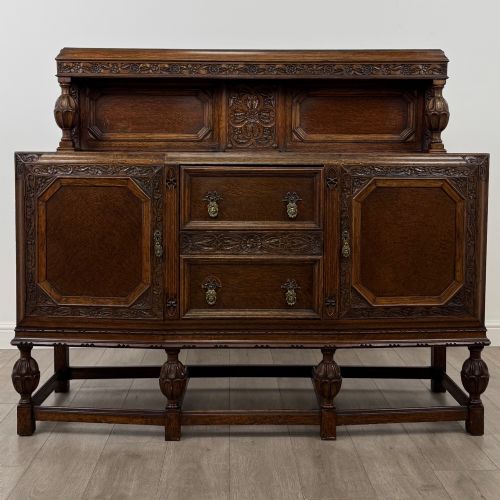
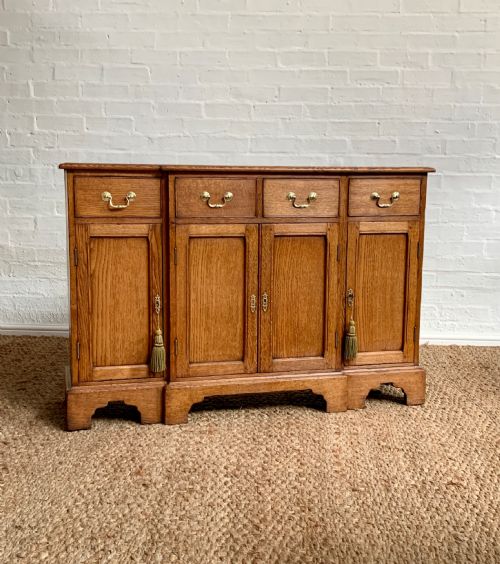
Form follows function across these designs, with many featuring combination layouts of drawers above enclosed cupboards to store dining linen, silver, and china. Whether selecting a compact side cabinet or a substantial sideboard, buyers find pieces built primarily for domestic utility with robust timber frames.
Materials and construction
Construction relies heavily on solid oak timber, frequently accented with secondary woods like fruit wood or walnut, and enriched with burr walnut veneers on select surfaces. Joinery techniques range from traditional hand-cut dovetails in the drawer construction to pegged mortise and tenon joints in the heavier framework of court cupboards and dresser bases.
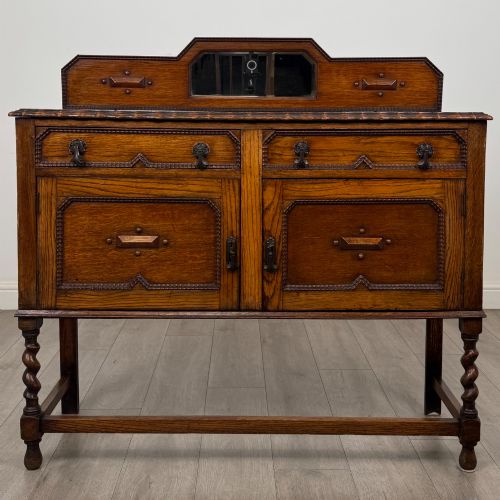
Surface embellishment involves skilled hand-carving, applied linenfold panels, and parquetry arrangements, supplemented by contrasting materials such as brass drop handles, iron hardware, and inset marble tops. Finishing touches include the use of mirrored backs in specific sideboard designs and dark wax polishes that highlight the distinct grain patterns of the oak.
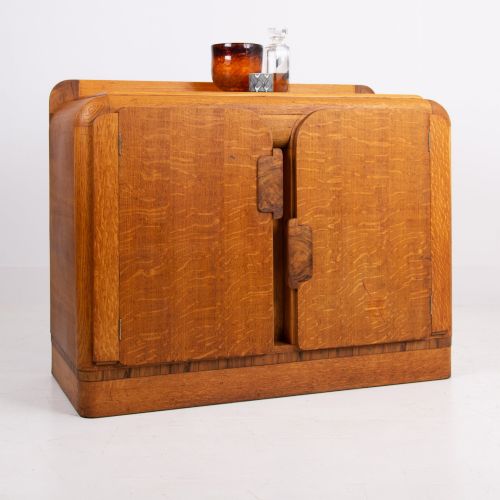
Periods represented span from the eighteenth-century Georgian era through Victorian craftsmanship to 1930s modernist designs by Gomme.
Evaluating craftsmanship
Quality reveals itself in the weight and selection of the timber, where dense quarter-sawn oak displaying prominent medullary rays indicates superior material selection compared to plain planking. The crispness of hand-carved details, such as deep foliate motifs or precise linenfold folding, separates standard production items from master-carved examples.
Structural integrity depends on the tightness of the joints and the smooth operation of drawers and cabinet doors without modern mechanical slides. Original hardware, balanced proportions, and the integration of secondary timbers like walnut or fruit wood further distinguish higher-tier pieces from simpler utility cabinets.
Gomme·Heals of London
The Vintage Oak Server Cabinet Glossary
- Court cupboard
- A heavy enclosed storage unit featuring an upper section recessed above a wider base, originating in the sixteenth and seventeenth centuries and revived in later periods.
- Dresser base
- A low wooden unit comprising a row of drawers above cupboards or open shelves, traditionally used in kitchens and dining rooms for food preparation and service.
- Linenfold
- A style of wood carving that imitates the appearance of folded vertical lengths of linen cloth, commonly found on Tudor and Jacobean revival panels.
- Barley twist
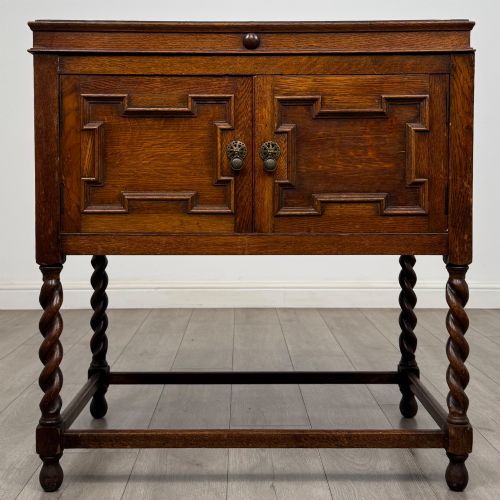
- A decorative turning technique resembling a rope wound around a cylinder, frequently utilised on the upright supports and legs of Edwardian furniture.
- Parquetry
- A geometric mosaic of wood pieces used for decorative effect on furniture surfaces, particularly prominent on French provincial and Louis XV style table tops.
Vintage Oak Server Cabinet: Frequently Asked Questions
What is the difference between a sideboard and a server cabinet?
A sideboard is typically a longer piece designed for dining rooms to hold serving dishes and cutlery, often featuring a combination of cupboards and drawers. A server cabinet tends to be more compact, functioning similarly but suited for smaller spaces or hallways.
Both forms utilise robust timber construction, with many examples in the current selection reflecting Edwardian and Victorian production methods.
How do I date an oak server cabinet?
Dating involves examining the construction methods, handle hardware, and stylistic revival influences present in the piece. Hand-cut dovetails, pegged joints, and vernacular proportions often point towards earlier eighteenth or nineteenth-century origins.
Later Edwardian and 1930s pieces frequently incorporate machine-sawn elements, lighter limed oak finishes, or specific revival styles like Arts and Crafts and Jacobean.
Where should I place a vintage oak cabinet in my home?
These cabinets suit dining rooms, living areas, and spacious hallways where their deep shelving provides practical storage for tableware, books, or linens. Their neutral timber tones allow them to anchor both traditional period interiors and modern minimalist spaces.
Placing them away from direct heat sources helps preserve the solid oak panels and prevents timber movement over time.
What styles are common in antique oak cabinets?
Common styles span Arts and Crafts, Jacobean Revival, Gothic Revival, and French Provincial designs executed in solid oak. The selection includes pieces with simple geometric lines alongside highly decorative items featuring carved linenfold panels and barley twist legs.
These varied aesthetic movements reflect the historic revival periods popular throughout the nineteenth and early twentieth centuries.