
Vintage Oak Office Cabinet
A vintage oak office cabinet brings sturdy utility and rich grain into a workspace, built to organise papers and books with sliding tambour doors or stacking sections.
Vintage Oak Office Cabinet
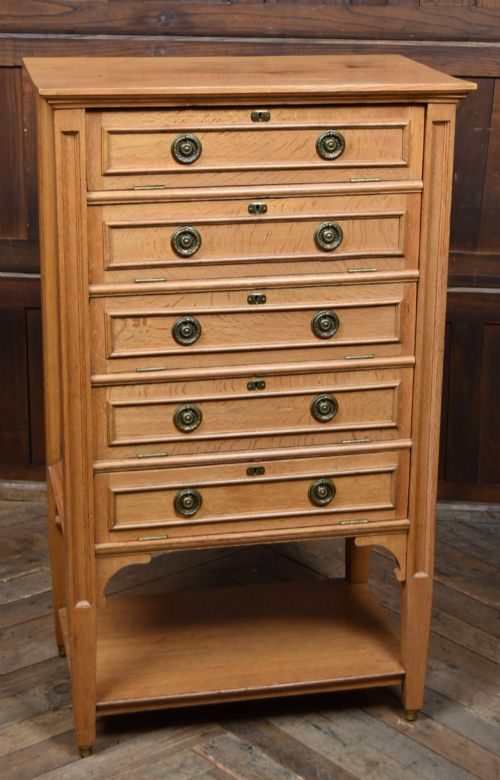
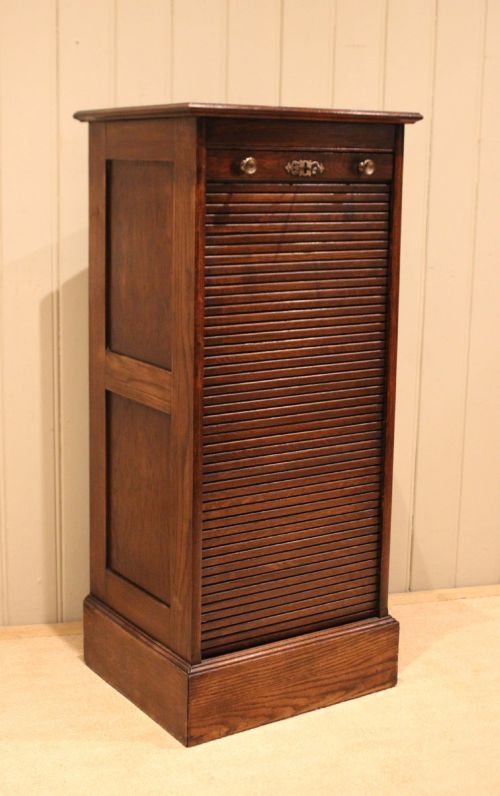
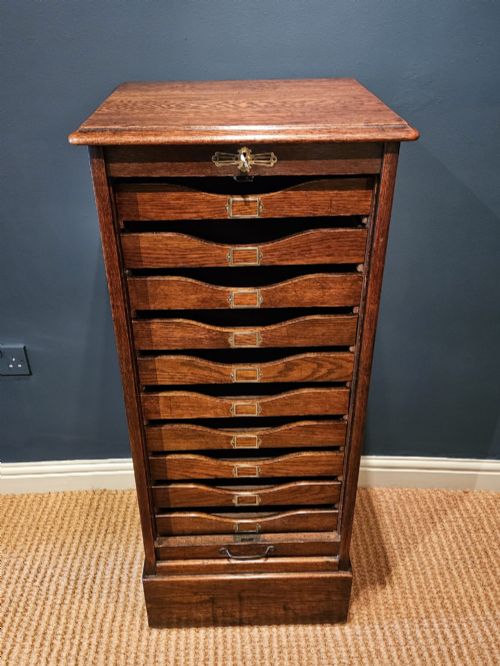
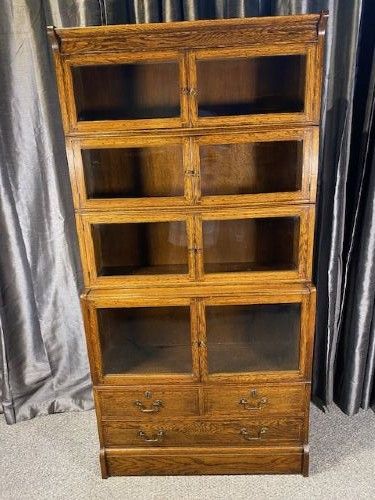
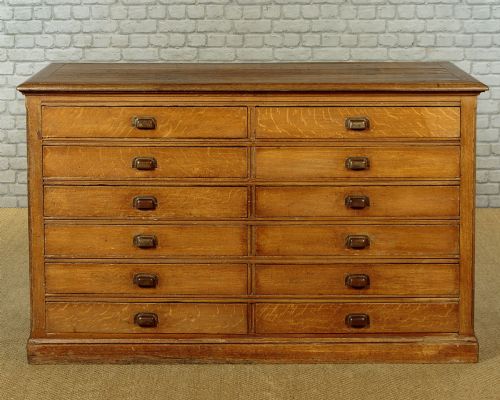
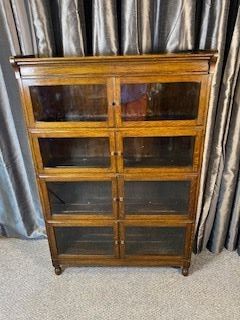
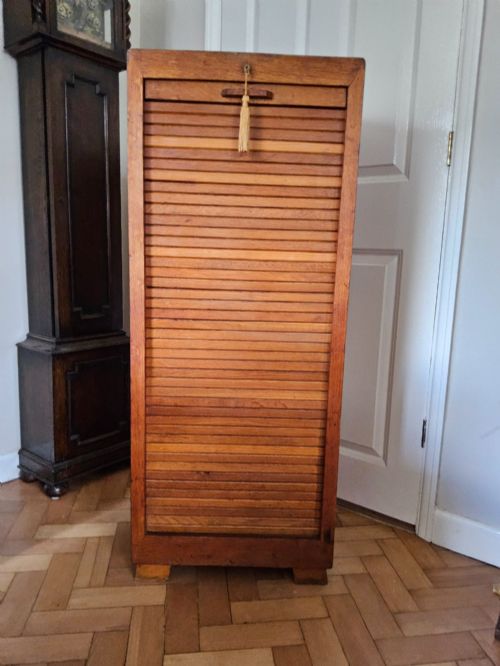
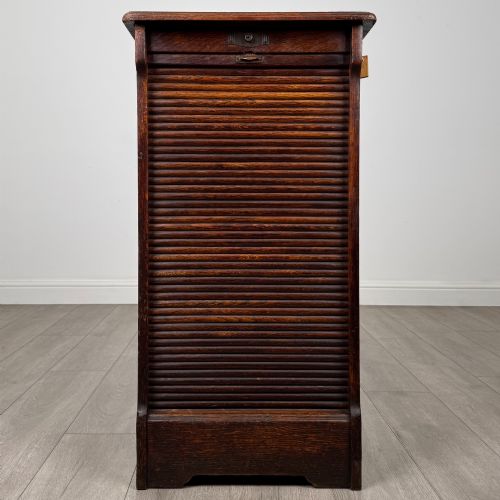
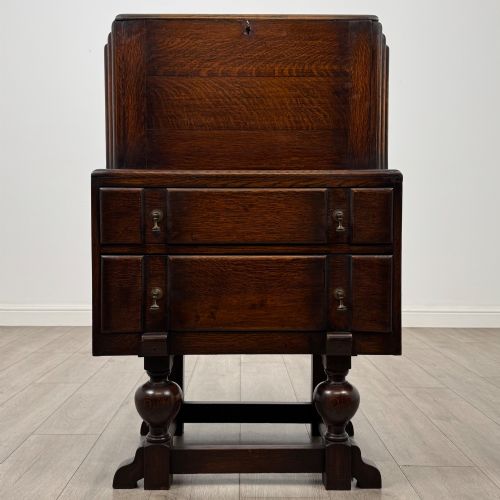
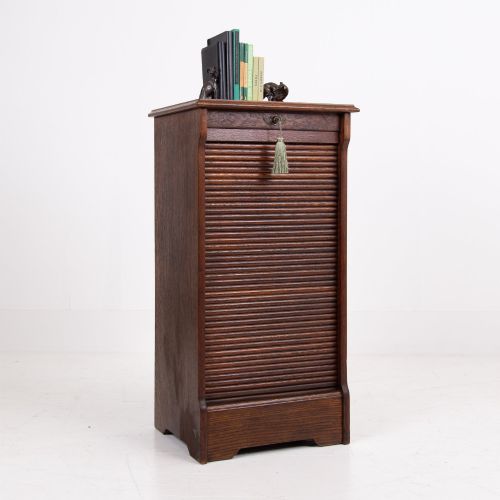
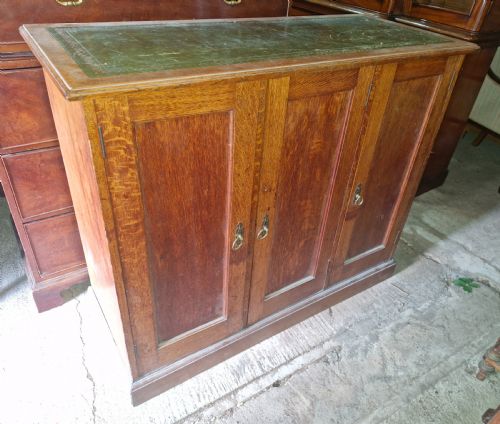
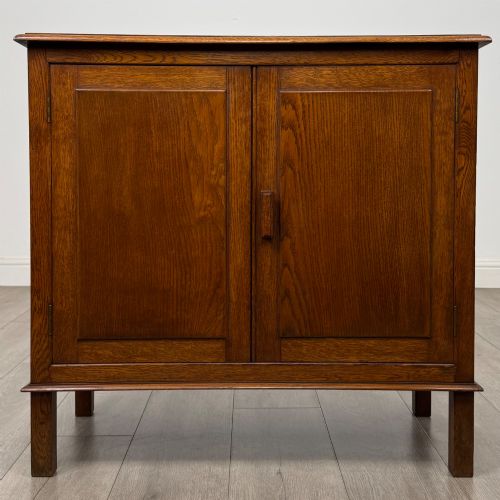
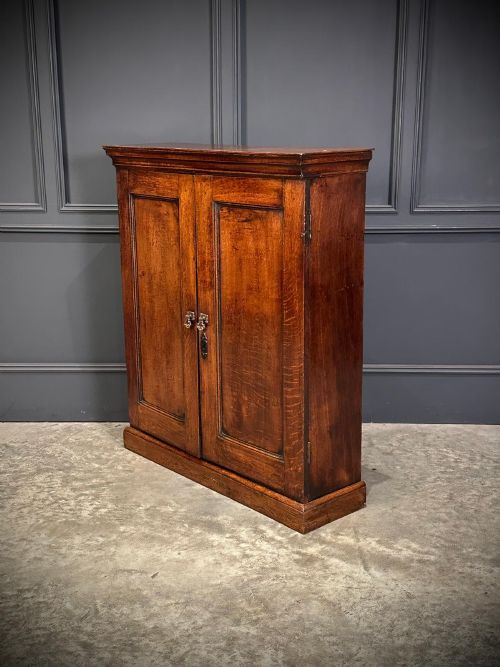
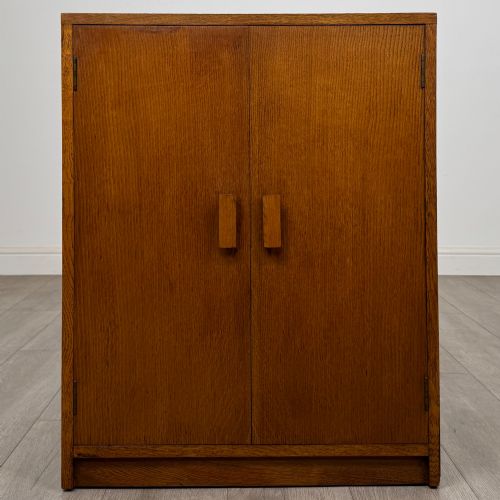
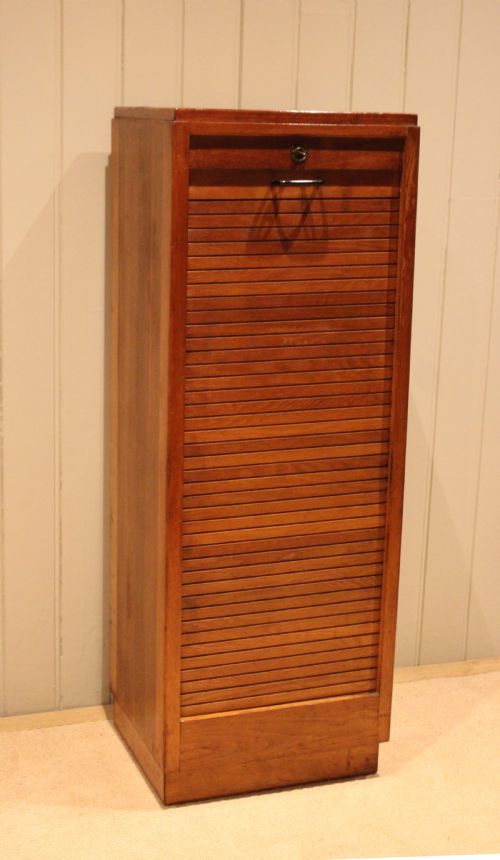
A vintage oak office cabinet encompasses practical workspace furniture designed for storage, filing and organisation from the Victorian period through to the mid twentieth century. Pieces span filing cabinets with rolling tambour shutters, modular stacking bookcases, banks of drawers, and writing bureaux.
The most frequent examples encountered on this page date from the Edwardian era and the early twentieth century, constructed for commercial offices, legal practices and domestic studies. These forms reflect a period when workspace furnishings prioritised durable timbers and modular adaptability.
How they were made
Makers utilised solid and quarter-sawn oak to build these cabinets, frequently displaying medullary ray figuring in the timber. Construction relied on traditional joinery techniques to house drawers, shelving tiers, and mechanical tambour tracks.
Hardware details such as brass handles, leather inserts, glass panes, and leaded glazing completed the utility of these functional items.
Gamekeepers and estate clerks once kept records secure inside heavy oak cabinets designed to withstand remote rural conditions.
What varies in quality
Quality rests upon the integrity of the timber selection and the smooth operation of mechanical elements like tambour shutters and stacking bookcase sections. Superior examples retain original brass hardware and well-fitted internal dividers that operate without binding.
Proportion and execution differentiate standard commercial utility furniture from finer workshop pieces produced with careful attention to panel alignment and grain matching.
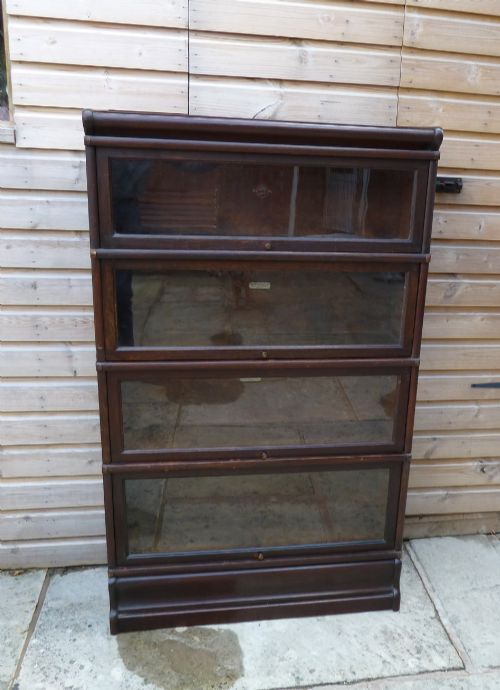
Globe Wernicke
The Vintage Oak Office Cabinet Glossary
- Tambour
- A flexible shutter door formed of narrow wooden slats glued to a canvas backing, allowing it to slide smoothly around a curved track to enclose a cabinet interior.
- Sectional bookcase
- A modular bookcase built from interchangeable stacking tiers with glass doors, also known as a barrister's bookcase, designed to be separated or stacked as needed.
- Quarter-sawn oak
- Timber cut radially through the growth rings rather than tangentially, producing a distinctive flecked grain pattern known as medullary rays.
- Plan chest
- A wide, shallow set of drawers designed originally for storing architectural drawings, maps, and large documents flat.
- Bureau
- A desk featuring a sloping writing flap that folds down to reveal small internal drawers and pigeonholes.
Vintage Oak Office Cabinet: Frequently Asked Questions
How do tambour doors work?
Tambour doors consist of narrow wooden slats attached to a flexible canvas backing that runs in recessed grooves along the cabinet sides. This allows the shutter to glide around a corner and disappear into the body of the cabinet.
Over decades of use, dust can accumulate in these tracks. Cleaning and waxing the runners usually restores smooth operation without altering the original mechanism.
How do stacking bookcases separate?
Sectional bookcases are built as independent modular tiers that rest one upon another using simple pin or peg locators rather than permanent fixings. A finished base and a separate top cornice complete the stack.
This design allowed legal offices and libraries to expand their shelving capacity vertically by purchasing additional tiers as their book collections grew.
What is quarter-sawn oak?
Quarter-sawn oak is produced by cutting the log into quarters before sawing perpendicular to the growth rings. This method yields stable timber less prone to warping and reveals prominent silver flecks across the grain.
Cabinet makers favoured this cut for visible fronts and panels because it highlighted the natural figuring of the oak.
How do I care for vintage oak furniture?
Vintage oak benefits from occasional applications of beeswax to nourish the timber and protect the polished surface from drying out. Avoid placing these cabinets near direct heat sources or in strong sunlight.
Gentle dusting with a dry cloth prevents dirt build-up in the carved details and hardware recesses.