
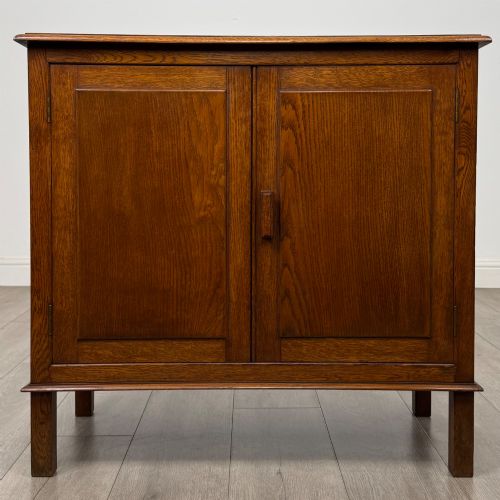
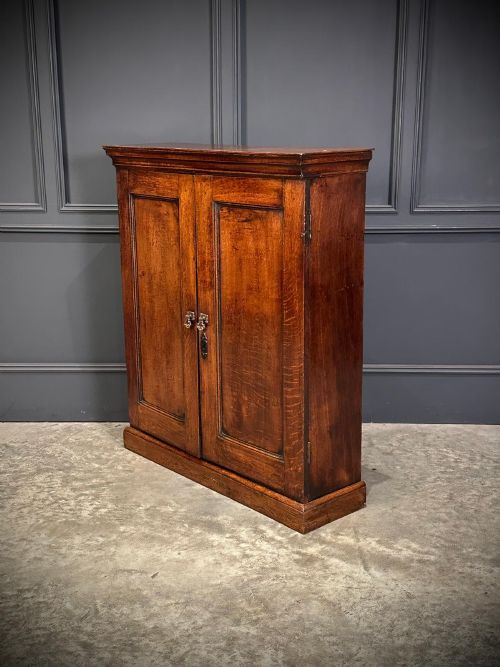


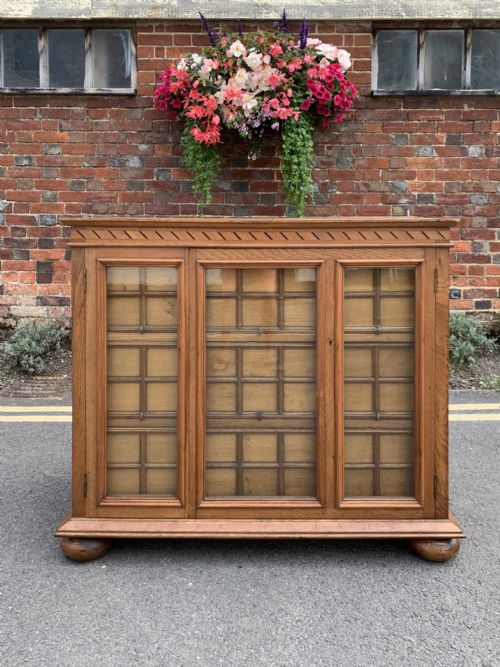

Oak Low Bookcase Cupboard
An oak low bookcase cupboard combines lower storage with open or glazed shelving, offering a sturdy and practical way to house a library while anchoring a room.
Oak Low Bookcase Cupboard
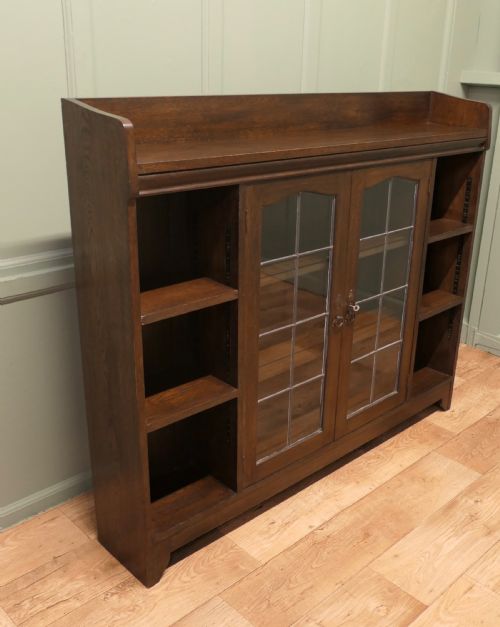
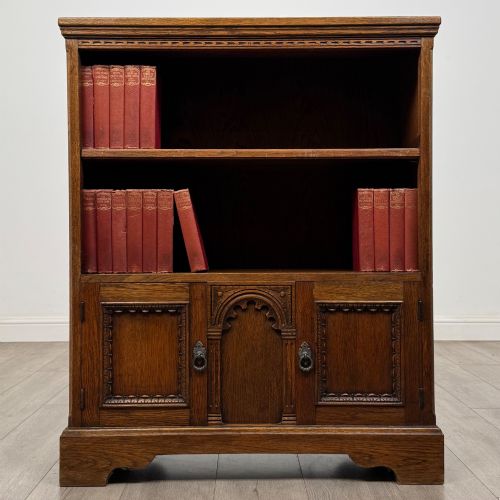
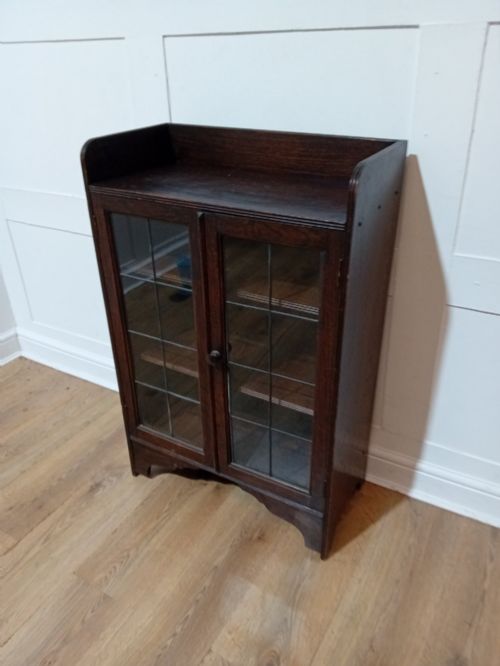
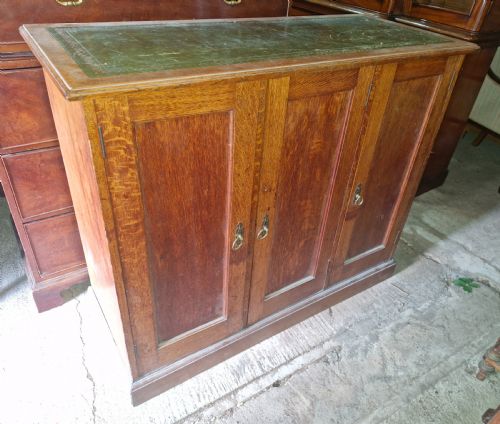
When you search for an oak low bookcase cupboard, you are looking at a compact storage piece that pairs shelving with a closed cupboard base. These items span periods from the Georgian era through the Regency and Victorian periods, with significant representation from Edwardian and early twentieth-century workshops.
The versions most commonly encountered on this page date from the Edwardian period and the early 1900s, often drawing on Arts and Crafts, Jacobean Revival, or Tudor styles. They appear in forms such as dwarf cabinets, side cabinets, and fitted cupboards, generally offering a lower profile than traditional tall libraries.
Mellowed oak surfaces define the group, sometimes enriched with pollard oak or burr oak veneers, occasionally featuring glazed doors or leaded glass. They function equally well as vestry cupboards, small open bookcases with lower storage, or glazed cabinets suited to domestic living spaces.
What varies in quality
The distinction between standard utility items and finer examples lies in the selection of timber figure, such as the use of burr or pollard oak veneers on cabinet doors. Cabinetmaking execution, including the crispness of revival mouldings and the integration of galleried tops or leaded glass, separates basic workshop output from more ambitious commissions.
Proportion and structural retention also differentiate the range, as pieces retaining original brass hardware, uncompromised leaded glazing, and well-fitted interior shelving command greater attention from collectors of period oak furniture.
Materials across the listings focus primarily on solid oak, supported by decorative accents of pollard oak, burr oak, brass, lead, and glass.
William Trotter·Gillows·Liberty
The Oak Low Bookcase Cupboard Glossary
- Pollard oak
- Timber taken from trees that have been pollarded, producing a dense, highly figured grain pattern used for decorative veneer. It appears frequently on Regency and nineteenth-century cabinet doors.
- Leaded glass
- Small panes of glass held together by strips of lead cames, commonly found in Edwardian and Arts and Crafts cabinet doors. This technique adds structural rigidity and decorative linear pattern.
- Dwarf cabinet
- A low-standing storage piece designed to sit beneath picture rail height, keeping sightlines open in a room. These forms became popular during the Edwardian era for domestic studies.
- Quarter-sawn
- A method of cutting oak logs radially to the growth rings, revealing prominent medullary rays across the board. This cut provides superior dimensional stability for panels and shelves.
- Burr oak
- A growth deformity on an oak tree that produces swirling, highly decorative wood grain when sliced into veneer. Cabinetmakers used it selectively on primary display surfaces.
Oak Low Bookcase Cupboard: Frequently Asked Questions
What periods do these bookcases date from?
The pieces span several centuries, originating from Georgian and Regency eras through Victorian revivals.
Edwardian and early twentieth-century examples, particularly those influenced by the Arts and Crafts movement, appear most frequently in this selection.
How were these cupboards used historically?
These units served multiple domestic and institutional functions, from holding household libraries to storing vestry records.
The combination of lower enclosed storage and upper display shelving allowed owners to protect valuable volumes while keeping frequently accessed items close at hand.
Are the glass doors original?
Many pieces retain their original glazed or leaded doors, which often feature period-appropriate thickness and minor imperfections in the glass.
Examining the putty lines and the joinery around the lead cames helps determine whether the glazing matches the age of the oak frame.
How do I identify Arts and Crafts oak furniture?
Arts and Crafts pieces emphasise visible construction methods, straightforward joinery, and the natural grain of solid oak rather than heavy applied ornament.
They frequently incorporate distinctive metal hardware in brass or copper and exhibit simpler, functional proportions.