


Leather Top Side Cabinet
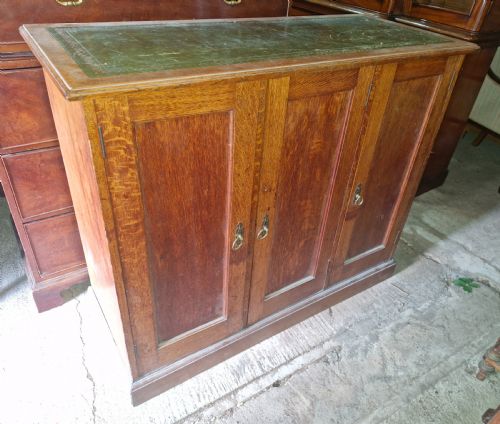
These leather top side cabinet selections bring together handsome woods and fitted writing surfaces designed for practical elegance in traditional rooms.
Leather Top Side Cabinet
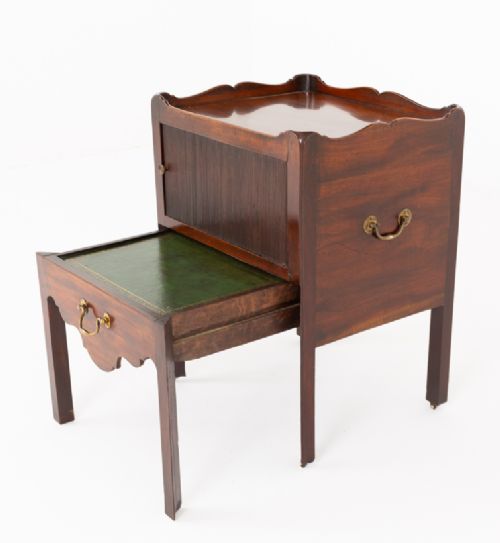
When buyers search for a leather top side cabinet, they encounter compact writing desks, bedside pieces, and side furniture originating from the Georgian, Regency, and Victorian eras. These items merge cabinetwork with inset leather writing surfaces, offering storage alongside a durable writing panel.
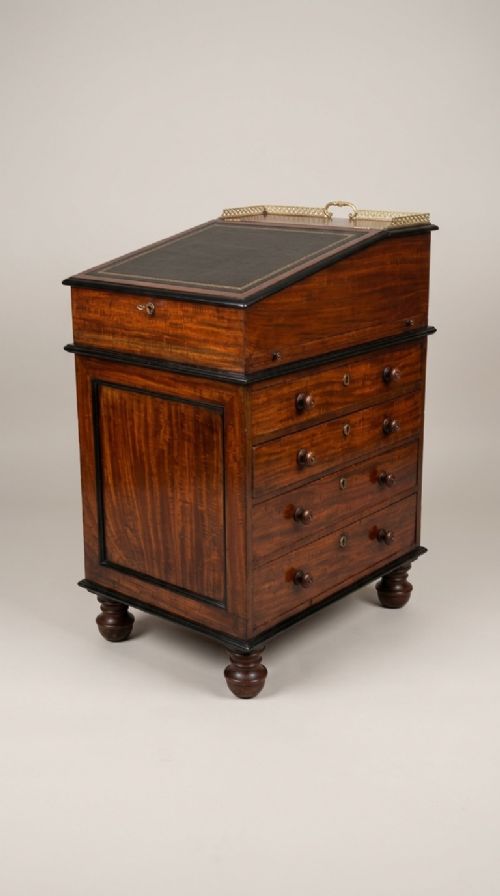
The most frequent examples found on this page are Davenports and side cabinets fashioned from richly grained timbers like mahogany and rosewood. These forms date primarily across the nineteenth century, reflecting periods when fitted storage and small writing desks were essential household furnishings.
How they were made
Cabinetmakers utilised solid timbers and choice veneers, applying mahogany, rosewood, and burr walnut over robust carcases of oak. Drawer linings and internal dividers demonstrate meticulous joinery designed to withstand daily use over centuries.
Writing surfaces feature tooled leather inserts, often edged with gilt tooling, paired with brass hardware such as knobs, handles, and casters. Ebonisation and parcel gilt accents appear on select Regency pieces to enhance architectural lines.
Listings feature items spanning the Georgian, Regency, and Victorian periods, constructed primarily in mahogany, rosewood, and burr walnut.
What varies in quality
Distinction across these pieces rests on the choice of timber veneer, the precision of marquetry inlay, and the crispness of brass mounts. Superior examples exhibit tightly figured burr walnut or richly grained rosewood matched symmetrically across panels.
The sophistication of the internal stationery compartments and the finesse of the hand-tooled leather surface further separate standard items from exceptional cabinetwork. Maker attribution, where discernible through construction methods, also elevates the standing of a piece.
Gillows
The Leather Top Side Cabinet Glossary
- Davenport
- A small pedestal desk featuring a sloping, leather-lined writing lid above a bank of drawers. This form became popular during the Regency period for compact studies and drawing rooms.
- Marquetry
- Decorative veneer work forming pictorial patterns using various coloured woods. It requires high skill to fit the thin wood pieces seamlessly into the surface.
- Parcel Gilt
- Partial gilding applied to specific carved details or mouldings on a wooden frame. It highlights particular architectural elements against a dark timber background.
- Ebonised
- Wood treated with a dark stain or finish to imitate ebony. This technique gained favour during the nineteenth century for accentuating classical details.
- Canterbury
- A low stand with partitions designed for holding sheet music, books, or portfolios. Some incorporate drawers and small cabinets beneath the main compartment.
Leather Top Side Cabinet: Frequently Asked Questions
What is a Davenport desk?
A Davenport is a compact writing desk featuring a sloped, leather-inset lid that opens to reveal storage compartments. Below the writing surface, a set of side drawers provides additional space.
First appearing around the Regency period, these pieces were designed for use in small studies or drawing rooms where floor space was limited.
How do I date a mahogany piece?
Dating mahogany furniture involves examining the grain, the method of drawer construction, and the underlying secondary timbers like oak. Georgian and Regency pieces typically show hand-cut dovetails and lighter internal framing.
Later Victorian examples often incorporate heavier timbers and machine-cut elements, reflecting changes in workshop production during the nineteenth century.
Where were side cabinets placed?
These cabinets served functional roles in bedrooms, libraries, and drawing rooms as bedside storage or small writing surfaces. Their compact footprints allowed them to fit neatly into corners or alongside seating.
The inclusion of leather tops provided a durable surface for writing letters or placing desk accessories without damaging the polished wood underneath.
How should I care for antique leather?
Antique leather writing surfaces benefit from gentle cleaning with a dry or slightly damp cloth to remove dust. Avoiding harsh modern cleaners preserves the original tooling and the aged patina of the material.
Applying specialist leather dressings occasionally helps prevent the hide from drying out, maintaining flexibility across the gold-tooled borders.