

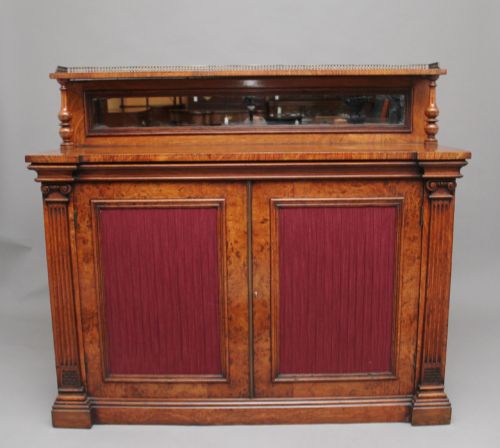

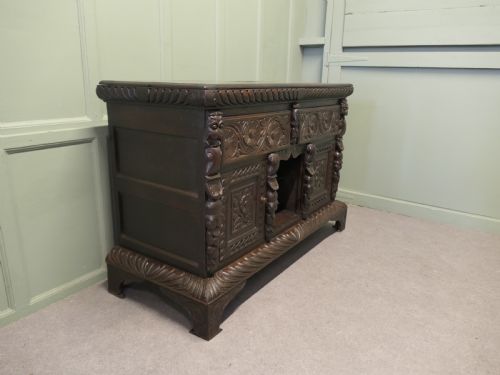
Victorian Oak Credenza Cabinet
A victorian oak credenza cabinet brings substantial nineteenth-century presence to a room, offering deep timber grain and heavy period carving.
Victorian Oak Credenza Cabinet
When searching for a victorian oak credenza cabinet, buyers encounter substantial storage pieces ranging from large sideboards and buffets to smaller hall cupboards and dresser bases. The selection leans heavily towards nineteenth-century examples, with specific pieces dated through the eighteen-fifties, sixties, eighties and nineties.
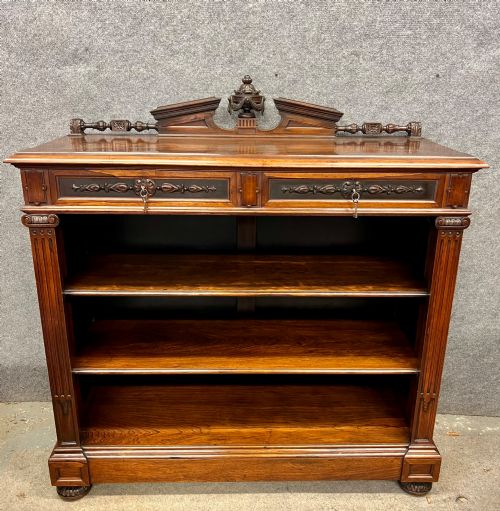
Makers and workshops of the period utilised robust timber alongside related forms like bookcases and servers. Stylistic influences vary from plain utility versions to heavily carved Gothic Revival, Renaissance Revival and Arts and Crafts iterations.
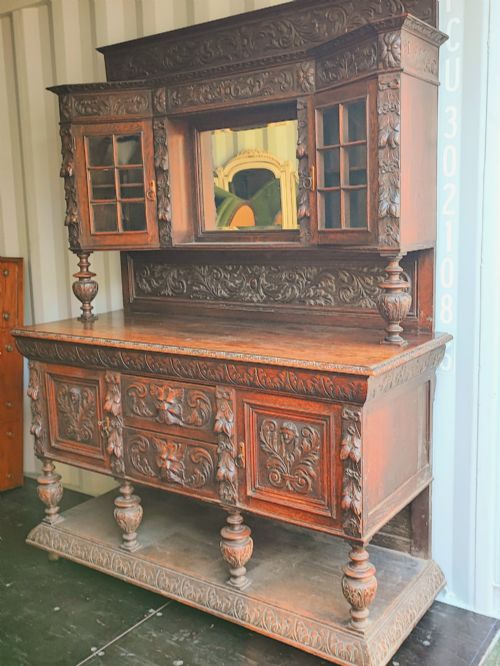
Most items combine practical enclosed storage with display surfaces, occasionally incorporating mirror backs or top shelves. The forms reflect both domestic utility and grander reception room display requirements of the era.
Assessing quality in period pieces
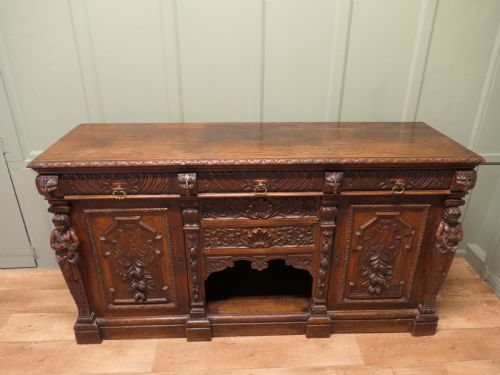
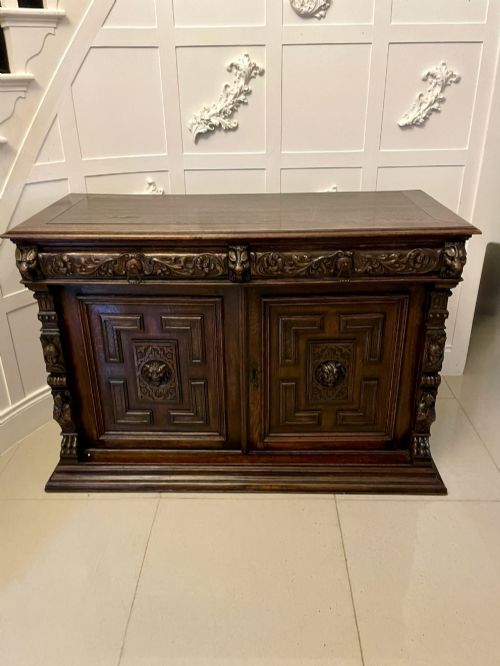
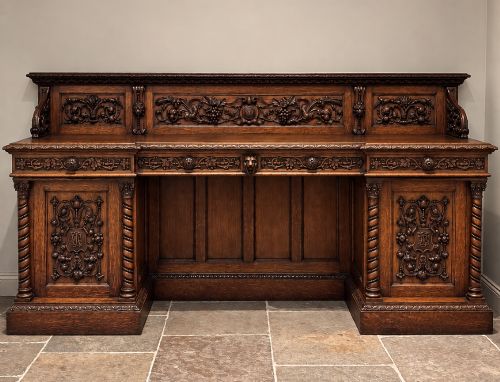
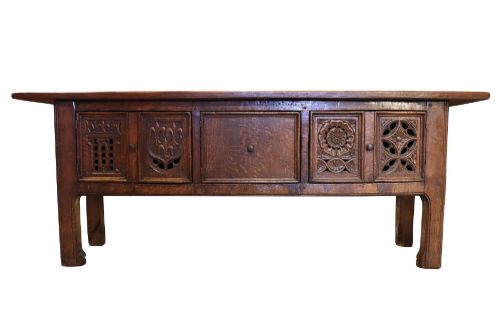
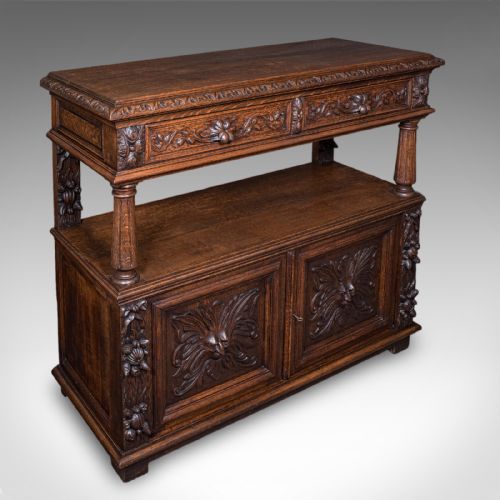
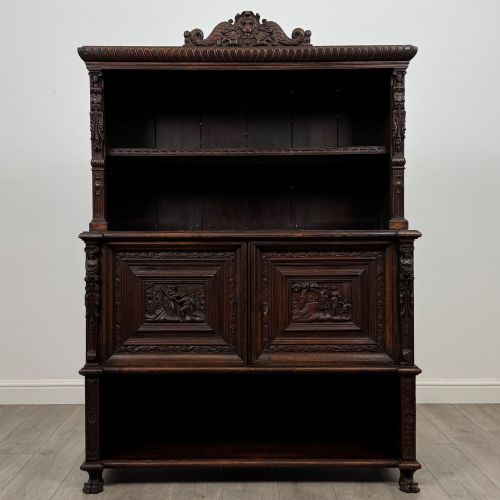
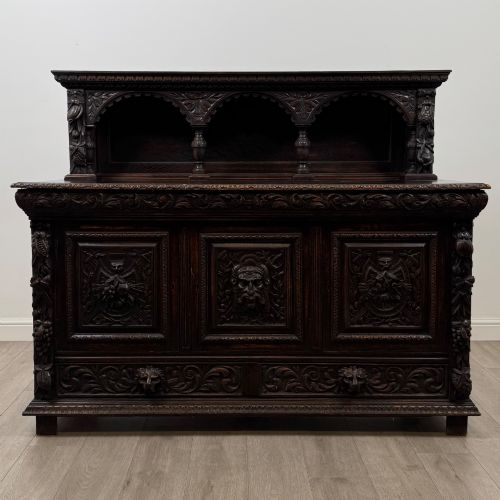
Quality separates simple utility cupboards from ambitious architectural sideboards through the depth and crispness of the timber carving. Superior examples display intricate relief work, such as Green Man faces or Gothic architectural elements executed with precision.
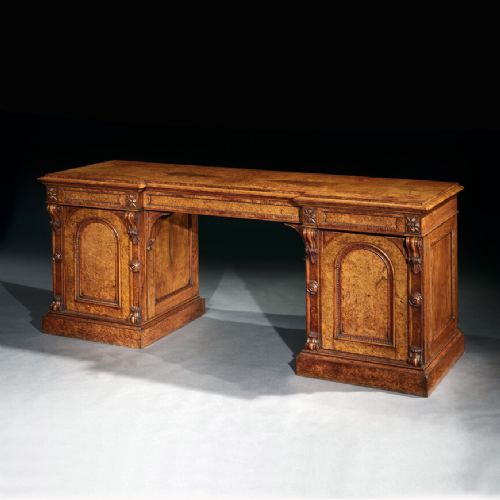
The choice of timber creates a distinct divergence in the range, with highly figured pollard oak pieces commanding attention compared to plain standard oak boards. The weight of brass furniture, the clarity of integrated mirrors and the tightness of panel construction further distinguish finer workshops.
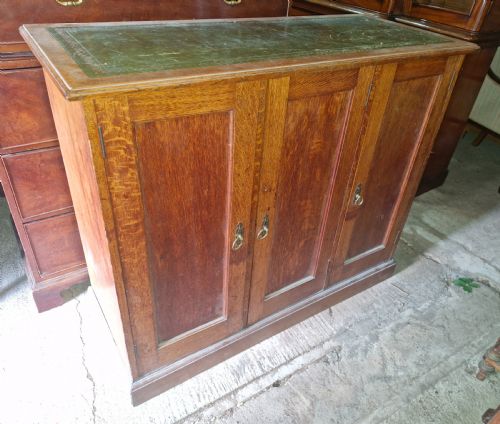
Periods represented span from early nineteenth-century pieces through Victorian Renaissance Revival to Edwardian utility cupboards.
Garnett And Sons·Maple And Co
The Victorian Oak Credenza Cabinet Glossary
- Pollard oak
- Timber taken from trees that have been pollarded, producing a highly decorative knotty grain pattern. This distinctive wood was favoured for superior Victorian cabinet doors and drawer fronts.
- Green Man
- A sculptural architectural motif depicting a human face entwined with foliage or vines. It appears frequently in nineteenth-century carved woodwork.
- Gothic Revival
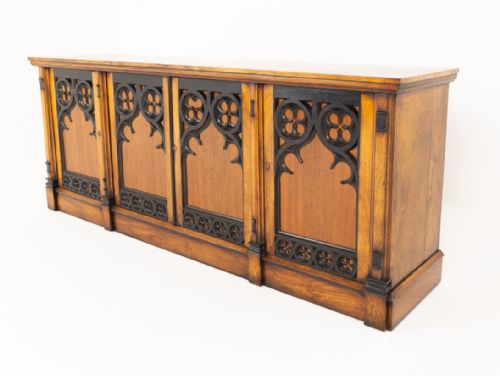
- A nineteenth-century design movement drawing inspiration from medieval architecture. Pieces show pointed arches, tracery and heavy structural proportions.
- Credence cabinet
- A medieval-style side table or small cupboard traditionally used for food tasting or religious vessels. The form reappears in late nineteenth-century revival furniture.
- Dresser base
- A low wooden storage unit featuring drawers above cupboards, lacking the upper plate rack of a traditional kitchen dresser. These serve as substantial sideboards in dining spaces.
Victorian Oak Credenza Cabinet: Frequently Asked Questions
What is the difference between a sideboard and a credenza?
Sideboards generally offer broader dining room storage with combinations of drawers and cupboards for tableware and linens. Credence cabinets and related credenzas lean towards architectural display surfaces with medieval or continental revival detailing.
Buyers often find the terms used interchangeably by antique dealers when describing nineteenth-century heavy timber furniture.
How do I identify Gothic Revival oak pieces?
Gothic Revival pieces display architectural motifs such as pointed arches, quatrefoils, heavy chamfered edges and linenfold panelling. The carvings often include deeply recessed panels and ecclesiastical symbols.
These designs emerged strongly during the Victorian era as a reaction against classical industrial production.
Where should I place a large oak cabinet?
These substantial oak items require walls capable of supporting heavy timber furniture, making dining rooms, wide hallways and spacious living areas ideal. Their deep proportions mean they anchor a room visually and need clearance for door swings.
Placing them away from direct heat sources protects the old oak from drying and splitting.
What dates are most common for these cabinets?
The majority of pieces date from the Victorian period, specifically clustered around the eighteen-eighties during the height of revivalist cabinet making. Earlier examples from the eighteen-fifties and sixties appear alongside occasional Edwardian and nineteen-twenties utility pieces.
Exact dating often relies on registry marks, construction methods and stylistic shifts towards Arts and Crafts simplicity.