

Vintage Oak Drop Leaf Table
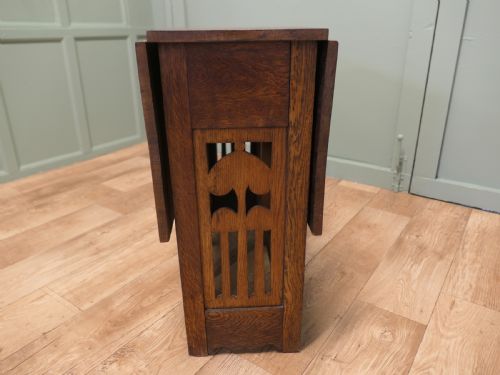
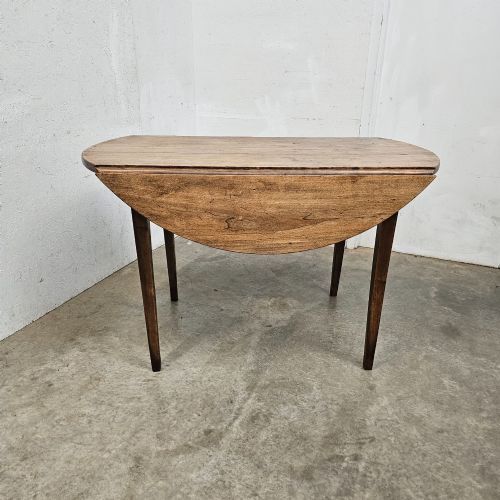
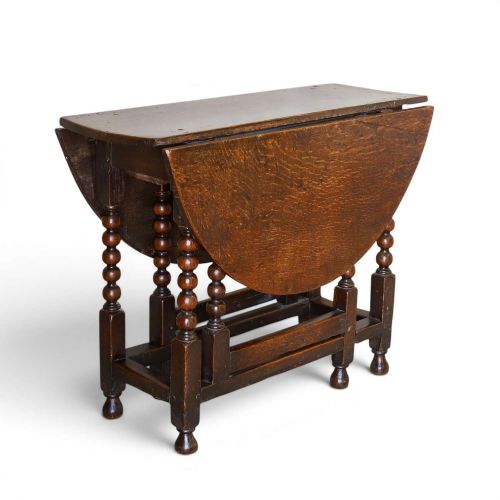
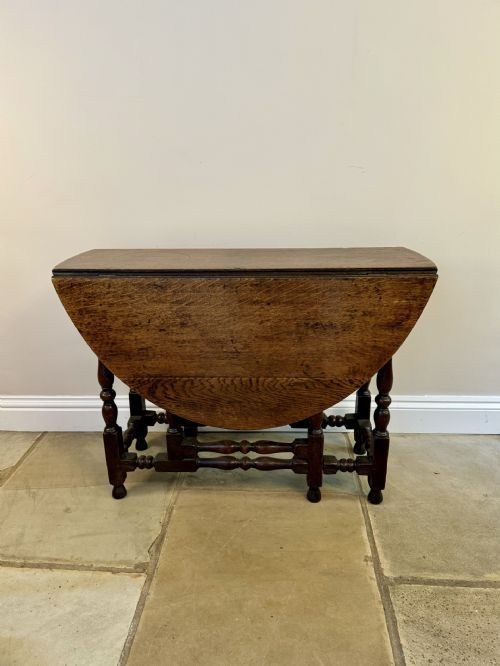
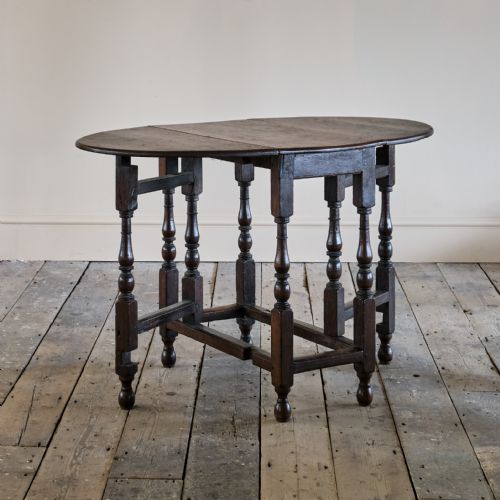
A vintage oak drop leaf table offers folding flexibility and rich timber grain, moving easily from compact side table to family dining surface.
Vintage Oak Drop Leaf Table
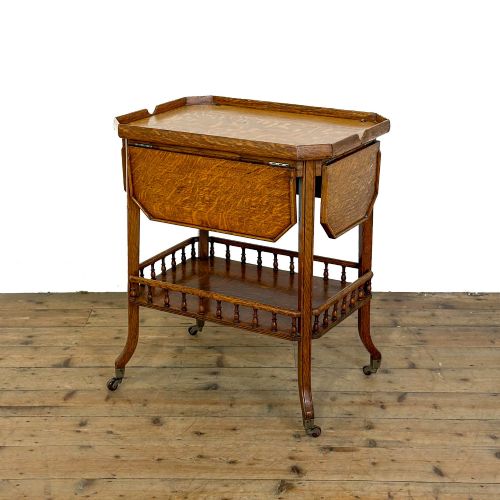
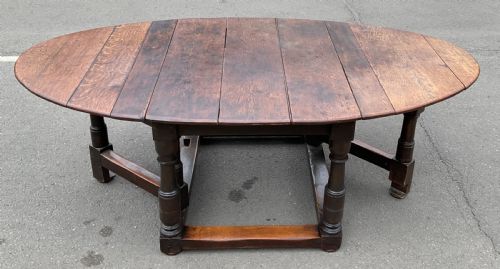
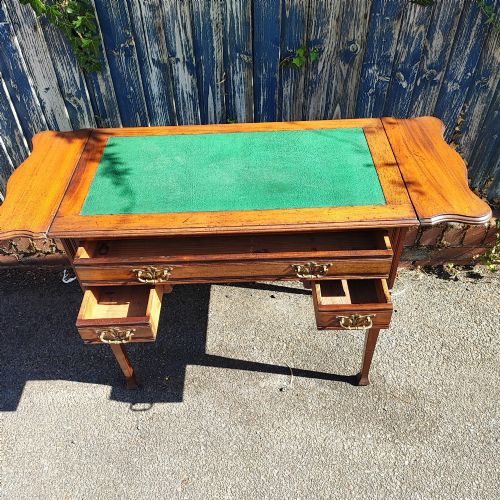
A vintage oak drop leaf table brings practical folding leaves and sturdy construction into daily domestic use. Buyers encounter everything from compact tea trolleys and coffee tables to substantial gateleg dining tables spanning several centuries.
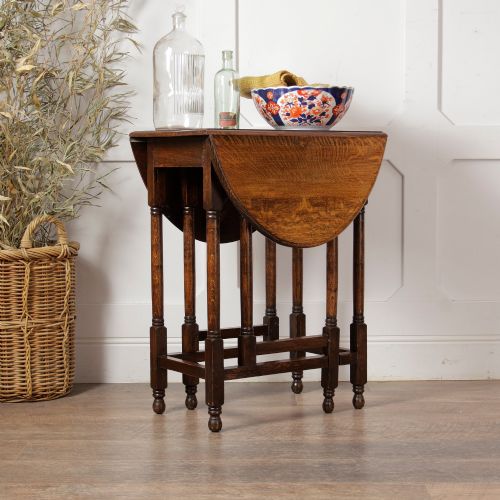
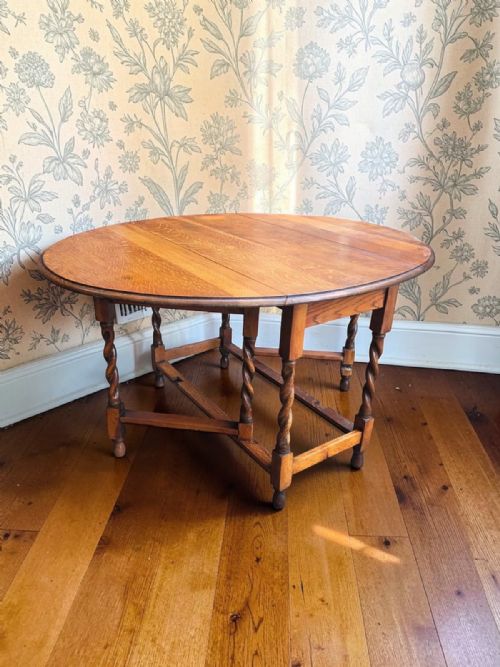
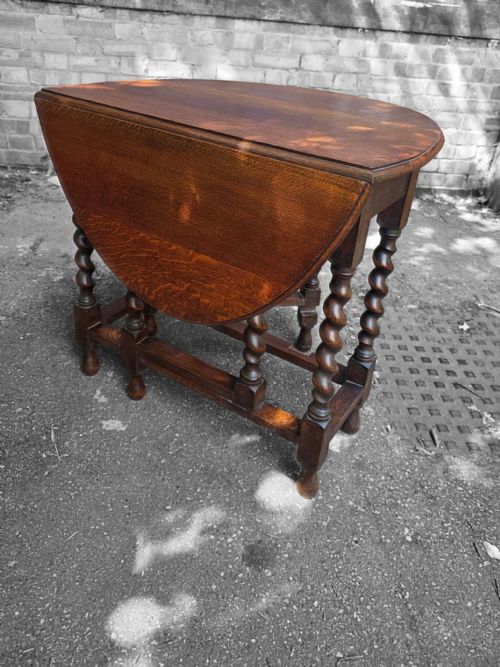
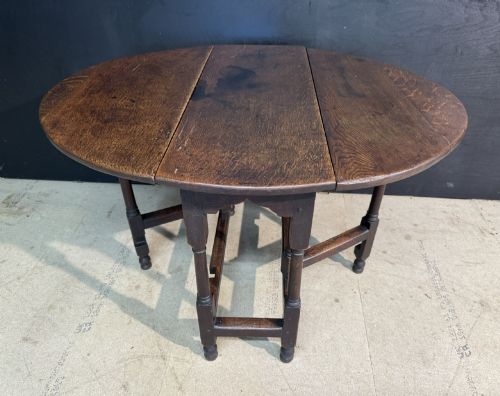
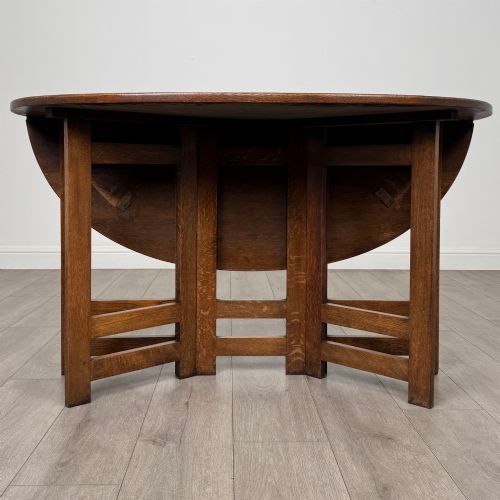
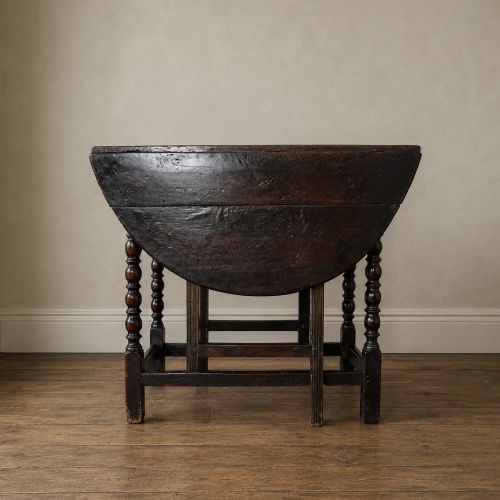
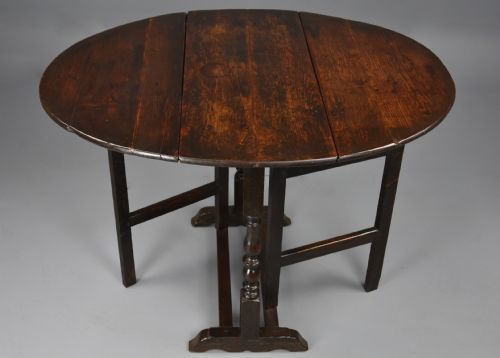
The selection ranges from seventeenth century gateleg forms with oval tops to twentieth century revival pieces and Arts and Crafts dining tables. Many examples incorporate barley twist or bobbin turned legs that support folding side flaps.
Smaller occasional tables sit alongside large wake tables, offering versatile surfaces suited to modern living spaces and traditional interiors alike. Solid oak and golden oak dominate the forms, frequently paired with walnut or fruitwood accents.
How They Were Made
Cabinet makers constructed these tables primarily from solid oak, sometimes combining the timber with ash, mahogany, or fruitwood for secondary framing. Carpenters utilised traditional joinery alongside hinged mechanisms to allow the drop leaves to swing freely on supporting swing legs or gates.
Turning lathes shaped structural components into distinctive barley twist, bobbin turned, or straight supports. Brass hinges and iron fixings secured the folding flaps to the central fixed top, ensuring stability when extended.
Early gateleg tables occasionally incorporate secret compartments hidden within the pivoting frame for storing small valuables.
What Varies in Quality
The standard of timber selection and the crispness of the turned legs dictate the overall refinement of a piece. Earlier examples display deep original patina and dense grain, whereas revival pieces rely on proportion and joinery integrity.
The smoothness of the drop leaf action and the tightness of the gate joints reveal the original maker's precision. Tables retaining unblemished surface patination and balanced proportions command greater appreciation from collectors.
The Vintage Oak Drop Leaf Table Glossary
- Gateleg table
- A table with hinged leaves supported by swing-out legs that resemble a opening gate. This construction provides robust support for the drop leaves when fully extended.
- Barley twist
- A spiral turning technique carved or shaped into table legs. This decorative feature appears frequently on seventeenth century and revival dining tables.
- Drop leaf
- A hinged table flap that folds down to save space or lifts up to expand the surface area. It rests on movable legs or wooden brackets when raised.
- Patina
- The surface sheen and mellowing developed by timber over decades or centuries of handling and exposure. It indicates age and depth of character in antique wood.
Vintage Oak Drop Leaf Table: Frequently Asked Questions
How do I use a drop leaf table in a small room?
Keep both leaves folded down against the central fixed top to utilise the piece as a narrow console or side table against a wall.
Raise one or both leaves and swing out the supporting legs when you need extra surface space for dining or writing.
How do I tell a seventeenth century table from a twentieth century revival?
Examine the construction marks, timber density, and hand-tooled joints visible beneath the top and around the gate mechanism. Seventeenth century originals display distinct hand-cut pegged joinery and deeper natural patination.
Twentieth century Jacobean revival pieces often show uniform machine milling and lighter oak tones despite adopting historic turning styles.
Are barley twist legs sturdy enough for daily dining?
Spiral turned oak legs provide substantial load-bearing strength when the structural stretchers and gate hinges remain tight and properly aligned.
Check that the swing legs lock firmly into position under the extended leaves before placing heavy items on the surface.