
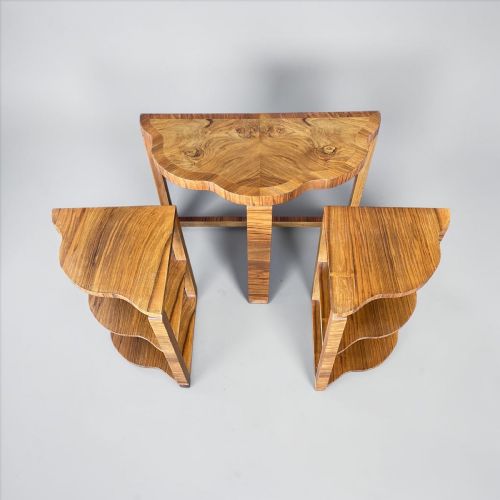
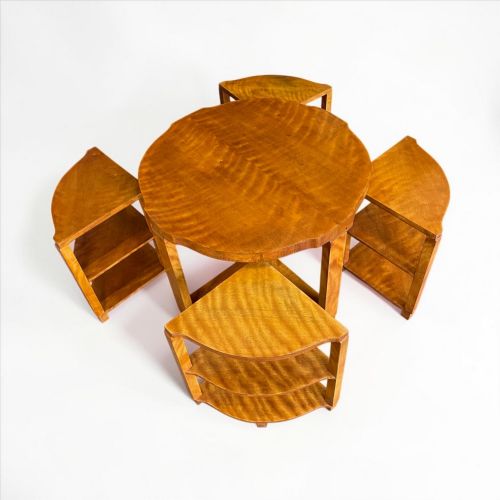


Vintage Nesting Tables Set
These vintage nesting tables set pieces offer clever multi-tiered surfaces that slide together neatly when floor space matters.
Vintage Nesting Tables Set
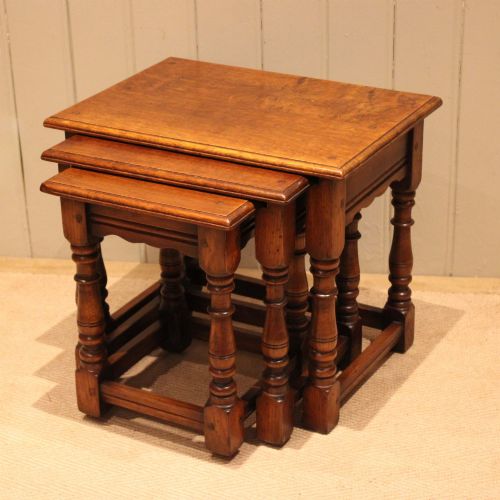
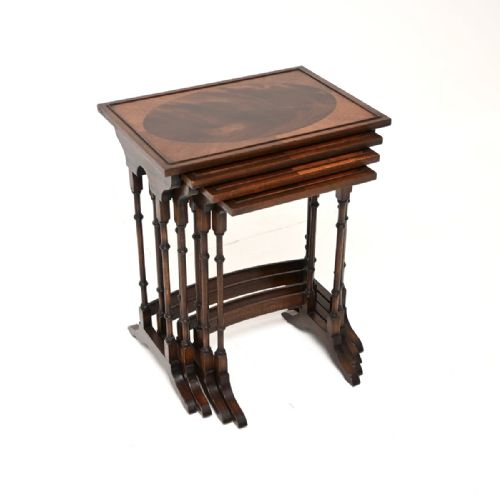
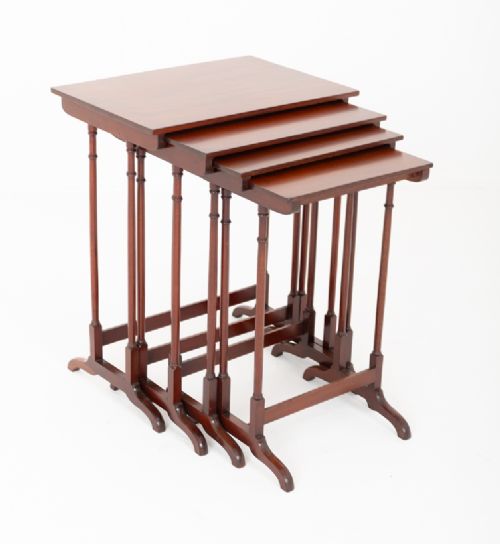
A vintage nesting tables set provides a graduated series of freestanding tables designed to slip smoothly beneath one another. The form appears most frequently in Edwardian, Art Deco, and early twentieth century periods, running from nineteen-twenty back through the nineteenth century.
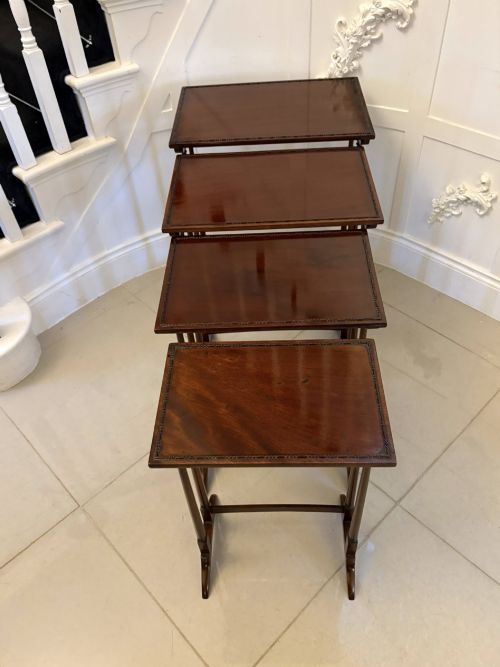
Buyers encounter sets comprising three, four, or five tables in various timbers. The pieces function as occasional side surfaces for tea or lamps, remaining compact until extra guests arrive.
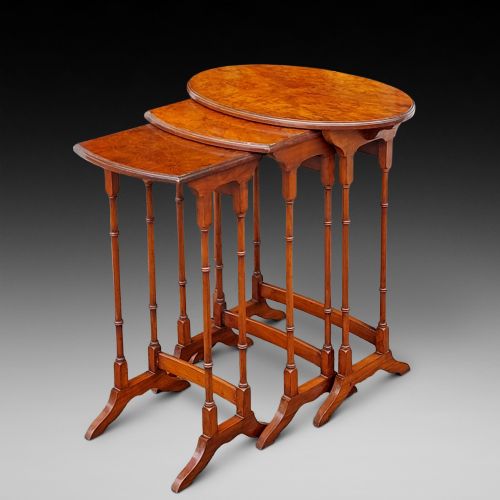
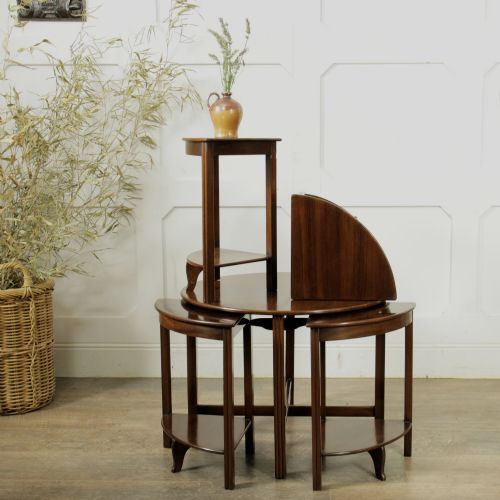
Origin variations span traditional English mahogany and walnut designs to Chinoiserie lacquer, French parquetry, and Oriental hardwood. The selection includes standard rectangular nests alongside circular formations and quartetto tables.
How they were made
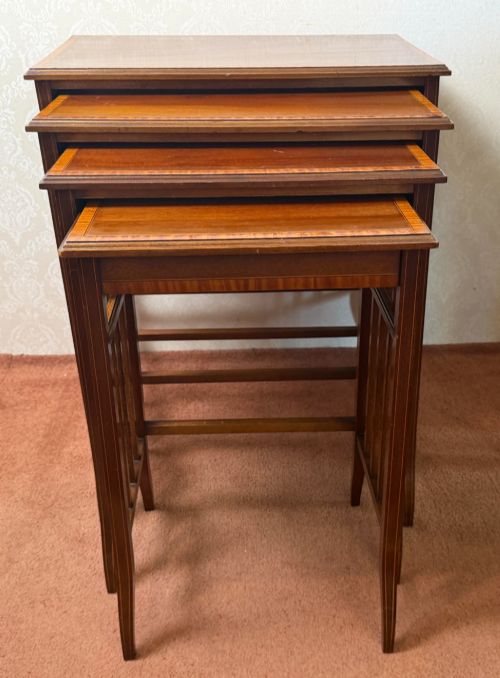
Cabinetmakers constructed these tables using solid and veneered hardwoods like mahogany, walnut, burr walnut, and oak. Finer examples incorporate contrasting timbers such as satinwood for cross banding and inlay work.
Surface decoration ranges from brass inlay and floral marquetry to hand-painted Chinoiserie lacquer. Joinery relies on traditional techniques to ensure each smaller table glides precisely into the frame of the next without binding.
Listings span periods from the nineteenth century through the nineteen-forties, featuring mahogany, walnut, oak, burr walnut, satinwood, glass, teak, and lacquer.
What varies in quality
Quality reveals itself in the crispness of the timber selection and the precision of the graduating frame clearances. Superior sets employ highly figured burr veneers or carefully matched mahogany grains across all surfaces.
The integrity of the structural joints dictates longevity, particularly where legs meet table tops on the smallest, most vulnerable pieces. Finer examples display meticulous attention to inlay, cross banding, and hand-applied polish finishes.
harry and Lou Epstein·Heal's
The Vintage Nesting Tables Set Glossary
- Quartetto
- A matched set of four small tables designed to nest together. The term appears frequently in Edwardian and nineteenth century listings.
- Cross banding
- A decorative border of veneer laid with the grain running perpendicular to the main surface. It frames the top of better quality tables.
- Burr walnut
- Timber taken from a tree growth that produces swirling, highly decorative grain patterns. It forms the primary visual feature on luxury modernist and Edwardian nests.
- Parquetry
- Geometric patterns formed by small pieces of wood fitted together on a surface. French makers utilised this technique for tabletop decoration.
- Chinoiserie
- European imitation of traditional Chinese artistic styles, typically featuring painted lacquer and gilt motifs. It decorates specialty sets from the nineteenth and early twentieth centuries.
Vintage Nesting Tables Set: Frequently Asked Questions
How were nesting tables originally used?
They served as flexible tea tables in drawing rooms and parlours during the Victorian and Edwardian eras. Servants or hosts could deploy the smaller tables individually for guests and store them compactly afterwards.
Today, they perform a similar space-saving function in modern reception rooms, providing movable surfaces for drinks and lamps without cluttering the floor.
How do I tell an Edwardian set from an Art Deco set?
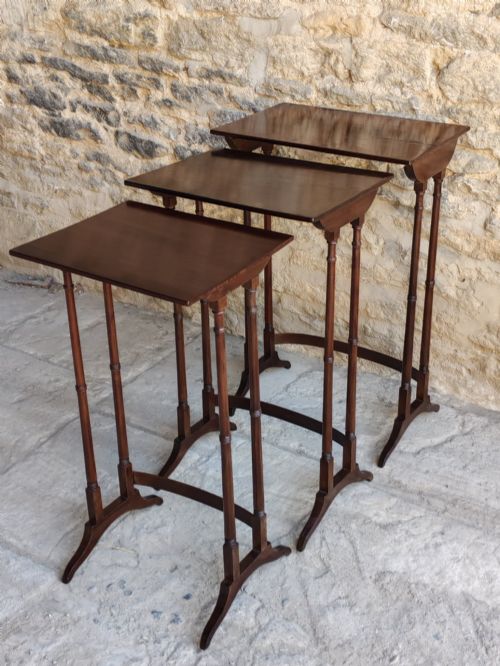
Edwardian versions generally lean towards traditional revival styles with inlaid satinwood, slender tapered legs, and subtle stringing. They often carry classical proportions rooted in Georgian or Sheraton designs.
Art Deco sets embrace geometric simplicity, bolder walnut or teak grains, and clean architectural lines. Decoration relies on the natural figure of the wood rather than applied floral stringing.
Are Chinoiserie nests fragile?
Chinoiserie decorated lacquer sets require gentle handling to preserve the painted and gilt surface details. They function best as decorative occasional furniture rather than heavy daily use tables.
Keeping them away from direct sunlight and excessive moisture protects the delicate lacquer finish over time.